Crash Course in Acrylic Painting
December 14–15, 10:00 am–4:00 pm
$175
One of the most common questions we get at The Art League School is where beginners should start. The answer is that there are lots of options — our blogger had no trouble in Basic Drawing, Stained Glass, or Wood & Stone Sculpture — but for anyone curious about painting, the perfect workshop is coming up next weekend.
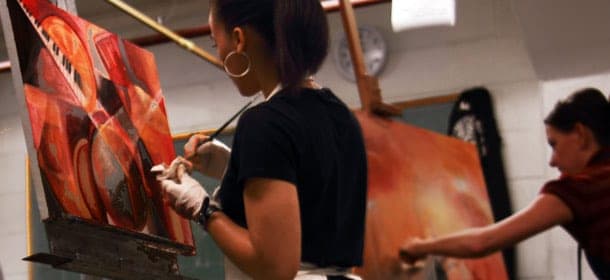
The Crash Course in Acrylic Painting, taught by Deirdre Saunder, is a two-day introduction appropriate for absolute beginners and returning painters who want an overview of a wide variety of techniques. You’ll take home several small experimental paintings and one large one, and if you like this workshop, our next term of nine-week classes starts in January. (See all our painting classes & workshops.)
We talked to Deirdre Saunder for more details on what students can expect.
What skills or experience do I need to have to take this workshop?
Deirdre Saunder: No painting experience or skills are needed to take this workshop. It is open to complete beginners but will also benefit the more advanced painter because a lot of techniques will be taught.
Why should I start with acrylics?
Acrylic is a wonderful painting medium to start painting with. It is relatively cheap, non-toxic, water-based, dries quickly and is very versatile and forgiving. Unlike watercolor, which rehydrates and is therefore harder to layer, acrylic dries fast and can be layered. Watercolors are transparent and must be worked from light to dark, but acrylics can be used from light to dark or dark to light and can be transparent or opaque. Their drying time can also be slowed down with the addition of mediums. Overall they are easier and more affordable to use than watercolor or oils. Oil paint is more expensive, takes a long time to dry and contains toxic properties (except for water soluble oil paint). Each medium has its own qualities, but acrylics is the perfect medium for a workshop where drying time is critical.
What exercises or projects will we be doing?
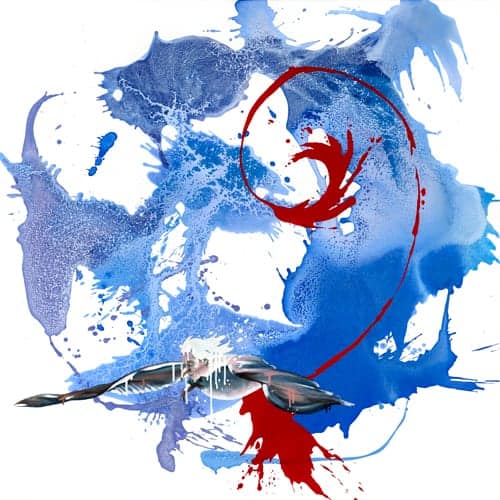
The students are going to work primarily on technique and discover what acrylics can do. They will be taught how to use the myriad of acrylic mediums that are available, in addition to numerous other techniques: they will learn to use acrylics like watercolors and as impasto, creating textures and using different brushes and tools. They will also experiment with color and color mixing. Subject matter will mostly be derived from still life material, simple objects and some photographic elements. Much more time will be spent on painting than on drawing and few drawing skills will be needed.
Am I going to take home any finished products?
The students will take home a number of small experimental paintings and will do one larger painting that hopefully they will be proud of.
What supplies are needed?
- Tubes of Liquitex Basics acrylic paints (4oz): Cadmium Red Medium Hue, Alizarin Crimson Hue Perm, Cadmium Yellow Medium Hue, Yellow Oxide, Ultramarine Blue, Phthalo Blue, Phthalo Green, Dioxazine Purple, Burnt Umber, Ivory Black, 2 tubes Titanium White
- Acrylic mediums: Gel medium, modeling paste, gloss medium, pumice gel medium, retarder
- Brushes: Flats, #12, #8, #4 and #2; Round #10; Fan #6 (optional)
- Palette knives: 1-5/16” × 7/16” and ¾” × 1-5/16”
- Paper Palette: 12” × 16” (this is a disposable palette in white or gray)
- Paper and canvas: 3 sheets 18” × 24” canvas paper, 2 sheets 18” × 24” 300 lb hot press watercolor paper, 3 sheets 18” × 24” drawing paper (sketching paper), 1 pre-stretched 18” × 24” canvas
- Miscellaneous: Roll of paper towels, 2B pencil, 1 stick soft charcoal, water jar, masking tape
You can get all these supplies, or a hard copy of the supply list, at The Art League Store (on the second floor of the Torpedo Factory next to the school office).