Ten Questions for Cindi Lewis

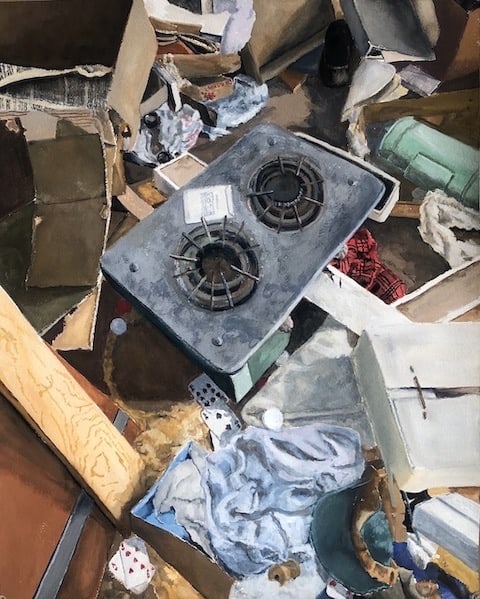
Hotplate by Cindi Lewis; Gouache

Our December solo artist talks about her inspiration and process for Homestead Elegy.


by Julia Chance

When painter Cindi Lewis saw photos of an old family homestead taken by her husband and son during an genealogical research trip to North Dakota, she was struck by what they revealed: a long-abandoned house that contained a profusion of furniture, appliances, clothing, and personal items from bygone decades. That was the inspiration for Homestead Elegy, her solo exhibit at The Art League Gallery.

The house that Lewis depicts was built by her husband’s great-grandfather, a German immigrant, in the 19th century and was once home to three generations. Lewis visited the property a year after her husband’s and son’s trip and was amazed by what she saw. “It was still fully if idiosyncratically, furnished,” she recalls “and there was a vast array of stuff,” including dozens of white trash bags of unknown contents; pots, pans, and dishes; cardboard boxes; magazines; overalls; lumber; food and medicine containers; shoes; papers; playing cards; and enormous quantities of firewood throughout the house. Lewis relished it all.

“I often enjoy getting into a fair level of detail in my work, as can be seen in the Homestead Elegy interiors,” she says.

Her warm, gouache renderings of the home’s chaos become a game of seek–and–find, compelling viewers to identify the various items that abound. Whether the accumulations of belongings were a reaction to Depression-era privation, physical frailty brought on by age, or something else, her perspective is a touching glimpse of a rugged way of life and a striking contrast with the spare beauty of the surrounding North Dakota landscape.

During her recent artist talk, the Columbia, Missouri native and Art League Board of Directors secretary spoke about her art, creative process, and what fascinated her about the house she captured. Here is an excerpt of what she shared.

What was the first thing you created that you were particularly proud of?  

I don’t remember the first thing, but when I was in junior high school I made a large piece of chocolate meringue pie out of paper mache. I thought that was pretty cool!

When did you know that you were an artist? 

I’ve loved drawing and painting forever, though there have been long stretches when I was in college and law school, and then practicing law when I didn’t do much artwork. Later I cut back the hours that I worked at the law firm so that I’d have more time for other things, including art, and my artwork has been a major aspect of my subsequent retirement. My art education has been primarily through classes and workshops at The Art League.

Describe your artwork. 

My work is representational, primarily in oils, watercolors, and gouache, though I have also been doing some printmaking in recent years. My subject matter tends to be landscapes and some figurative work.

What is your process for making art? 

I work primarily from photos though I enjoy plein air painting when conditions permit. I usually do a quick pencil or pen sketch to set up the composition; because of the complexity of some of the Homestead Elegy pieces, I did more detailed drawings than usual before I started the paintings. Then it’s a matter of adding and adjusting the color and details.

What are the ideas or questions that drive your artwork?

I’m generally driven by seeing particular scenes or images that catch my eye and demand to be painted.

What is Homestead Elegy about? 

It depicts a homestead in North Dakota that was inhabited by three generations of the original homesteader’s family. My husband’s father was one of the youngest of the third generation. The house had an oil heater, a wood stove, a water pump in the kitchen, no phone, and no indoor plumbing. After the last of the family members died or moved away and the house fell into disrepair, it remained full of a haphazard collection of their belongings, which provided a poignant—and sometimes amusing—view into the lives of the people who lived there.
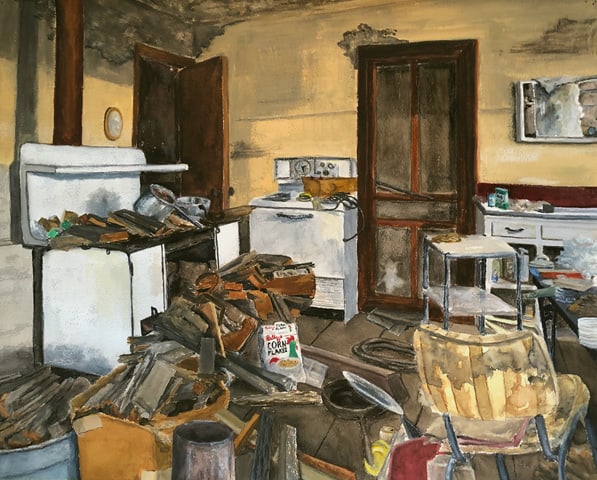
A Kellog’s Corn Flakes box retained its cheery coloring in contrast to the faded items surrounding it.


Did you sketch or photograph the settings you painted? 

My husband, son, and I all took numerous photos, and I did detailed sketches of the specific settings that I painted.

Did you have any trepidation about entering a structure that has been abandoned for such a long time? 

Funny you should ask. We curtailed our explorations after the living room floor gave way and deposited my husband in the root cellar. Fortunately, he wasn’t badly hurt.
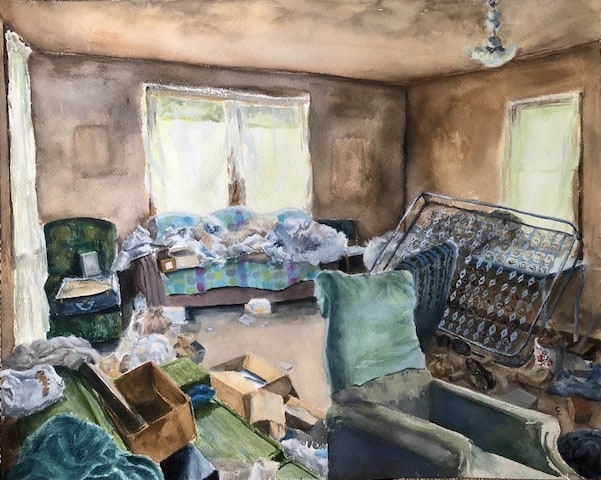
An old bed spring is among the curiosities in Living Room.

You proposed this exhibit two years ago. Has it changed much from what you initially submitted?  

No. I was fascinated by the house and the former inhabitants’ belongings—and by the contrast between the somewhat claustrophobic house and the wide-open North Dakota landscape where it’s located—so I continued with my original plan.

What do you hope viewers glean from Homestead Elegy? 

I can only speak for myself but I came away with a profound respect for the challenges and hardships faced by the family who lived there and others like them.

Homestead Elegy is on view through January 8, 2023.
Artful Weekend December 31 – January 1

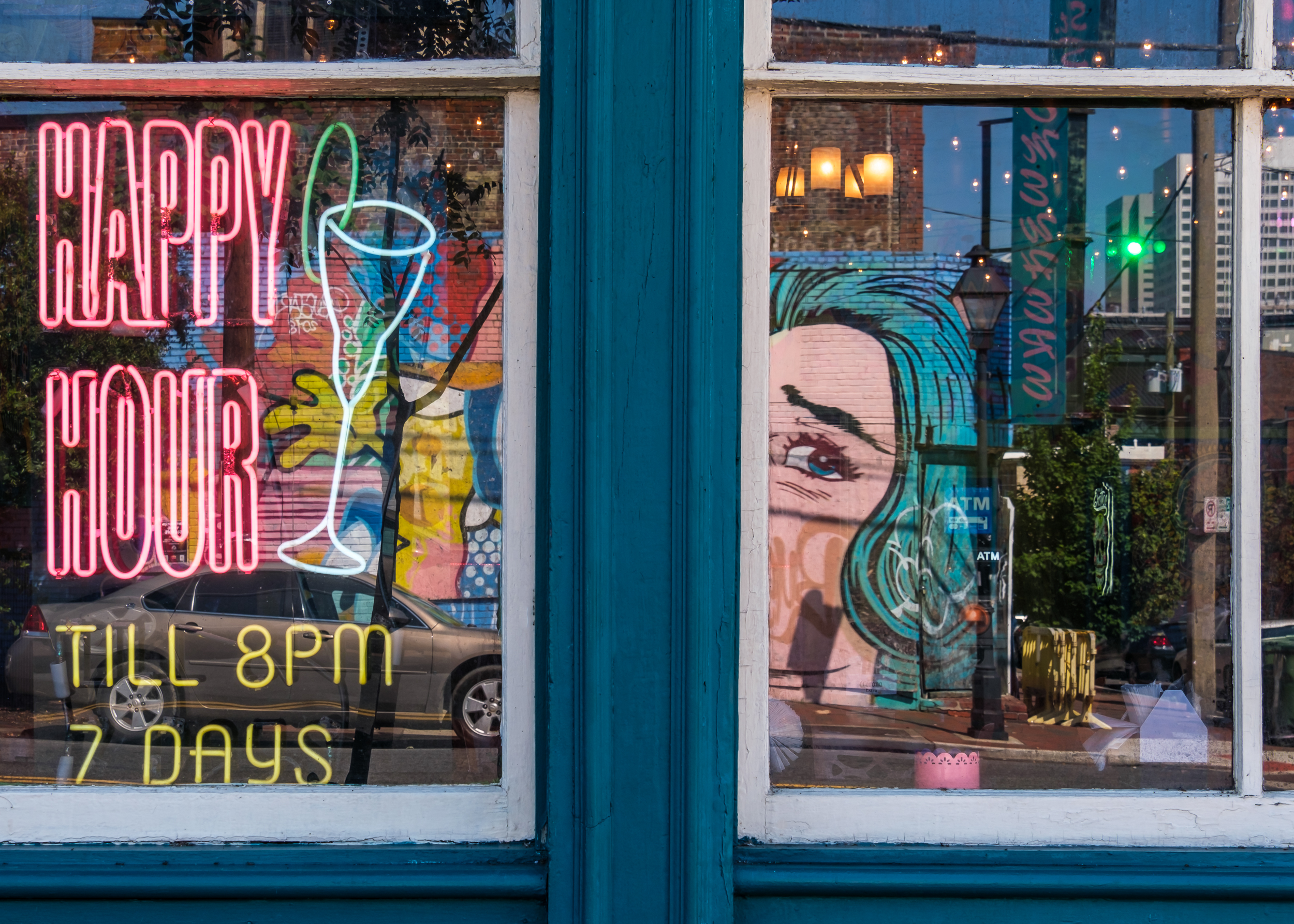
"Happy Hour Until 8 PM", photography by Suzanne McIntire" is currently on view in December's member exhibit.

Welcome to Artful Weekend

-our listing of area art exhibits and events-

This weekend: December 2022 ExhibitHomestead Elegy by Cindi Lewis, and Petite December at the League; Mending time at Cody Gallery; A Window Suddenly Opens: Contemporary Photography in China at the Hirshhorn; and Faraway So CloseSwedish Artists Look at the United States at House of Sweeden.


December 2022 Exhibit

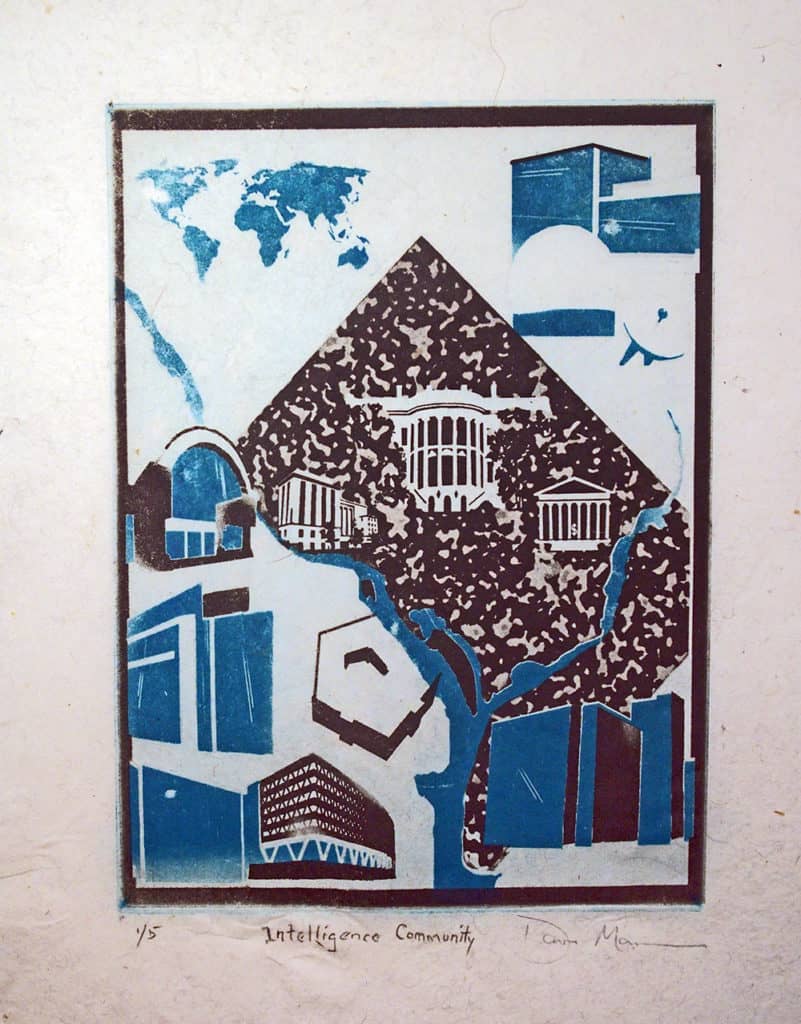
Intelligence Community by David Mann; Intaglio etching on hand-made paper.

Diverse works in different mediums are the feature of member exhibits at The Art League. This month’s show features 98 artworks in oil, acrylic, watercolor, ceramic, photography, printmaking and more. It was juried by Jenn Bratovich, Director of Exhibitions & Programs at Print Center New York.

This months Best-in-Show Award winner:

Blue Cheese Collection #5 by Gale Waller; Acrylic on panel


Honorable mentions:

Woodland Reflections by Diane Dunn; Mixed media on canvas

Yellowstone Bourbon Prohibition Era Bottle by Brie Haydun; Pencil on paper

Tomorrow is Another Day by Camille Kouyoumdjan; Acrylic, collage on canvas

Vaunita by Linda Lowery; Encaustic on birch panel

Sunlight From the Garden by Samuel C. Miller; acrylic on mixed media in internally lit

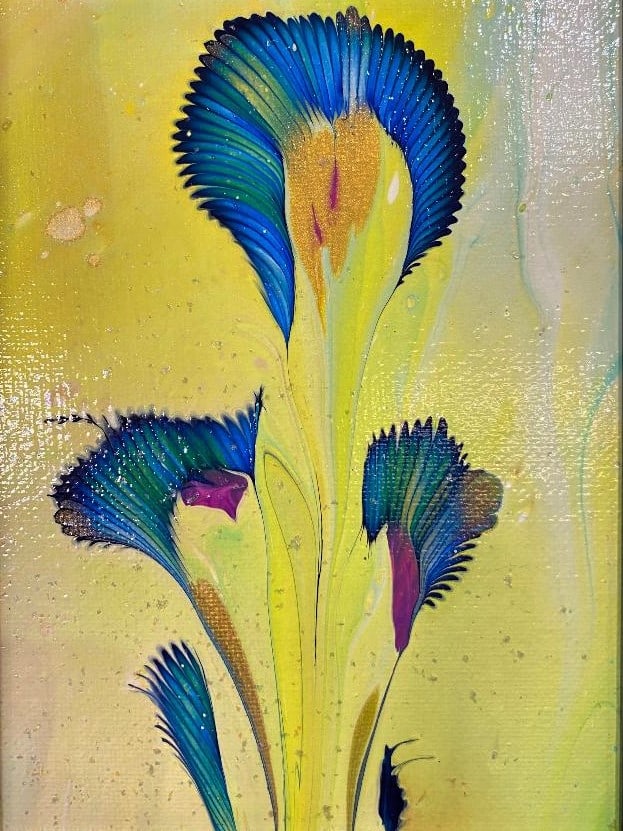
Floral Fantasy by Liz Santulli

Tyger 15—Celebrating the Year of the Tiger by Jasmin Smith

December’s member exhibit is on view through January 8. 2023.


Homestead Elegy by Cindi Lewis

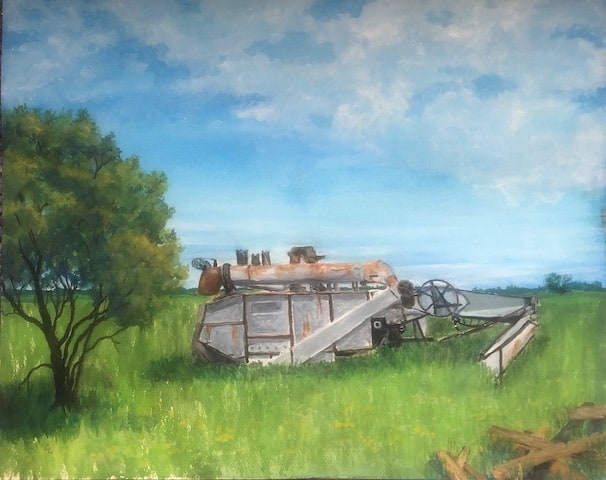
Rusted by Cindi Lewis; Watercolor

In her solo exhibit Homestead Elegy, painter Cindi Lewis depicts the fate of a late 19th-century North Dakota homestead. Built by her husband’s great-grandfather, a German immigrant, the structure housed three generations. The last occupants are long gone, but the house and its contents—a profusion of abandoned furniture, appliances, and personal possessions strewn about in every room—remain.

Lewis’ warm, gouache renderings of the home’s chaos become a game of seek–and–find, compelling viewers to identify the many items that abound. Whether the accumulations of belongings were a reaction to Depression-era privation, physical frailty brought on by age, or something else, Lewis’ perspective provides a touching glimpse of a rugged way of life and a striking contrast with the spare beauty of the surrounding North Dakota landscape.


Petite December

Blue Stem by Guido Zanni; Acrylic on canvas

Our annual Petite December exhibit features miniature works available for immediate purchase during the holiday season. Sculptor and filmmaker Lydia Ricci juried this year’s the exhibit. Suzanne McIntire received the Best-in-Show Award for her black-and-white photograph Because Mom Said So, which is also this week’s cover image.


Mending time

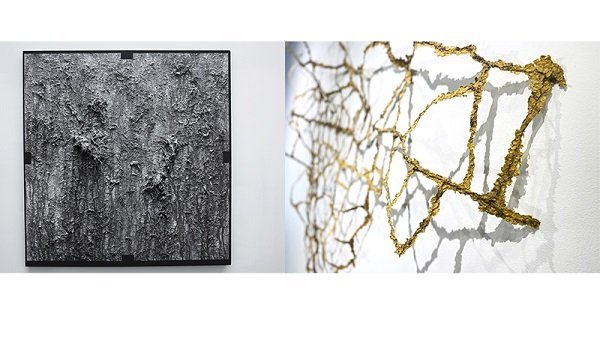
Image: Ryan McCoy (left), Emily Fussner (right)

Mending time brings together Emily Fussner’s cast paper installations with Ryan McCoy’s large mixed media paintings. Each artist’s ability to weave together the fragility of time with the grit of the earth opens a powerful space for transformation and rethinking. Texture, shadow, materiality, and process are delicately and thoughtfully integrated into their work and provide a solid ground to delve deeper. Their work beckons hope and transfiguration. Mending time is on view through January 4 at Marymount University’s Cody Gallery, 2807 North Glebe Road, Arlington, VA.


A Window Suddenly Opens: Contemporary Photography in China

Qiu Zhijie, Fine-Series-G, 1997

A Window Suddenly Opens: Contemporary Photography in China, the Hirshhorn Museum’s first survey of photography by leading multigenerational Chinese artists made between the 1990s and 2000s, chronicles how emerging Chinese artists independently embraced the immediacy of print and digital photography, recorded performance and video art during an unprecedented cultural shift away from the priority of the collective to a revived focus on the self. It’s on view through January 7, 2024. The Hirshhorn Museum is located at Independence Avenue and 7th Street NW, Washington, D.C.


Faraway So CloseSwedish Artists Look at the United States

Image courtesy of House of Sweden.

Following the Second World War, American popular culture grew and spread in Sweden, and it has been a dominant factor in the Swedish cultural scene ever since.Faraway So CloseSwedish Artists Look at the United States, an exhibition with photography and video art, shows how American culture and society have been depicted by prominent Swedish artists. Documentary images from the 1960s are shown in parallel with contemporary Swedish artists’ views of the United States today. Many of the participating artists are particularly interested in exploring a different reality of the United States—one that goes beyond the more traditional and idealized view that is often encountered in Sweden. It is on view through February 19 at House of Sweden, 2900 K Street NW, Washington, D.C.

Enjoy the weekend and happy New Year!