Whether you’re a Pinterest veteran (OK, it’s only a couple years old) or you’re just thinking of joining in, you can always use ideas for new things to pin. You know about the basics — inspiration, portfolio, works in progress — but sometimes “inspiration” isn’t quite as enticing as “scarey bunnies” or “That Seventies Board!”
To get your creativity started and keep your followers clicking, we spent some time brainstorming and put together a list of boards to try out … but just the titles.
What would the “oops” board look like? That’s up to you. There are no rules on Pinterest — well, there are a few, as you already know if you’ve been pinning:
every pin must contain an image
every pin must belong to a board
give credit! (if you pin from a website, Pinterest automatically links back to the source — or, you can add a credit to the description)
Other than that, creativity is king. As with any other social media site, there are three general guidelines to follow: stick with it — post regularly, not in fits and starts; join in — comment and like and re-pin other people’s posts; and be yourself — share your story and your voice.
What will you pin? Any ideas you’d like to share? Let us know in the comments section!
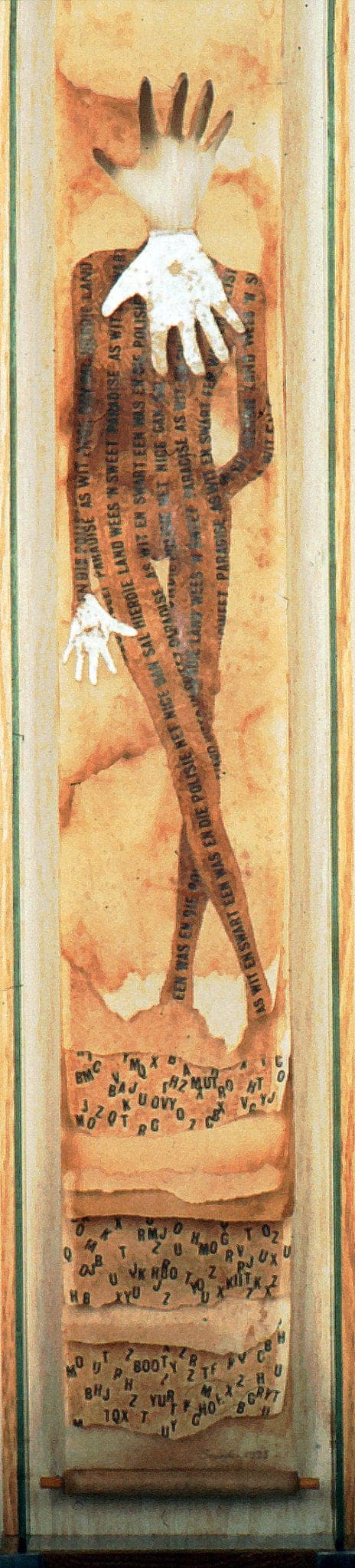
Dog Walkers, screenprint by Yolanda Frederikse, from the December All-Media exhibit.
It’s been a while since the last edition of Artful Links, but we’ve saved up some good ones for you. Videos, how-tos, and nearby and online exhibits await. Click away!
photos
This isn’t one to click on unless you’ve got time to kill — Lou Brooks’ online Museum of Forgotten Art Supplies has fascinating entries like this mouth-operated fixative atomizer from the curator’s first art class. You might get a kick out of the collection of vintage art supply ads, too. The museum invites contributions, too, in case you feel like digging around in the closet.
art-icle
Whether you’re shipping art or packing it up for a move, Saatchi Online’s guide How to Package Artwork is worth bookmarking.
art-icle
This Q&A with an SFMoMA curator has 10 Tips on Displaying Art at Home. Of note: how high to hang it, how to protect from sunlight, and what color to paint your walls. For a crash course, you could always observe The Art League Gallery’s hanging crew at work each month.
exhibits
As always, there’s no shortage of worthwhile exhibits in the DC area. Here are our recommendations for some exhibits worth a family trip, and you can find more on Culture Capital:
“Van Gogh: Repetitions” through January 26 at the Phillips Collection — see scenes and motifs that Van Gogh returned to and reworked.
“Workt by Hand” through April 27 at the National Museum of Women in the Arts — an exhibit of quilts spanning two centuries
“Small Worlds” through January 12 at Target Gallery — we don’t need to tell you how easy it is to fill a day in the Torpedo Factory.
In honor of the upcoming “Abstract Expressionism Revisited” exhibit: Robert Rauschenberg on Erased de Kooning is a short, enlightening interview with Rauschenberg on the controversial piece and how he approached Willem de Kooning for a piece to destroy. (De Kooning: “It’ll have to be something that I’ll miss.”) SFMoMA has published an infrared scan that gives some idea of the original drawing, for the curious.
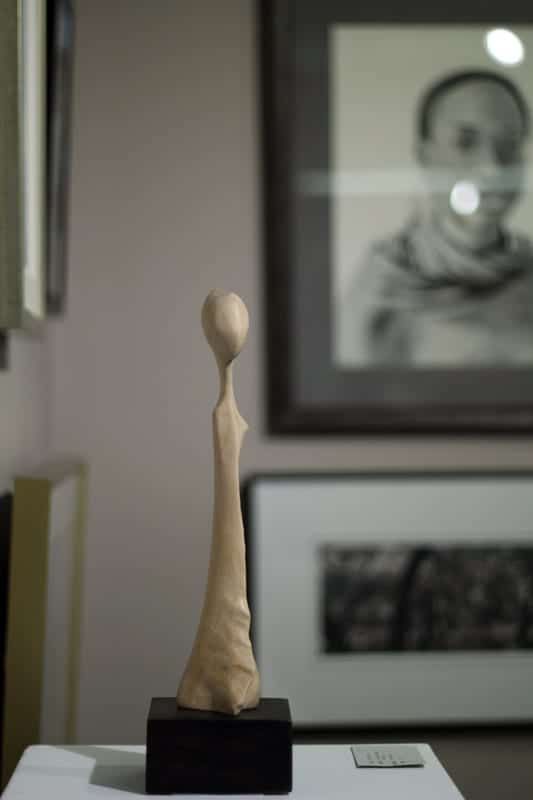
If you’ve been to the Torpedo Factory, you probably remember seeing sculptures like the one above in the studio of sculptor Tatyana Schremko, towering over you at seven feet tall. Standing at a less formidable 14 inches and carved from maple, Schremko’s Sweet Vidalia won the Bertha G. Harrison Award for Figurative Sculpture in this month’s all-media show at The Art League, open through January 6.
We asked the artist to tell us more about her sculpture’s signature form, her creative process, and how this piece came to be named for an onion.
You create sculptures in bronze, paper, wood, and even ice — what do you like about wood as a material? Why did you choose to use maple for this piece? Why is this piece named after an onion?
Tatyana Schremko: I work in wood because that is the material I can use to make very tall sculptures without the great expense of a foundry to have it in bronze. Although those sculptures can be cast in bronze at any time.
As far as the maple wood “onion,” I was trying out the gentle luminosity of the maple — the onion created itself by being deliciously rounded at the bottom, and the skin frilling as if being peeled, and ending with a new shoot on the top. It was merely a form I made, and then I called it an “onion.”
Tatyana Schremko’s 2006 solo exhibit at The Art League, “Echo in the Forest.” The tall sculptures, 6–7 feet tall, are carved from lindenwood, and the three sculptures mounted on the wall are paper castings.
This shape appears in a lot of your sculptures. Why this shape, what does it mean to you?
The gentle, elongated shape reminds me of shadows and whispering wind. There is a longing and a soothing at the same time. The lines create a balance and a dance.
What’s your creative process like?
Ideas are in everything I see, hear, and smell — from holes in the cement in the crosswalk to salty sea breezes. Sometimes these want to be expressed in wood — other times in other media.
What are you working on now?
Now I am undertaking a project of five to seven forms, resembling my tall wood sculptures, but made in paper and expressing the fragility of humanity.
A view of the “onion’s” rounded bottom and sprout-like top.
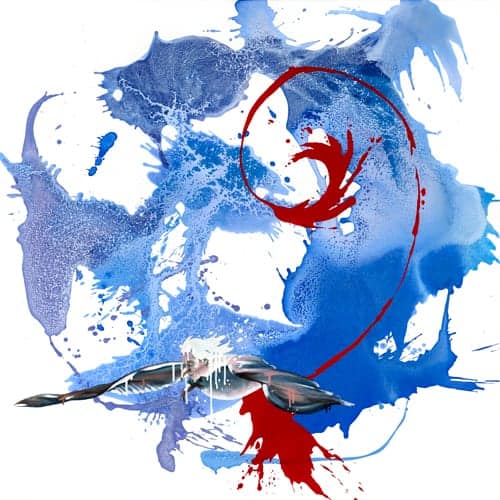
The works selected for for this exhibit will honor the artwork created during the great 1950s Abstract Expressionist movement. Non-representational, non-objective imagery, and unconventional approaches to creating images are encouraged, but not required. Members can enter any work to be considered for exhibit. For a full prospectus, click here. (Image: detail from Action Painting by Brenda Belfield)
“Abstract Expressionism Revisited” kicks off a series of seven exhibits celebrating The Art League’s 60th anniversary in 2014. The series will bring us through art movements from the 1950s to present day, starting with Abstract Expressionism.
Works that don’t fit the theme can still be entered, but we want to encourage everyone to join in and try something new for these exhibits — so we’ll be continuing to pin inspiration, and any tips we can, to the Pinterest board “Inspiration for AL Exhibits”:
Abstract expressionism is most closely associated with painters, but artists in any medium can take inspiration from pictographs, Jungian psychology, and the artist’s gesture — “directness and immediacy of expression.” Think of the famous term “action painting,” coined by art critic Harold Rosenberg, and replace “painting” with your own medium.
January also marks the kickoff of our 60th Anniversary Lecture Series. Dr. Claudia Rousseau will give a presentation on Abstract Expressionism on Thursday, January 23, at 1:00 pm:
Join us for a free presentation on this important artistic movement and the artists working both locally and nationally during the 1950’s and 1960’s. Dr. Rousseau received her Ph.D. in Art History from Columbia University. She currently is a professor of Art History and Montgomery College. She has written extensively on Italian Renaissance art and Modern Art. Rousseau often curates and juries exhibits. She juried for The Target Gallery in April 2013 and was a solo juror for The Art League in October 2012. To register please call or e-mail the gallery, [email protected] or sign up on Eventbrite.
We asked Ariane in the School office to answer some of the most frequently asked questions from our students. And of course, if you have a question about choosing a class, signing up, or anything else, you can ask us in person (room 217 on the second floor of the Torpedo Factory), on the phone at 703-683-2323, or by email at [email protected]. We’re open 10:00 am to 5:00 pm, Monday through Saturday.
How do I choose a class or workshop? Browse our catalog here or pick up a catalog at the Torpedo Factory. Call us during office hours if you need a recommendation (703-683-2323).
I’m a first-time art student — what class should I take?
This is the most asked question we get at The Art League School. The short answer is a Basic Drawing class. It is foundational for anyone interested in becoming a painter or a printmaker.
That said, in all the other departments (photography, sculpture, fiber, ceramics, etc.) there are beginner classes that are appropriate for anyone with no previous arts experience. Everybody in the school office is happy to help discuss choosing classes with new students (in person, by phone, or email at [email protected].)
Trying out silk screen printing at Artfête.
How do I register?
Prospective students may register online, in person, by mail or by fax. Unfortunately, we cannot register students over the phone.
Where will my class or workshop meet?
All of our classes meet in Old Town Alexandria, either in the Torpedo Factory building (105 N. Union St) or at the Madison Street Annex (nearby at 305 Madison St). We send confirmation e-mails to all enrolled students with the location of their building and classroom number.
Are materials included in tuition prices?
Most classes do not have materials included in their tuition. Unless specifically noted in the class description, students are expected to bring their own supplies to class.
Where do I find a supply list and supplies?
Supply lists are kept in hard copy at The Art League Store. In order to find the correct list, please be sure to have the name of your class and instructor.
What if I can’t pick up a list in person before classes begin?
If you know you won’t be able to stop by The Art League before your class begins, you can send a self-addressed stamped envelope to The Art League Supply Store. Please include a note indicating your class title and instructor’s name. The list will be mailed to you. The store is unable to email, fax or read lists over the phone.
What happens if I miss a class?
For most classes, if you cannot attend a class, it is up to you to coordinate with your teacher for missed assignments.
Nancy Freeman demos for her new class, Apps for Artists.
How do I buy a class as a gift for someone?
We recommend purchasing a gift card so that the recipient may choose the exact class they wish to take. The Art League Gallery (703-683-1780) sells gift cards that are good for the purchase of classes, workshops, gallery artwork, and art supplies.
Where do I park for classes at the Torpedo Factory?
We recommend parking at Solo parking at the intersection of Duke and Union Streets or at Alexandria’s City Hall underground parking at the intersection of King and Fairfax Streets.
Where do I park for classes at the Madison Annex?
Free parking is available evenings and weekends at Colonial Parking on 267 Montgomery Street. During the weekday there is free two hour parking on the streets surrounding the Madison Annex, and paid parking at Colonial Parking.
How do I purchase weekday student parking at Crowne Plaza Hotel?
Please note: These parking passes are no longer available.
How to contact The Art League School:
in person at the Torpedo Factory (105 N. Union St. in Alexandria) in room 217 on the second floor. Hours: 10:00 am–5:00 pm, Monday through Saturday
“To practice any art, no matter how well or badly, is a way to make your soul grow. So do it.” — Kurt Vonnegut
The new year starts soon, and Winter classes are starting after that, on the week of January 6. There are dozens of classes at The Art League School in ceramics, drawing, fiber arts, jewelry and metal, mosaics, painting, photography, printmaking, sculpture, stained glass, digital art, and even more. Are you signed up yet?
To give you that extra little nudge, here are six reasons to make taking an art class one of your new year’s resolutions:
1. Because you always wanted to.
After all, you’re reading this post, aren’t you?
2. To decorate your apartment/home/self.
That feeling of accomplishment and creative ownership is second to none. — “I love your earrings! Where’d you get them?” — “Oh, I made them. No biggie.”
You don’t have to wear your art down the runway, but it is allowed. (From Artfête 2013.)
3. To meet new people.
Nothing builds camaraderie like the moments after a demo, when we turn and ask each other that age-old question: “How’d she do that?”
4. To rekindle a long-lost passion.
It’s never too late to dig your camera out of the closet. In fact, many artists in The Art League Gallery are people who returned to art — just come to a reception and ask around. As Pablo Picasso once said, “All children are artists. The problem is how to remain an artist once he grows up.”
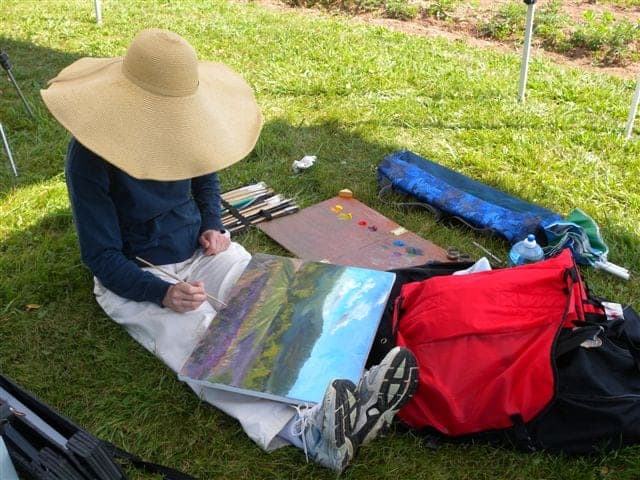
Hats optional. (This photo by Jean Schwartz is from the 2012 travel workshop to the lavender fields of Pennsylvania.)
5. To relax.
Pick up a pencil, or a brush, or a chisel, and feel your worries float away. Some of our classes are even known to enjoy a glass of wine while they work (not the ones with blowtorches, though).
6. To exercise a new part of your brain.
Is the creative part of your brain feeling underfed? An art class could be just what you need to nourish your mind and soul. It’s not just for adults, either — check out this list of 10 skills kids learn from arts classes. (The Art League offers classes for ages five and up.)
New Year’s is the time to expand your mind. (New Girl by Sharon Boyle)
What are you waiting for? Search the catalog now to pick out your next class, or browse by subject:
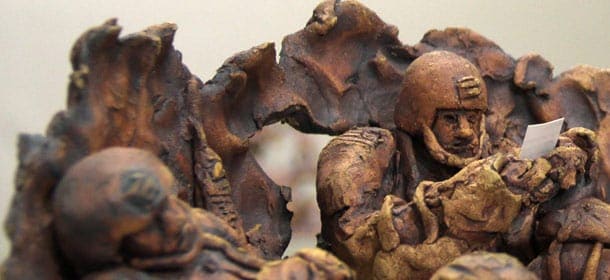
“Meadows is recovering from a frontal-lobe traumatic brain injury he suffered in Afghanistan in January. He said his doctor at Fort Belvoir was hesitant to allow Meadows’s participation in Impart, fearing it would be too much strain. ‘He wasn’t sure because of how bad I was at first,’ Meadows said. ‘But he knew I loved it, so he let me keep exploring it.’ After his doctor saw the sculptures, Meadows said, ‘he was blown away. He said it opened up a channel for me.’ ”
Reimagining Rosa Parks
Deadline: January 5, 2014. The Library at Prince George’s Community College is hosting a call for entries for the exhibit Reimagining Rosa Parks, a collaborative project between the PGCC Library and The Book Bridge Project. More about this exhibit →
Teaching apprenticeships
Pyramid Atlantic Art Center seeks highly motivated teaching artist apprentices. Individuals at the beginning of their careers, who wish to enhance their teaching artistry and knowledge of the art education field, are invited to apply. The program will serve twenty-four 6–11 year-old students, twice a week at the Pembridge/Amherst Square apartment’s community center and Arcola Elementary. This is a three hour a week commitment and a stipend is provided. More about the program (PDF) →
Ann Arbor residency
Deadline: January 15, 2014. The Penny W. Stamps School of Art & Design at the University of Michigan is now accepting applications for the Roman J. Witt Artist Residency Program. The program awards one residency per academic year for a visiting artist/designer to develop a new work in collaboration with students and faculty. More about the program →
Circus-inspired art
Deadline: January 29, 2014. The Off-Rhode Studio at Art Enables is opening its walls and inviting artists in the Washington, Virginia, Maryland area to participate in “Amazing Marvels,” a show featuring work inspired by the circus, sideshows or carnivals. Off-Rhode is a gallery for self-taught and outsider artists; however, this call is open to all artists working in all mediums and preference will be given to self-taught and outsider artists. View the call for artists →
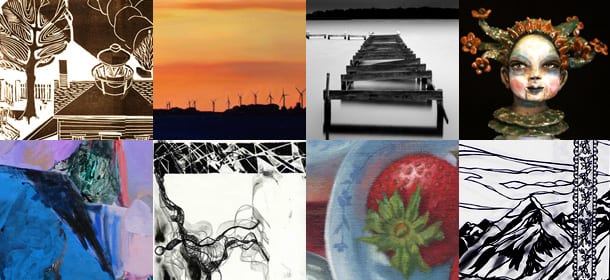
In October, a panel of two jurors selected artists to exhibit in The Art League Gallery’s solo artist room during the 2015 season. The eight selected artists will be spending the time between now and then finishing artwork and preparing for their exhibits.
To be selected, artists submitted their resumes along with images of five completed pieces and a proposal of what they envisioned for their exhibits. Where the monthly juried shows in the Gallery showcase the breadth and variety of talent in our artist membership, the solo exhibits spotlight a deeper, more coherent body of work by a single artist.
(For a preview of solo exhibits in the nearer future, you can look forward to the 2014 Solo Preview exhibit next month in the Gallery.)
Here’s a look ahead at the calendar for 2015, with selections from the images and proposals from the artists:
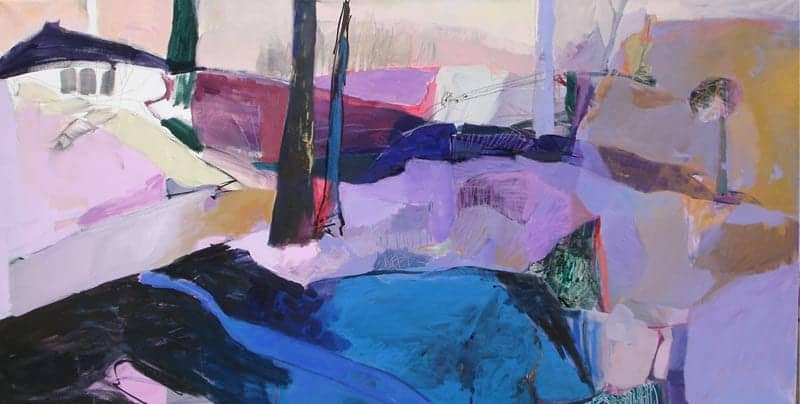
March: Claudia Cappelle
Winter’s Passage by Claudia Cappelle
“For me landscape is an of expression of what is interior to me. My purpose is not a re-creation or rendering of a specific place but a personal response to the shapes, patterns, and color. I abstract from nature.”
Claudia Cappelle’s large format, 34″ × 66″ acrylic paintings capture the landscape in an abstracted, dynamic form. Her exhibit, titled “Reconstructing the Landscape,” is inspired and influenced by the book Pilgrim at Tinker Creek by Annie Dillard, and in particular Dillard’s description of a new way of seeing the natural world.
May: John Gosling
Jones Point Lighthouse by John Gosling.
“My fascination with Old Town Alexandria as a subject matter derives from my recognition, as an urban planner, that Old Town is one of the premier examples of a successful, sustainable (250 years!), mixed-use community development in America. For me it is a very special place.”
John Gosling’s linocut prints reflect his interpretations of local scenes from his background as an architect and urban designer, focusing on people interacting with their environment. Gosling — whose linocut print of Old Town Alexandria, It’s All a Façade, can be seen in the Gallery this month — serves on the boards of The Art League and the Old Town Civic Association.
June: Maremi Andreozzi
Wind Turbines at Dusk by Maremi Andreozzi
“Catching and painting ‘night fall’ or ‘day break’ feels like finding ‘good luck’ — mythical, hopeful, and timeless.”
Maremi Andreozzi’s series of “cloudscapes” has its origin in her three-year-old son’s fascination with the sky. This exhibit looks for contrasts and transitions in the sky — changing colors, passing time, and the expansive sky dwarfing distant structures.
July: Shiho K. Rice
Connection by Shiho Rice
“Having lived in both North America and Japan, my artwork is an expression of my own perspective of mixed cultures.”
Kirié is the Japanese artform in which a single piece of black paper is cut to create an image, resulting in a piece that can look at first glance like an ink drawing or a woodcut. Shiho Rice’s exhibit in the summer of 2015 will introduce the technique to a new audience. Recently, Rice has been experimenting with new ways to frame and light finished pieces to highlight the shadows cast by the paper.
September: Wijati Soemantoro
From Wijati Soemantoro’s Ring of Fire series
“I witnessed the explosion of Mount Galunggung in West Java a long time ago. I am planning to explore the dramatic effects of the aftermath and how the victims and people within the vicinity react towards the disaster.”
Wijati Soemantoro’s series of abstract lithographs is her response to natural disasters, born from her time living in Indonesia. Soemantoro discusses the series and her artwork in general in this recent Q&A.
October: Sheila Harrington
Strawberries & Cream by Sheila Harrington
“The cyclical changes of life, how human beings respond to them, and the juxtaposition of the natural and the man-made, fascinate me, and I can’t help drawing and painting them.”
Sheila Harrington’s exhibit grows out of a series of “seasonal still-lifes” exploring the passage of time, a theme also explored in her blog. Harrington’s oil paintings on linen are limited to 6″ × 6″ so they can be completed before the perishable subjects change appearance.
November: MariAnne MacGregor
broken by MariAnne MacGregor
“Nowhere in the world that we inhabit reveals the boundless nature of time and space quite like standing at water’s edge.”
MariAnne MacGregor’s exhibit “On the Threshold” explores the anthropological concept of liminality, or the straddling of boundaries that occurs during a ritual. This series of black-and-white photographs on the edge of the water touches on the immensity of the natural world.
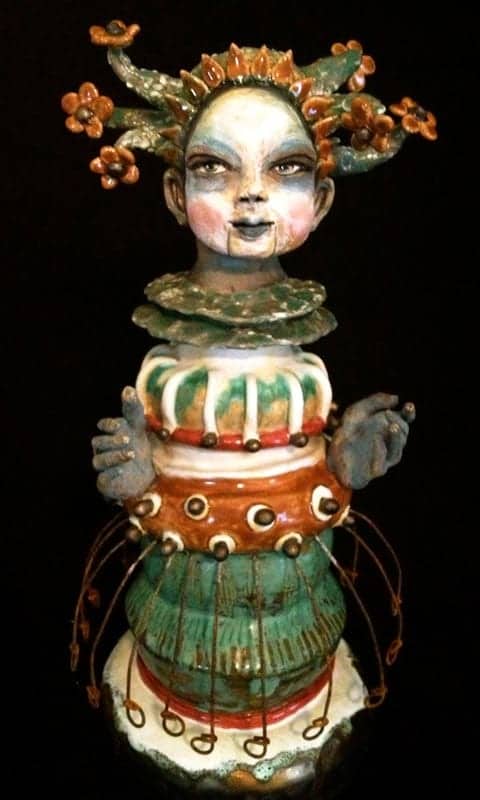
December: Kathlyn Avila
Out-Reach by Kathlyn Avila
“My ceramic figures embody the personalities of familiar souls that all people may recognize regardless of where they grew up. Each figure is an expression of a unique personality that tells a story through adornment, symbolism and gesture.”
Kathlyn Avila’s “My Green Valley” draws on her own life and the memorable characters she has known. Avila, who also teaches ceramics classes at The Art League, hopes her instantly recognizable figures will “kindle visitors’ memories of personal histories, real, imagined and embellished.” You can read more about Kathlyn’s work in this recent artist Q&A.
You can keep track of all our upcoming exhibits here.
Thursday was the opening reception for all our new shows: the December All-Media Exhibit, “The Street Sense Project,” and the IMPART Ceramics Exhibit.
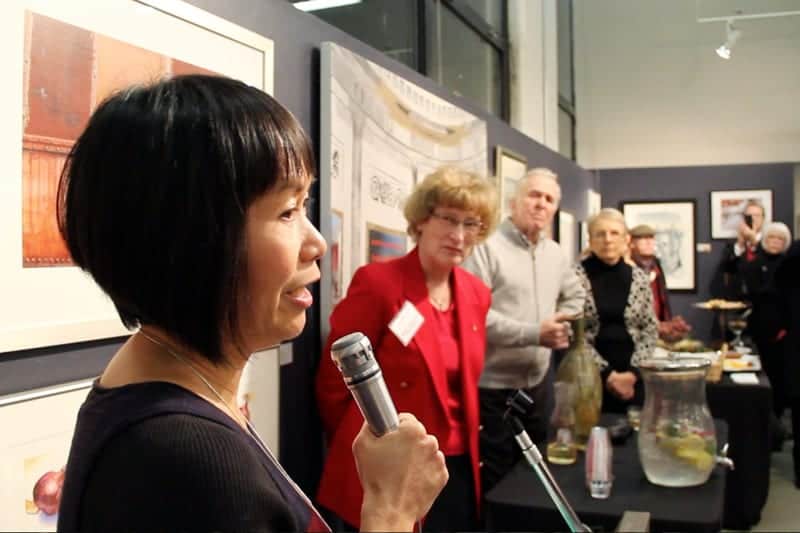
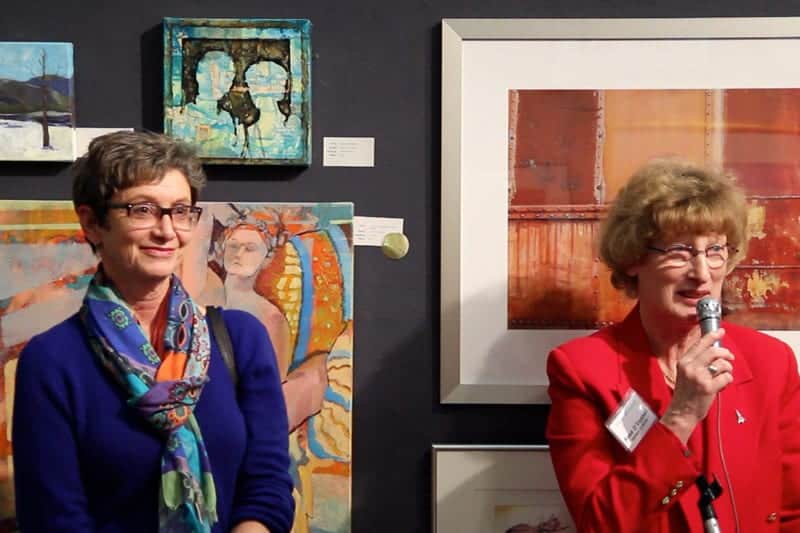
We had an amazing turnout, including many of the IMPART artists and their families. We also got to hear from solo artist Thien-Kim Pham and meet the award-winners in the all-media show.
Thank you to everyone who came out! If you missed the reception, we’re pleased to announce you’ll have another chance: there will be a closing reception for the IMPART exhibit on Sunday, January 5 at 2:00 pm.
We were honored to welcome wounded warrior artists from the IMPART program, as well as Jose Riojas, chief of staff of the Department of Veterans Affairs, and Joe Courtney, a U.S. congressman from Connecticut. See below for photos from yesterday evening:
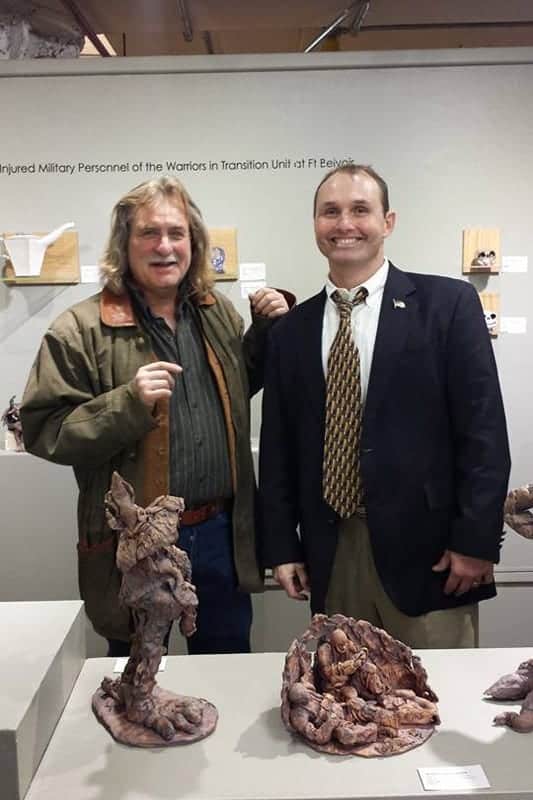
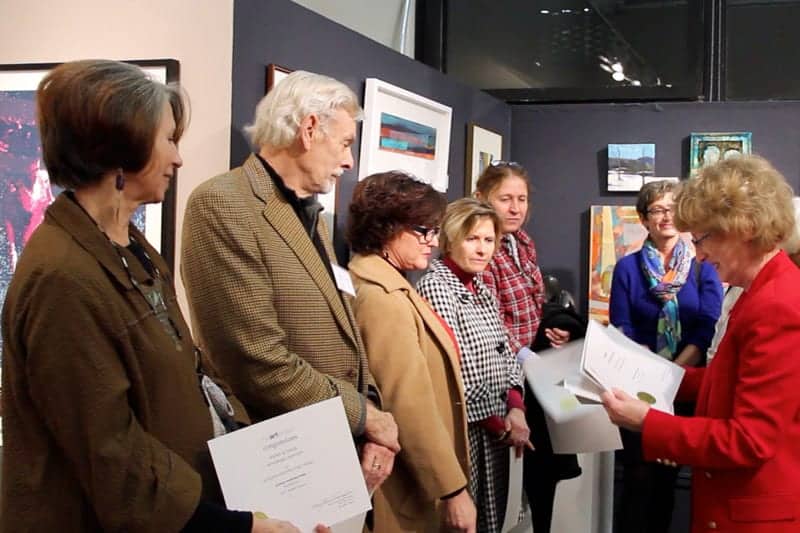
IMPART artist Jonathan Meadows talks to Congressman Joe Courtney of Connecticut.Solo artist Thien-Kim Pham speaks about her portraits of the homeless in “The Street Sense Project.” Portions of sales from the paintings will go to nonprofits related to the subject matter. Representatives from two of those nonprofits, the National Alliance on Mental Illness and Interfaith Works, also spoke.Work in the December All-Media Exhibit.VA Department Chief of Staff Jose Riojas, right, talks to Jonathan Meadows.Jose Riojas speaks with Suzanne Bethel, The Art League’s executive director.IMPART artist Jonathan Meadows poses with his artwork and ceramics instructor Blair Meerfeld. Photo by Melissa Meadows. (You can see more of Melissa’s photos on our Facebook page.)Gallery Director Rose O’Donnell presents artist Gail Vogels with the Carol Zakaski Memorial Award for Best in Show.December’s artists selected for honorable mentions by the juror.
IMPART Ceramics Exhibit
Through January 5 Opening reception: Tonight, December 12, 6:30–8:00
There’s a new ceramics exhibit in The Art League Gallery this month, and if you’ve seen it, you surely wanted to know more about the artists behind it.
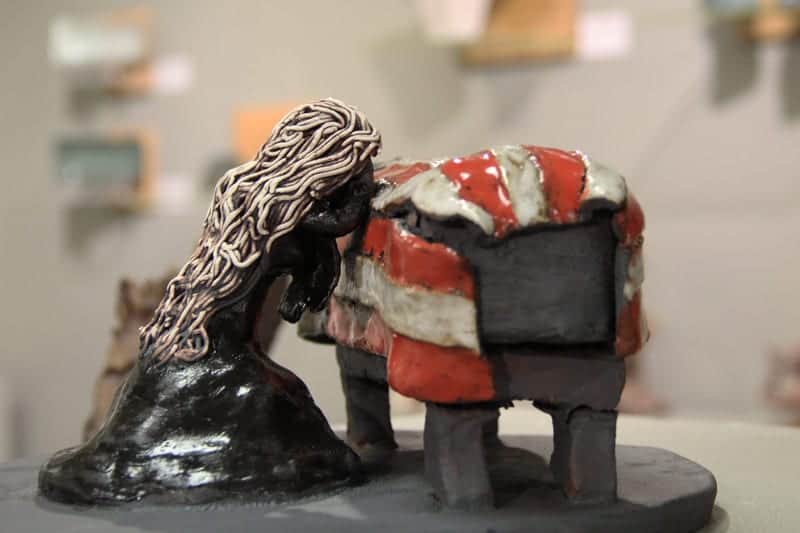
The IMPART Ceramics Exhibit represents a unique group of student artists and a special outreach program. The I.M.P. in IMPART stands for Injured Military Personnel and A.R.T. stands for, well, art. The IMP artists from the Warrior Transition Unit B, Fort Belvoir, along with their families and friends, have been taking ceramics classes at the Madison Annex for about a year. This exhibit is a rare opportunity to share some of the artwork they’ve made.
“Some folks have really found a voice in clay, and we decided to put on an exhibit for them,” said Blair Meerfeld, chair of The Art League’s ceramics department.
The program started in 2011, when Suzanne Bethel, then The Art League’s Deputy Director, approached Blair with the idea to create a new Art League program to serve the local community of Injured Military Personnel and transitioning veterans at Fort Belvoir. The idea was to use visual arts instruction as a catalyst for personal enrichment, improving fine motor skills, relaxed social engagement, and expressive catharsis. And it seemed a natural fit to start such a program in the Ceramics Program.
Letter From Home by Jonathan Meadows.
The program got off the ground later that year after Carla Amerau joined the ceramics department as a new associate artist. As retired military, Carla was able to guide the process and act as a liaison with Fort Belvoir.
It started with demos in a Fort Belvoir common room, trying to attract attention from one person at a time. It was tough going at first, but “once we got them coming, they were hooked,” Blair said.
“Some folks have really found a voice in clay.”
One day during a demo, Blair said, a young man asked to try his hand at the potter’s wheel. He had made pots back home in Idaho before his tour in Iraq. His participation during that demo lent some credibility to the idea of “trying it out” for others in the Warrior Transition Unit, and with people now bringing their friends from the base, the program continues to grow through word of mouth.
“Every week it is a topic of discussion in WTU B Company — I wish Wednesday was every day so we could do pottery!” said Sergeant Will Roberts, a recent participant in the program.
Clay artwork from the exhibit.
The IMPART students that come from the Warrior in Transition Unit are injured soldiers who are transitioning between their injury and moving on to return to their unit, or a new job, or retirement. These soldiers often have free time between medical appointments and their assignments so the Events Coordination Office sets up things for them to do, such as this Wednesday ceramics class.
It’s not a typical ceramics class, though. Students are building back their motor skills, hand-eye coordination, and muscles, and dealing with stress disorders. The term isn’t limited to the usual nine weeks, either — they can stay for a month or a year, however long they’re at Fort Belvoir before they move on.
“It’s different from anything else I do for The Art League,” Blair said.
Coming Home by Jonathan Meadows
The ceramics classes have therapeutic benefit because they’re relaxing and they give students a creative opportunity to express and work through issues they have in their lives. That outlet for creative expression is one of the main goals of the program. “Even making a bowl probably helps,” Carla said.
Working with clay is also beneficial for dexterity and vision problems, Blair said.
“Every week it is a topic of discussion in WTU B Company.”
At this point, the IMPART classes at Madison have an average group of six to nine people coming each week, including soldiers and the friends or family who come with them. Most people are working on ongoing projects from week to week, and any new students can start learning how to sculpt with clay or throw bowls on the wheel. Most students have never done anything with clay before, Carla said. They’re just looking for a continuing, creative experience.
Classes are about three hours a week, but students keep in touch during the week. When you get a text asking if a piece is fired, or if it’s dry yet, it’s a good feeling, Blair said — a sign that people are engaged with the program.
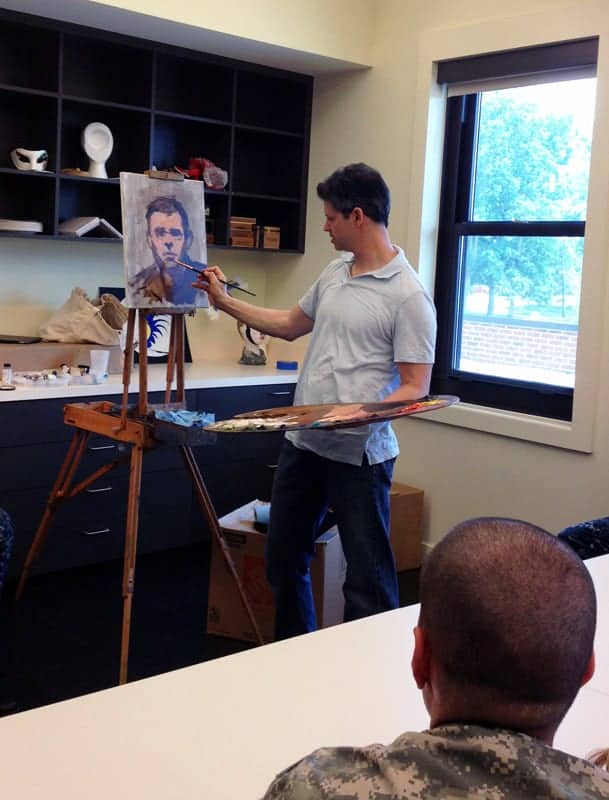
The Art League’s IMPART program isn’t limited to the ceramics studio. Since its inception, the program has expanded into a great collaboration between The Art League, Wounded Warriors, and the USO. Using the USO national Warrior and Family Center at Fort Belvoir Hospital, The Art League provides visual arts experiences on Monday afternoons for in-treatment PTSD military patients. These IMPART participants have taken painting and photography classes, attended portrait painting demonstrations with Rob Liberace, and have learned to mat and frame their artworks.
Art League instructor Rob Liberace gives a painting demo at Fort Belvoir.
What’s next for IMPART? Suzanne Bethel, who became The Art League’s executive director in 2012, offered this: “We’re working on a plan to add new independent class scholarships for Injured Military Personnel, and their techs, starting in early 2014. Stay tuned …”
The Art League is proud to be extending its mission to this community and to be offering this special program to Wounded Warriors. For more information about the IMPART program and how you can support it, click here.
Tokens & Sentiments
Deadline: December 27. On February 7, Capitol Arts Network will open “Tokens and Sentiments,” a juried exhibit featuring artwork, poetry and more. Photography, painting, mixed media and poetry will be considered for this exhibition at Capitol Arts Network. Think out of the box with your florals, artwork, designs, poetry, and more to offer your real life version of a valentine in this modern age. Works large and small will be considered. More about the exhibit →
Sculpture fellowship
Deadline: January 7, 2014. Socrates Sculpture Park in Long Island City, NY is accepting proposals for the Emerging Artist Fellowship, an annual program that selects 15 artists for the opportunity to produce and exhibit a large scale site-specific sculpture or installation in the park. More about the fellowship →
Go Elsewhere residency
Deadline: January 10, 2014. Elsewhere in Greensboro, NC is now accepting 2014 residency applications. Artists, musicians, curators, scholars, writers, gardeners, urban agriculturalists, homesteaders, installation, sculpture, textile, sound, video, kitchen and performance artists, system-thinkers, game-makers, and other creative individuals/groups across medias are encouraged to apply. More about the residency →
Art on Paper
Deadline: January 15, 2014. The Maryland Federation of Art invites all artists residing in the United States, Puerto Rico, Canada and Mexico to enter its Art on Paper competition. Original work created on or made from paper (including photography), meeting size requirements and following entry guidelines will be considered. The selected works will be on exhibit at MFA’s Circle Gallery. More about the exhibit →
3-D art
Deadline: February 18, 2014. For the juried exhibit “Dimensional Expressions” at Artful Dimensions Gallery in Fredericksburg, VA, artists in all media are invited to submit images of their 3-D artwork. Art League artist and instructor Kathlyn J. Avila is the juror for this exhibit. More about the exhibit →
Juried exhibit — Harrisonburg
Deadline: March 15, 2014. Park Gables Gallery at the Virginia Mennonite Retirement Community in Harrisonburg, VA invites submissions to an exhibit juried by a three-juror panel. Entry is open to all artists residing in the U.S. There are over $5,000 in prizes available and the gallery charges no commission on works sold. More about the exhibit >
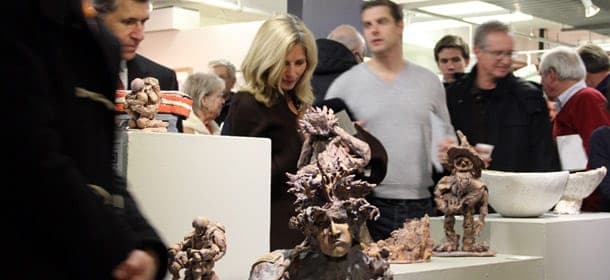
For a special gift — one that’s literally one-of-a-kind — you can’t really beat art, whether it’s a new class or workshop, or an original piece to hang on the wall. To show the art-lover in your life that you care, here are some holiday gift ideas from The Art League:
Art supplies
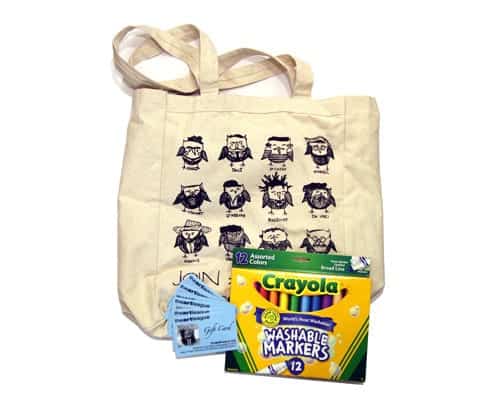
The Art League Store, on the second floor of the Torpedo Factory, sells everything the art student or working artist needs: watercolor paper, stretched canvas, a new set of pastels, or a stylish Join the Flock tote bag to carry their supplies to class in. For young artists who can’t wait for Art Camp to start up again, some markers, colored pencils, and newsprint can keep their creative side engaged.
Art classes
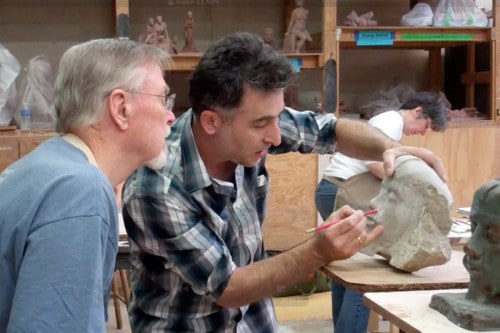
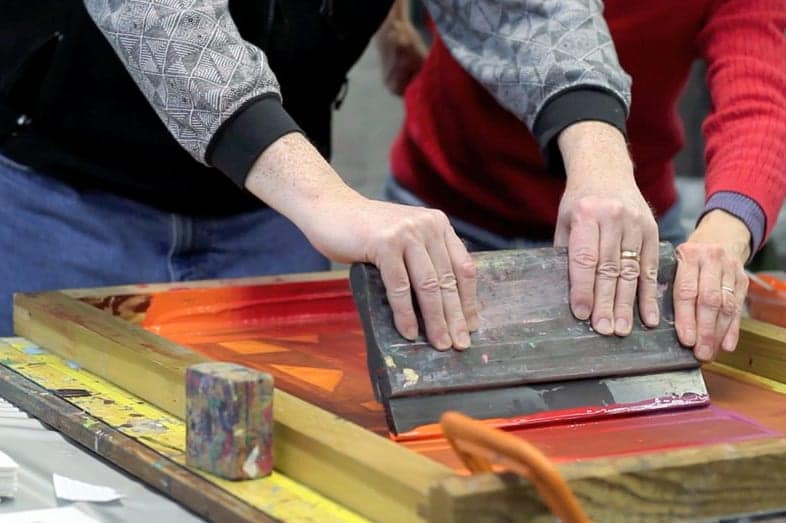
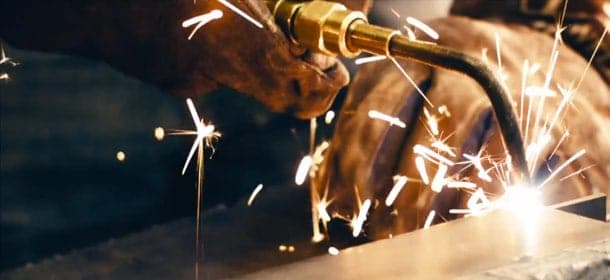
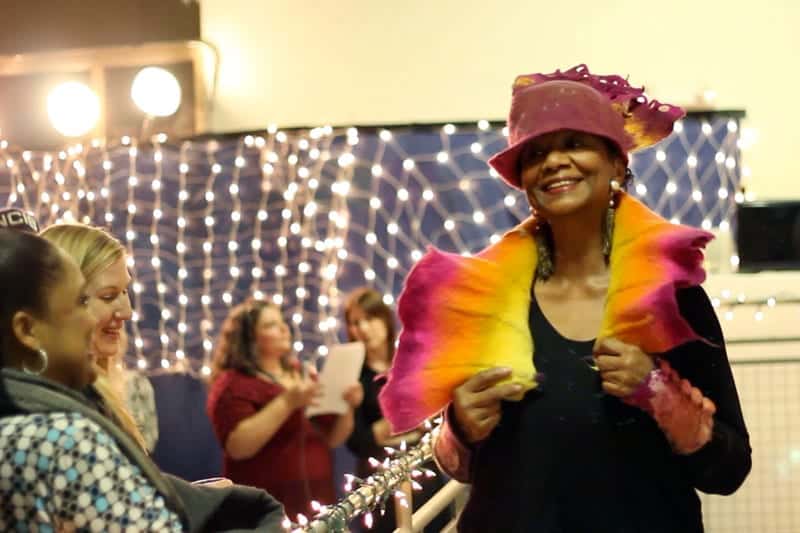
Drawing, painting, printmaking, photography, sculpture, ceramics, jewelry, metalwork, stained glass, weaving, felting, knitting, child and teen classes, and Summer Art Camp … we keep pretty busy at The Art League School. You can encourage creative growth with the gift of a workshop, class, or camp — or, a gift card and a catalog for your artist to pick out a class to take. (If you need some ideas, you can look inside our classrooms in this YouTube playlist.)
Price: Prices for classes vary, ranging from $45 for the one-day Jumpstart in Ceramics workshop to an average of around $200–300 for a nine-week course. Summer Art Camps for ages five and up start at $155. You can search the catalog here.
Gallery membership
For the artist in your life looking to take the next step and start exhibiting, you can give them a supportive push in the right direction with an Art League membership. Membership at The Art League entitles an artist to enter juried group exhibits every month, submit to special exhibits like Art in City Hall, apply for a solo exhibit come Fall, access our reference library, and attend seminars and lectures.
You can pay a year’s dues (or renew an existing member), and take home a copy of Tidings and an exhibit schedule to wrap up so they’ll be ready to come to receiving January 6 or 7.
Price: A one-year membership is $95 for new members or $80 for renewals. We also offer one-month trial memberships for $30.
Handmade ornaments
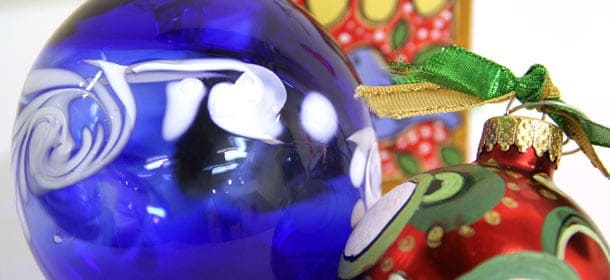
The ornaments hanging on The Art League Gallery’s tree are each handmade by an Art League artist — painters, sculptors, and glass artists alike. We’ll be hanging new ones throughout the month, so come check out our collection!
Price: From $7 to $60
Bin Gallery artwork
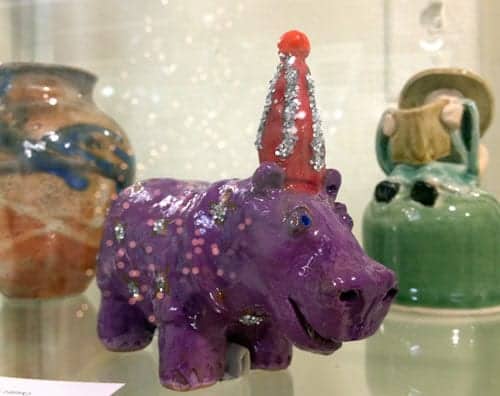
Holiday Hippo by Trinka Roeckelein, in the Bin Gallery
Because everything in our gallery is original artwork, it’s guaranteed to be a one-of-a-kind gift. The artwork in the Bin Gallery includes unframed pieces by our artists, which are a perfect choice if you’re looking for an affordable option. Of course, we have new framed and 3-D artwork in the Gallery every month, too.
Price: $45 and up
Art League Apparel
Our “Join the Flock” merchandise has been a hit ever since we introduced it during our “30-Something” campaign last summer. These aprons, t-shirts (crew neck and scoop neck), buttons, and tote bags feature drawings of 12 famous artists — as birds — by Art League instructor Stephen Procopio. Get one for the Art Leaguer in your life and let them show off their artist pride!
Price: Shirts, $15–20; aprons, $20; bags, $10; and buttons, $1
Gift cards
OK, so it’s not always easy knowing exactly what class, what tube of paint, or what piece of artwork to get. Let your loved one choose for themselves with an Art League gift card, which they can use for any of the following:
Any Art League class (wrap it up with a school catalog and an Art League apron!)
Any artwork in the Gallery
Supplies at The Art League Store
Events like Patrons’ Show and Art on the Rocks
Membership dues
Exhibit entry fees
Don’t forget that buying artwork, taking classes, and shopping at The Art League goes to support our mission and means we can continue to offer affordable art classes, exhibition space for emerging artists, and outreach programs in our community.
Any ideas we missed? Anything here on your wish list? Try sharing this post on Facebook with a subtle “hint, hint.”
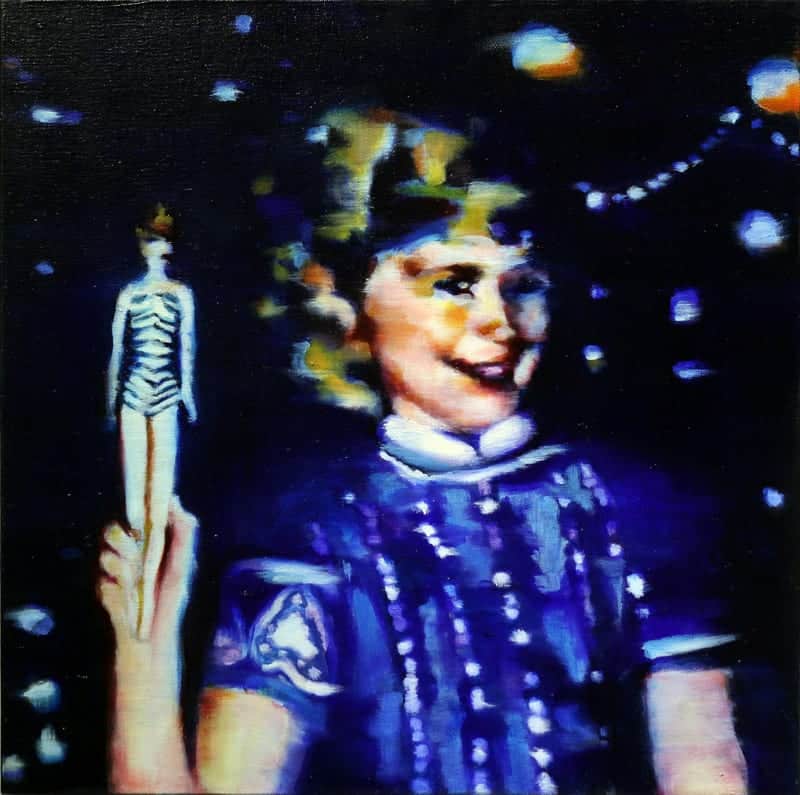
Christmas 1960, oil on canvas, by Gail Vogels. (click for full size)
With muted colors and soft edges, Gail Vogels has been exploring the relationship between images and memories in paintings like the one above — winner of the Carolyn Zakaski Award in this month’s all-media exhibit. If Christmas 1960 looks like a home movie, that’s because it comes from one. Vogels has been painting stills from her parents’ Super 8 movies for her “Flash: 1960s” series. We asked her to tell us more about the series and her memories in our Q&A, below.
Why oil?
Gail Vogels: I’m an oil painter because it is the most forgiving medium. Oil paint forgives your mistakes, your change of heart and you can paint over all the bad paintings you’ve done in the past.
Do you remember the scene in the photo? What does it mean to you?
I think I remember the scene but this image was taken from Super 8 home movies. It’s hard to separate a memory of an event from an image depicting that event. If an image is shown to you at a young age, I think it is imprinted on your brain and perhaps you lose track if you were actually a witness to the event or a witness in seeing the event depicted in a photo or film.
I did an entire body of work from stills of these family movies called Flash: 1960s which can be seen on my website. The girl in the image is my sister showing off her new Christmas gift, the Barbie doll. Working from these stills I began to explore the idea of painting memories. During the process of painting I discovered that memories are alive and continue to take shape.
Girl in Snow by Gail Vogels, from the “Flash: 1960s” series.
What was your inspiration or motive for the 1960s memories series?
I started this series when my parents sent me a compilation of home movies. I was intrigued by the light and movement. I wanted to try to capture the ghost-like blurred movement. Plus I love the juxtaposition of the sweet little girl’s face proudly showing off her scantily clad, ridiculously proportioned Barbie doll. The original Barbie doll is iconic and I think triggers memories for both men and women.
You write in your artists statement that the soft edges seemed appropriate to this series. Why is that?
I think that memories shift. I believe we are our memories and those memories are always evolving.
How do you try to paint that? Do you have a specific technique to achieve that effect?
Yes, many layers of paint, glazes and blurring of edges with a large brush.
What is your first memory of art as a child? My mother is an artist and she was an early influence in observing the world with an artist’s eye. I have this memory of going to the Philadelphia Museum of Art and I think I wore white kid gloves. The only other place I wore white gloves was at church so I knew I was on holy ground. Is this memory accurate? I need to ask my parents but I think so!
What are you working on now?
I’m new to DC and I’m working on scenes from riding the Metro.
I’m not sure yet where this work is going. I enjoy riding the Metro. I moved here from Atlanta and although I’m not a native southerner I did learn after living there for 20 years to make eye contact with people and smile sometimes! There is a sense of community on the trains; we are all in this moment together. I don’t paint or draw on the trains. I don’t want to be obvious or to distract people from their ordinary commute. I remember images pretty well and I confess to discreetly taking photos of folks on the train with my phone.
One of the most common questions we get at The Art League School is where beginners should start. The answer is that there are lots of options — our blogger had no trouble in Basic Drawing, Stained Glass, or Wood & Stone Sculpture — but for anyone curious about painting, the perfect workshop is coming up next weekend.
The Crash Course in Acrylic Painting, taught by Deirdre Saunder, is a two-day introduction appropriate for absolute beginners and returning painters who want an overview of a wide variety of techniques. You’ll take home several small experimental paintings and one large one, and if you like this workshop, our next term of nine-week classes starts in January. (See all our painting classes & workshops.)
We talked to Deirdre Saunder for more details on what students can expect.
Painting by Deirdre Saunder
What skills or experience do I need to have to take this workshop?
Deirdre Saunder: No painting experience or skills are needed to take this workshop. It is open to complete beginners but will also benefit the more advanced painter because a lot of techniques will be taught.
Why should I start with acrylics?
Acrylic is a wonderful painting medium to start painting with. It is relatively cheap, non-toxic, water-based, dries quickly and is very versatile and forgiving. Unlike watercolor, which rehydrates and is therefore harder to layer, acrylic dries fast and can be layered. Watercolors are transparent and must be worked from light to dark, but acrylics can be used from light to dark or dark to light and can be transparent or opaque. Their drying time can also be slowed down with the addition of mediums. Overall they are easier and more affordable to use than watercolor or oils. Oil paint is more expensive, takes a long time to dry and contains toxic properties (except for water soluble oil paint). Each medium has its own qualities, but acrylics is the perfect medium for a workshop where drying time is critical.
What exercises or projects will we be doing?
The students are going to work primarily on technique and discover what acrylics can do. They will be taught how to use the myriad of acrylic mediums that are available, in addition to numerous other techniques: they will learn to use acrylics like watercolors and as impasto, creating textures and using different brushes and tools. They will also experiment with color and color mixing. Subject matter will mostly be derived from still life material, simple objects and some photographic elements. Much more time will be spent on painting than on drawing and few drawing skills will be needed.
Am I going to take home any finished products?
The students will take home a number of small experimental paintings and will do one larger painting that hopefully they will be proud of.
What supplies are needed?
Tubes of Liquitex Basics acrylic paints (4oz): Cadmium Red Medium Hue, Alizarin Crimson Hue Perm, Cadmium Yellow Medium Hue, Yellow Oxide, Ultramarine Blue, Phthalo Blue, Phthalo Green, Dioxazine Purple, Burnt Umber, Ivory Black, 2 tubes Titanium White
Acrylic mediums: Gel medium, modeling paste, gloss medium, pumice gel medium, retarder
Brushes: Flats, #12, #8, #4 and #2; Round #10; Fan #6 (optional)
Palette knives: 1-5/16” × 7/16” and ¾” × 1-5/16”
Paper Palette: 12” × 16” (this is a disposable palette in white or gray)
Paper and canvas: 3 sheets 18” × 24” canvas paper, 2 sheets 18” × 24” 300 lb hot press watercolor paper, 3 sheets 18” × 24” drawing paper (sketching paper), 1 pre-stretched 18” × 24” canvas
Miscellaneous: Roll of paper towels, 2B pencil, 1 stick soft charcoal, water jar, masking tape
You can get all these supplies, or a hard copy of the supply list, at The Art League Store (on the second floor of the Torpedo Factory next to the school office).
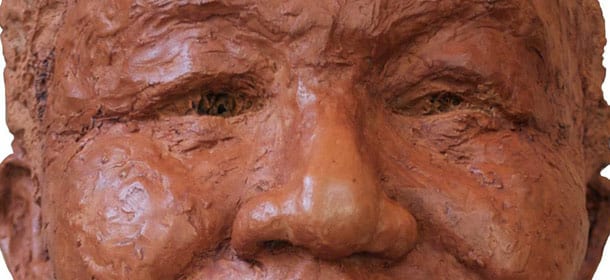
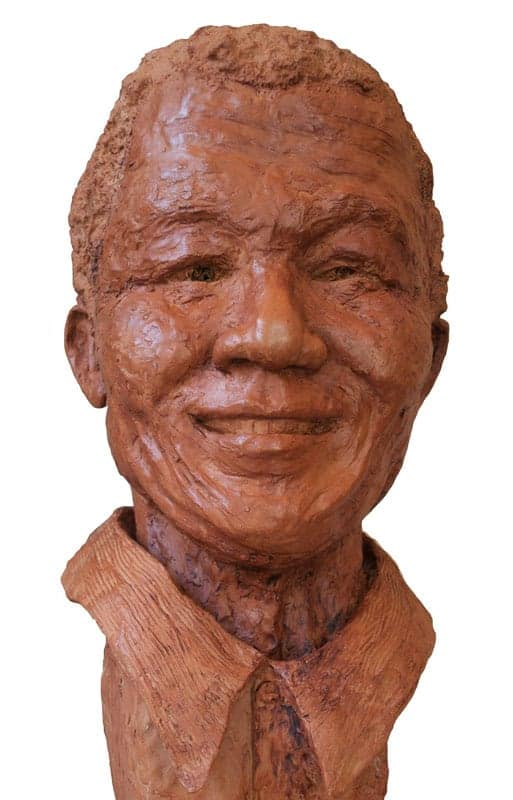
You might remember the above sculpture from a year ago, when it was featured in the 2012 Large Works show. Art League member Paula Stern’s bust of Nelson Mandela, in cast resin, is now headed to the Embassy of South Africa in DC.
At an event at the South African embassy, Stern showed some snapshots of the piece to Johnny Moloto, then first secretary at the embassy, which started the ball rolling for Stern to make her gift, which will be one of the first in the renovated embassy. The presentation ceremony was originally scheduled for next week, but has been postponed after Mandela’s passing yesterday. However, the sculpture will soon have a new home on Massachusetts Avenue.
Stern’s sculpture originated as a commission for Pinewood School in South Carolina, which has a garden dedicated to world leaders like Winston Churchill, Gandhi, and the Dalai Lama. A bronze cast of the bust was unveiled there in 2011.
The bust was sculpted in terra cotta. Stern recalled starting it during a portrait sculpture workshop at the Madison Annex with Charles Flickinger, working on Mandela instead of the classroom model.
Mandela’s likeness was based on a number of photographs of the leader, based on what Stern thought viewers would find the most recognizable image. Within the first couple of hours, “I just caught him,” Stern said. Knowing when to stop was, as always, an important decision.
Stern’s family, hailing from Memphis, has long been involved with the American civil rights movement, profiled in this Washington Post article. With the Mandela bust, Stern said, she was trying to capture a man who personifies racial tolerance, and to capture his “magnanimity, charisma, and beauty.”
The end result was an unusual bust, Stern said, with an “exuberant smile” and crinkling eyes.
“I think I captured the angel in him,” she said.
The piece, by the way, was rejected the first time it was entered in an Art League show. But while Stern was wheeling it out, she passed a family who recognized it.
“They said, ‘Wow, that’s Madiba!’ They were excited,” Stern said. “So I didn’t feel bad about it getting rejected.”
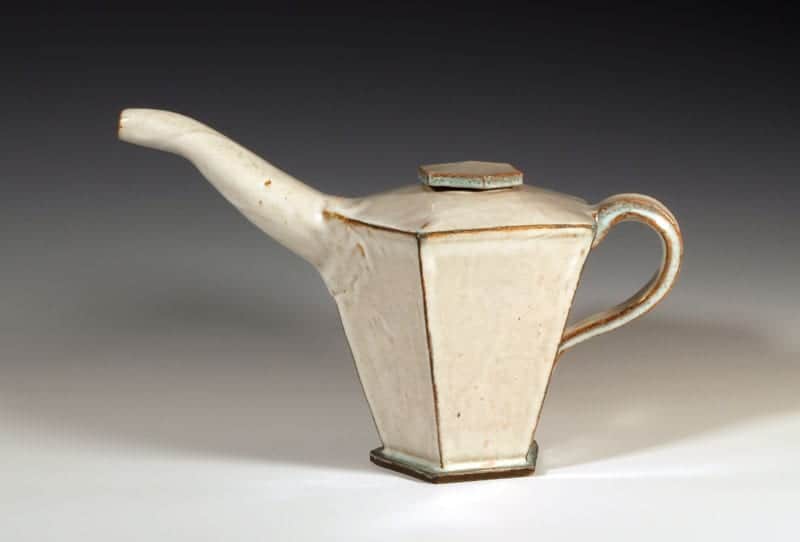
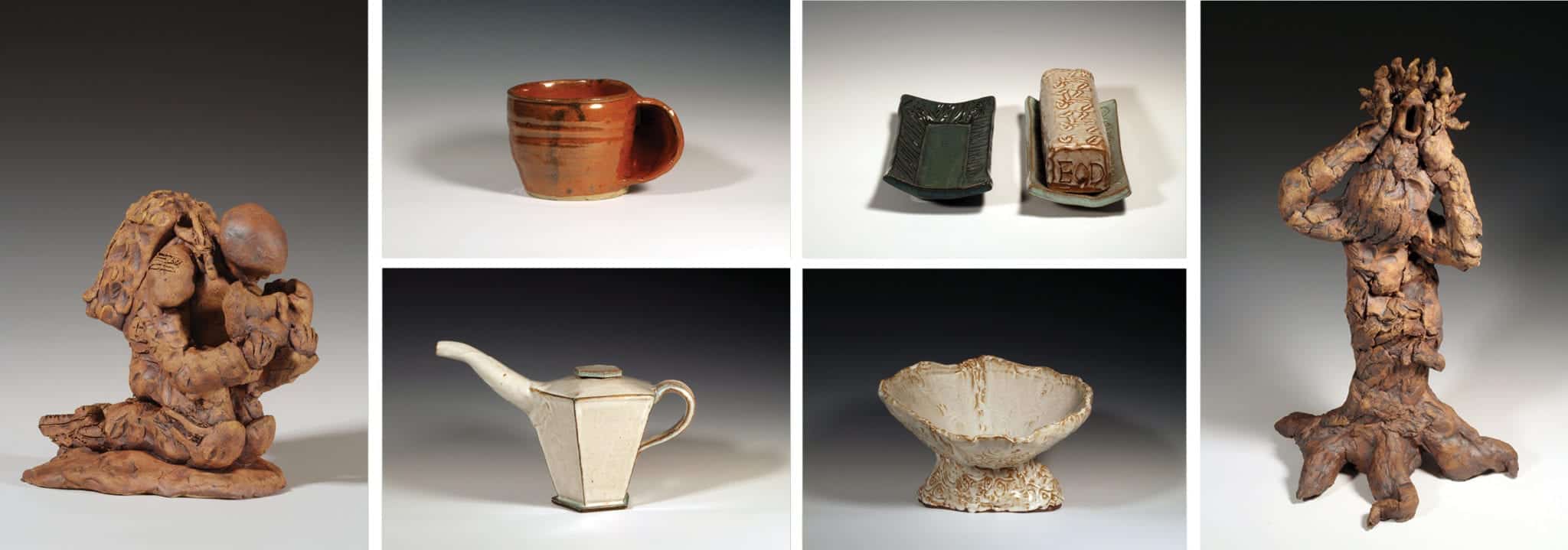
The ceramic art in the IMPART Ceramics Exhibit is by eight artists who are new to the Gallery. They’re all participants in the IMPART program — a collaboration between The Art League and the Wounded Warriors at Fort Belvoir to teach visual arts to Injured Military Personnel, and their escorts and caregivers, with an emphasis on personal enrichment, improving motor skills, relaxed social engagement, and expressive catharsis.
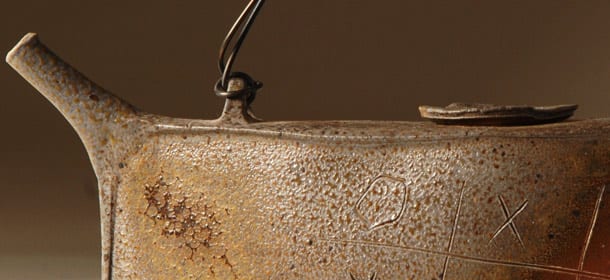
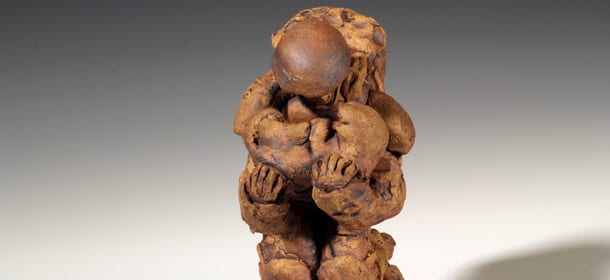
A sculpture and teapot by the IMPART artists.
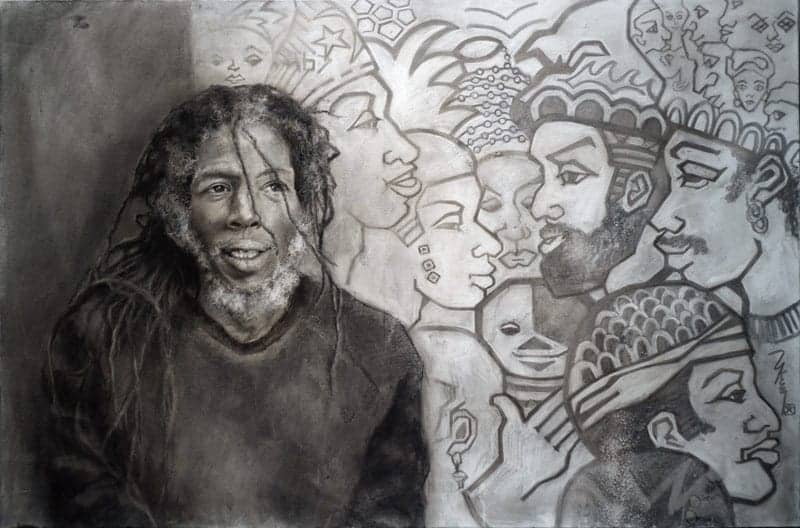
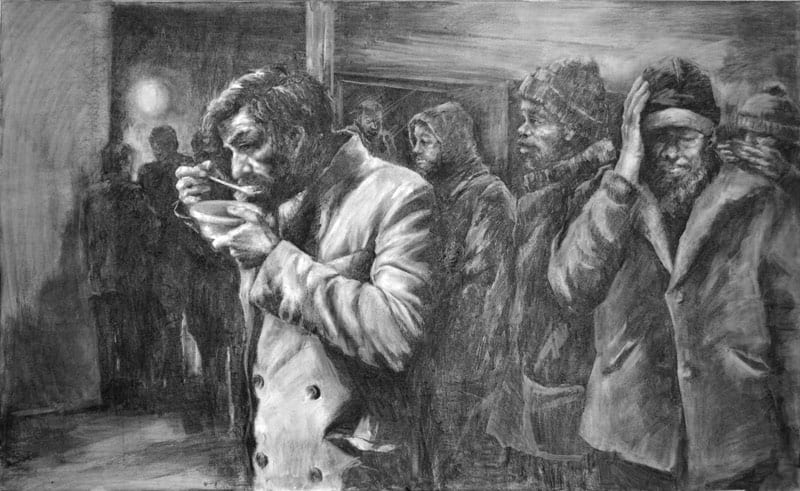
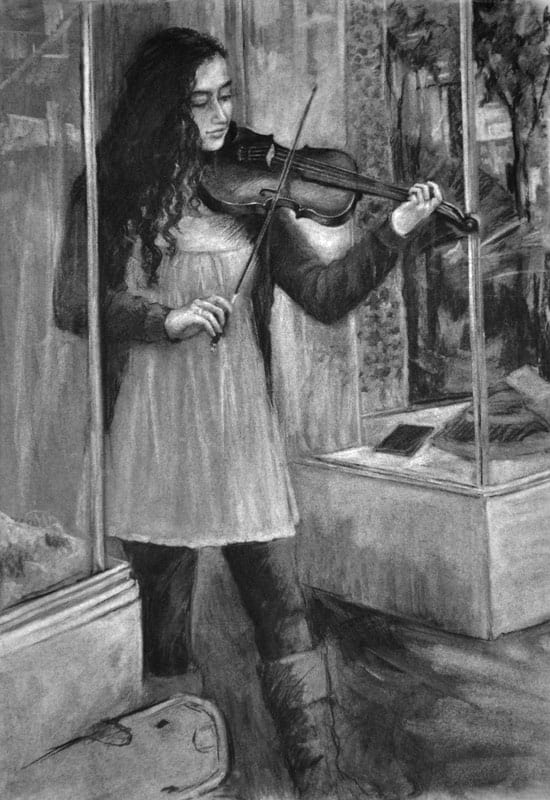
In this month’s solo exhibit, artist Thien-Kim Pham created portraits in the unusual medium of charcoal on canvas. The subjects are all people she’s met who live on the street, and Pham’s somber portraits call attention to their lives.
Portions of sales from the portraits will be donated to related charities, which are listed on the exhibit page.
Two portraits in charcoal by Thien-Kim Pham featured in “The Street Sense Project.”
See below for more images from the Gallery. We’ll have more on these exhibits in the days to come, and please join us next Thursday, December 12, for the opening reception!
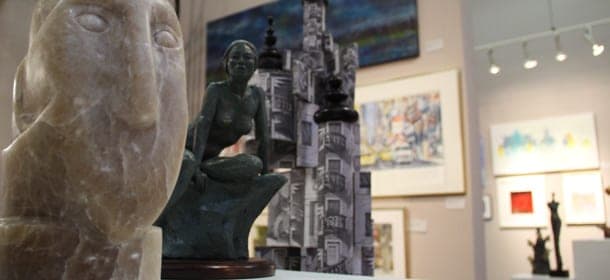
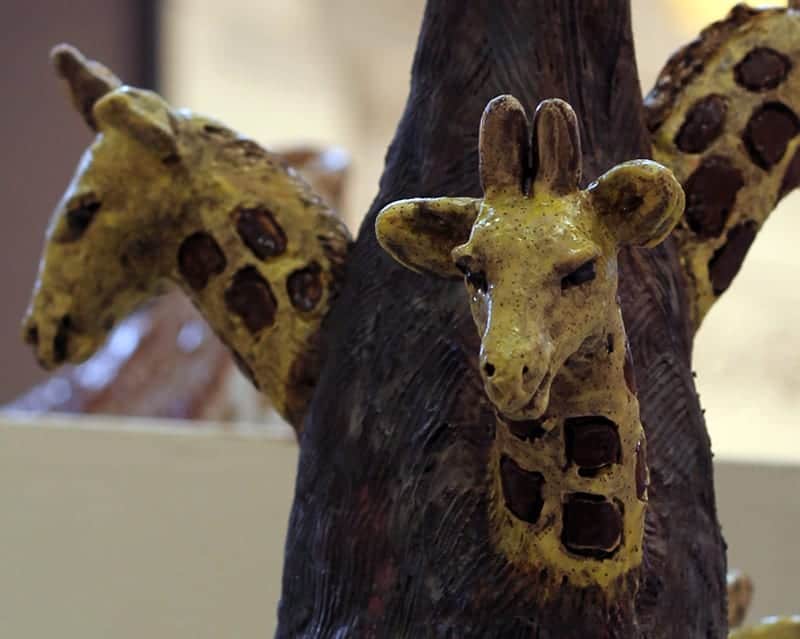
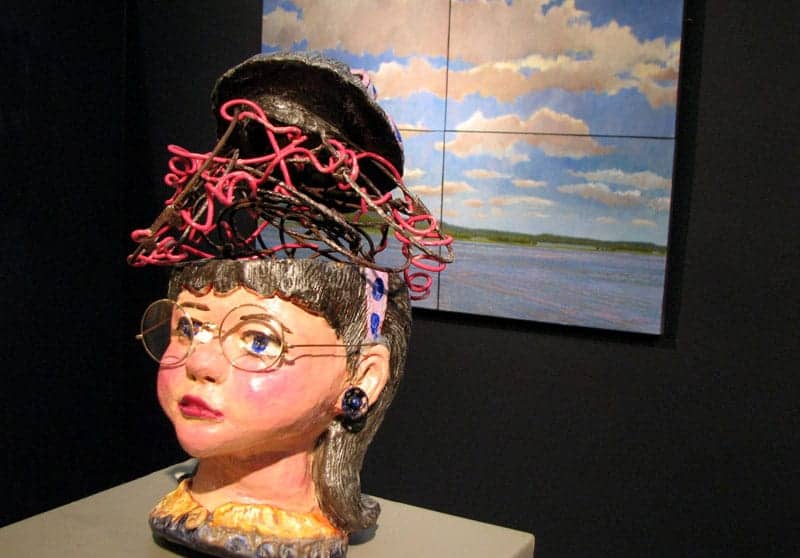
Artwork from the December group exhibit, juried by Marlene Harrison.The December All-Media exhibit includes lots of work by our 3-D artists.Antique Universe by Elena Tchernomazova.Christmas 1960, oil on canvas by Gail Vogels, winner of the Carol Zakaski Memorial Award for best in show.Sweet Vidalia, carved maple by Tatyana Schremko Schriempf, winner of the Bertha G. Harrison award.Giraffe Hotel by Trinka Roeckelein.More artwork from the IMPART Ceramics Exhibit (click for full size).From “The Street Sense Project.”
You can see work by several Art League ceramics instructors in two invitational exhibits this Winter.
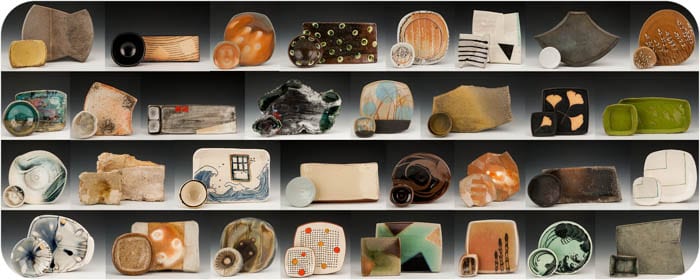
For “Sushi & Me,” on view now at Akar Design in Iowa City, Iowa, 32 artists created five sushi sets each. You don’t need to make it out to Iowa, though — you can visit the exhibit website to see work by Linda Christianson, Blair Meerfeld, and Stacy Snyder, all instructors here at The Art League.
Blair Meerfeld’s work is also in the upcoming “Fif-TEA” teapot exhibit at the Craft Alliance in St. Louis, celebrating the organization’s 50th anniversary. That exhibit opens January 10.
Last chance! Art in City Hall Deadline: December 6. The Art League and the City of Alexandria, in conjunction with the Mayor’s initiative to promote the arts citywide in Alexandria, continue to support Art In City Hall. This juried exhibit enhances the environment of Alexandria’s City Hall and promotes the talents of local artists. The exhibit will be juried by an outside, independent expert in the arts, and will hang for eight months on the second floor of the Alexandria City Hall. Members of The Art League, Del Ray Artisans, the Torpedo Factory Artists’ Association, Empowered Women International, and Convergence Art Center are invited to participate. This fall, the exhibit theme is “Intersections of Art and History.” More about the exhibit →
Last chance! Northern Virginia Fine Arts Festival
Deadline: December 7. The Northern Virginia Fine Arts Festival (May 2014) is produced by the Greater Reston Arts Center and is a competitive, juried, outdoor event showcasing the best contemporary fine art and craft from around the country. The Festival is held in the streets of Reston Town Center, an upscale, elegant, shopping destination. More about the festival →
Ceramic World Cup
Deadline: December 13 (early deadline December 6). The 2014 Ceramic World Cup Tournament is a national, juried exhibition. Thirty-two artists will be chosen to display three cups at HYART Gallery in Madison, WI. The exhibition will be promoted before and during the 47th annual NCECA (National Council on Education for the Ceramic Arts) conference in Milwaukee, WI, which will take place from March 19-22, 2014. More about the competition →
Benefit show at Arlington Arts Gallery
Deadline: December 14. The Art of Giving: This is a benefit show, where the proceeds from the gallery’s commission sales will go to help the Toys For Tots organization. If an artist wishes to include more of their sales to the benefit, please indicate so on your entry. All artists are invited to enter original artworks in any media for exhibition which will be on view at the Arlington Arts Gallery from December 15 through December 31, 2013. More about the exhibit →
Jacksonville Jazz Festival poster competition
Deadline: January 6, 2014. Would you like to be the artist for the 2014 Jacksonville Jazz Festival Poster? Mail or e-mail a photo of your entry today for your chance to win recognition as the official 2014 Jacksonville Jazz Festival poster artist, a $1,500 cash prize, a complementary booth at the festival and other festival perks. More about the competition →
Hamiltonian Fellowship
Deadline: March 1, 2014. The 7th annual open call to the Hamiltonian Artists Fellowship is now open. Advancing the professional development of emerging visual artists, the two-year program serves as a critical steppingstone for the next generation of contemporary artists in Washington, DC. More about the fellowship →
This Thanksgiving, we have thousands of things to be thankful for here at The Art League — each hour of time volunteered; each dollar donated; each artwork, frame, camera, and cupcake you’ve given.
Without your amazing, continued support, it simply wouldn’t be possible for The Art League to meet its mission. Your time, money, and gifts mean that we can nurture the artist through our school, gallery, and programs like SOHO, IMPART, and the Geri Gordon Scholarship fund.
From everyone at The Art League and everyone in the community we serve, thank you, and happy Thanksgiving!
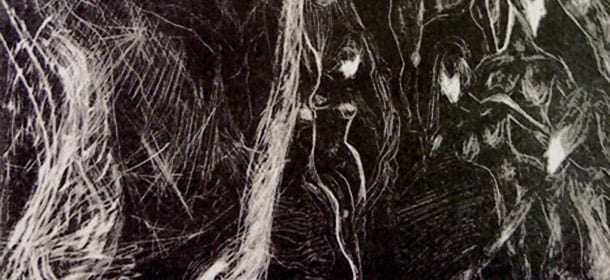
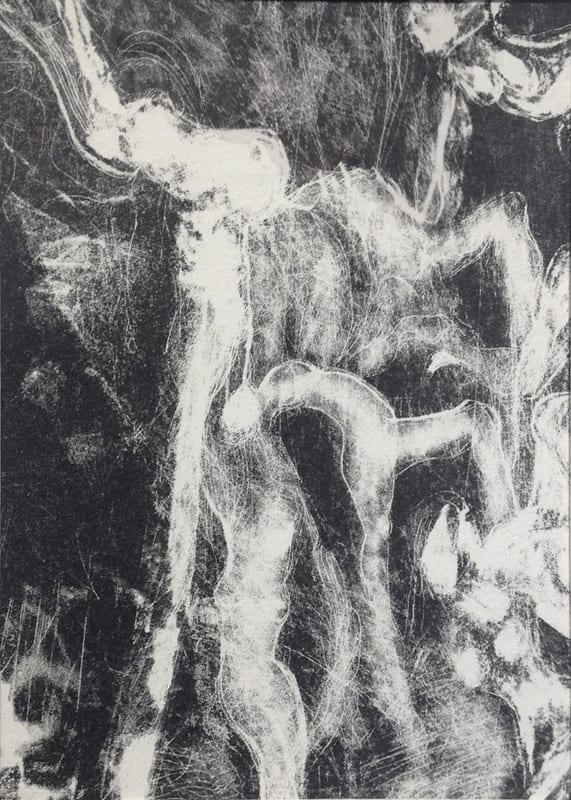
Abstraction of Woman’s Gesture, lithograph by Wijati Soemantoro, was awarded the Eleanor Boudreau Jordan Award for Best in Show.
Gretchen Schemerhorn, November’s juror and a printmaker herself, recognized the lithograph pictured above for best-in-show honors in “Small Works.” Abstraction of Woman’s Gesture, like many of the small works, is simple and minimal, but what made it stand out, Schemerhorn said, was the attractive visual texture and the skill required to create the range of lights and darks.
The artist, Wijati Soemantoro, was an orthodontist in Indonesia before moving to the United States to work full-time as an artist. Earlier this fall, she was selected as one of nine artists who will have solo shows in 2015! Read on for more about the appeal of lithography, the Picasso series that inspired Abstraction, and the idea behind Wijati’s 2015 “Ring of Fire” exhibit.
You work in several different media — what is appealing to you about lithography?
Wijati Soemantoro: I remember how I felt when I had the opportunity to draw on 200-year-old Bavarian limestone. This limestone is considered classic, limited, ancient, heavy and hard to handle but it can give the soft and beautiful images with a greater tone range. At that time when I touched the limestone, I felt the memories of events of the artists who worked with this material before. It brings me to an unfamiliar past while I am living in the present. It was an experience of mixed feelings that I have been looking for. I observed that lithographic process contains 5 different elements of nature: water, oil, metal, stone, and wood/paper. It also contains repetitive actions such as press, push and pull; all those actions and elements represented the vibration that I felt while gathering information about the subject of my drawing. The technique of lithographic processing is very tedious and versatile, but all the hard work and hours spent was well worth it because it satisfies my inner need.
Why was this particular piece a lithograph as opposed to, say, a painting?
In my perspective, both medium are very challenging but also appealing. I made some pieces of art work on a limestone on the theme Abstraction of Woman’s Gesture. This limestone would take my vibration and reflect it, which satisfies my inner need. It gives a more delicate and softer result. I could feel micro vibrations, movements and sensations that were imprinted on the paper after transferring the original lines and images from the stone. Every line represents its own movement, meaning and function. On the other hand, a painting could give me more freedom of expression because it is unlimited in many ways such as color and size. The results of a lithograph and a painting are beautiful to look at.
What’s your creative process like, from an idea to a finished piece?
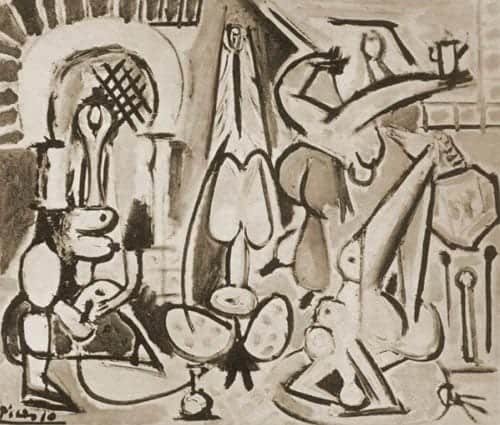
Abstractions of Woman’s Gesture is a series of artworks, inspired by Picasso’s Women of Algiers. I visited the Smithsonian Museum of Art and directly observed some of the original but different themes of Picasso lithographs. Instead of studying them, I was able to touch, smell and feel what was known to be the oldest form of the drawing on arches and newsprint papers. Afterwards, I utilized my mind and my heart and started drawing from my memory to portray movements and sensations originating from Picasso’s Women of Algiers. I usually draw directly into the limestone without a model or any object in front of me. After all the contents of the drawing are finished, I complete the process by using a standard lithography technique.
The stages of Abstraction of Woman’s Gesture in progress.From Pablo Picasso’s 1954–55 series Les femmes d’Alger dans leur appartement (d’après Delacroix)
Many of your pieces are more representational portraits and figures. What is different about the process for a more abstract piece like this one?
I approach art in two different ways: with my mind and my heart. The final products of my mind are usually more representational portraits and figures. On the other hand, when I utilize more of my heart, it evokes an emotional response. It creates a vibrating sensation through my body. My arm begins to levitate very slowly. The rhythm and motion of my body merges with the art material. This causes my hands to a draw repetitious, fluid, spontaneous, emotive series of forms and shapes. Every curving line has its own color and movement. Together they intertwine to create new abstract forms.
What was your goal with Abstraction of Woman’s Gesture?
To understand the message behind the artist’s work such as Picasso’s Women of Algiers. Abstraction of Woman’s Gesture is not about a woman literally, but about movement, liberation, peace and freedom. I tried to draw without imitating but personalizing what I have learned and inspired from other artists. I am working on both the mind and the heart perspectives. In other words, drawing what I see and what I feel at the same time. To master this technique is my goal and it is an ongoing lifelong learning process.
Three of the prints from Wijati Soemantoro’s “Ring of Fire” series, her response to her experiences with natural disaster, coming to The Art League Gallery in September 2015.
How does your life and arts education in Indonesia influence your work?
I was trained as an orthodontist in Indonesia. I have worked in the dental field for almost twenty-five years. I worked for a free clinic for the less privileged in Ubud, Bali (a small village well known for its culture in dance, music and arts). My artistic ability was a result of living among artists in this village and it continued to grow until I retired from dentistry. Then I started a new life in the US as a full time artist and graduated from Virginia Commonwealth University, majoring in painting and printmaking.
Are there any artists in particular who have influenced you?
Abdul Aziz, Realist Artist, Ubud, Bali, Indonesia
Robert Liberace, Realist Artist, Instructor, The Art League, Alexandria, Virginia
Barbara Tisserat, Associate Professor, Printmaking Department, Virginia Commonwealth University
What are you working on now?
I have been working on a large, non-representational oil painting (6 by 4 feet) inspired by the Gaza Strip, an endless battle between Israel and Palestine. It is still an ongoing process. Also, I am preparing for my lithography solo show at The Art League, “The Ring of Fire,” in September 2015. The Ring of Fire is a series of artwork of my experience towards natural disaster. This is a very personal expression of my empathy and sympathy towards the victims of Mother Nature, especially earthquakes and volcano eruption, which are quite familiar for me as an Indonesian who grew up near the Ring of Fire. I witnessed the explosion of Mount Galunggung in West Java a long time ago. I am planning to explore the dramatic effects of the aftermath and how the victims and people within the vicinity react towards the disaster. To express this idea, it is important to understand Mother Nature and also the victims who are affected.
Your holiday shopping can benefit The Art League, this Saturday through Tuesday
King Street, Winter Evening, watercolor, by Art League instructor Peter Ulrich.
Everyone knows you can’t beat the shopping in Old Town Alexandria. But what if there was a way to make it better? Say, if you could designate your local purchase to benefit The Art League?
[button-blue url=”https://www.theartleague.org/blog/wp-content/uploads/2013/11/Shop-Local-The-Art-League-Inc.pdf” target=”_self” position=”left”]Download the Give Local form[/button-blue]From Saturday, November 30 to Tuesday, December 3, if you shop at any of the Alexandria small businesses below, part of your purchase can go to support The Art League! Just download the Give Local form here, print it out, and hand it over when you make your purchase (we’ve already filled in The Art League’s name for you, but any nonprofit is eligible.) If you don’t have a printer, we’ll have some copies on hand in the Gallery this weekend. Shop Local Week 2013 is hosted by Think Local First DC, the Old Town Boutique District and Causetown.
As an added bonus: you can park for free on Friday, November 29 at all Alexandria parking meters and in all city-owned parking lots. Lots of Alexandria shops are offering Black Friday deals, which you can find at visitalexandriava.com.
So this weekend, come to Old Town and Del Ray, support local businesses, and support The Art League’s outreach programs to boot! A list of participating Alexandria businesses is below, but new shops can join anytime, so check here for the full and up-to-date list.
Thank you to the following local businesses who are participating (as of Nov. 26):
fibre space (1219 King Street, Alexandria, VA 22314)
Give Back Amount: 20% of your purchase
Olio Tasting Room (1223 King St, Alexandria, VA 22314)
Give Back Amount: 15% of your purchase
Pink & Brown (1212 King St, Alexandria, VA 22314)
Give Back Amount: 15% of your purchase
Red Barn Mercantile (1117 King St, Alexandria, VA 22314)
Give Back Amount: 20% of your purchase
The Potomac Bead Company (1104 King Street, Alexandria, VA 22314)
Give Back Amount: 15% of your purchase
Today’s Cargo (1102 King St, Alexandria, VA 22314)
Give Back Amount: 15% of your purchase
Hooray For Books! (1555 King St, Alexandria, VA 22314)
Give Back Amount: 15% of your purchase
Bishop Boutique (815B King St, Alexandria, VA 22314)
Give Back Amount: 10% of your purchase
Stuart Nordin Home & Design (101 S Saint Asaph St, Alexandria, VA 22314)
Give Back Amount: 15% of your purchase
Mint Condition (103 S. Saint Asaph St, Alexandria, VA 22314)
Give Back Amount: 10% of your purchase
529 Kids Consign (122A S Royal St, Alexandria, VA 22314)
Give Back Amount: 10% of your purchase
Gossypia (325 Cameron St, Alexandria, VA 22314)
Give Back Amount: 15% of your purchase (designated cause: Lungevity Foundation)
La Cuisine (323 Cameron St, Alexandria, VA 22314)
Give Back Amount: 15% of your purchase
Hysteria (125 S Fairfax St, Alexandria, VA 22314)
Give Back Amount: 15% of your purchase
The Shoe Hive (127 S Fairfax St, Alexandria, VA 22314)
Give Back Amount: 20% of your purchase
She’s Unique (205 King St, Alexandria, VA 22314)
Give Back Amount: 10% of your purchase
The titular Inn at James City is a subject the artist had been thinking about for years before executing it in the print above, a relief engraving that was accepted into “Small Works” and recognized with the third-place award. The juror, Gretchen Schermerhorn, praised the artist’s use of a subtractive technique to create a range of dark and light values.
We talked to the artist, M. Alexander Gray (Facebook page/Etsy shop) about his printmaking process and influences.
Why are you a printmaker? Why engraving in particular?
M. Alexander Gray: I can trace my interest in printmaking to a college instructor who said my pen drawings reminded him of Albrecht Durer’s woodcuts. Over the years since then I have come to appreciate printmaking as an extension of — and improvement upon — drawing. Actually, this piece isn’t a true engraving. It is a relief engraving, which is the same as a wood engraving but executed on a synthetic surface (Resingrave) instead of end-grain hardwood. After doing a lot of reading about woodcuts in early college, I discovered wood engraving, which is a similar technique but capable of a greater level of detail than a woodcut. Wood engravings also tend to be quite small, which is of course the theme of this show.
Can you briefly explain what the process is to make a print like this?
For me, drawing is fundamental to the printmaking process, so I always begin with that. With some of my other relief prints, the carving process is basically engraving/carving away every part of the block’s surface that isn’t part of the drawing. On this piece, however, I tried to “translate” the pen and ink drawing into the language of wood engraving — that is, expressing value by engraving lines and dots in varying patterns. Wood engravers of the nineteenth century were amazingly good at this, and I am humbly imitating their technique.
Inn at James City in progress: the drawing, top, and engraving the Resingrave plate.
What’s your creative process, from an idea to a finished piece?
I see something that inspires me, usually a place, building, or landmark, and I go and take photos of it. Sometimes the places I choose are drawn from my past, other times I discover neat sites from research on the Internet. Then I’ll make a drawing, directly on the surface that I will be working on, be it copper or wood. The engraving can be done by hand with a tool called a burin, but in this case I used tiny rotary drill bits to work the surface. Once the engraving process has reached a certain point, I will take a proof of the block and use that as I guide to further engrave the piece until I am content to call it finished. Then I will print an edition of the piece.
Are there any differences between wood engraving and a woodcut other than scale?
Besides scale, wood engravings allow more detail and freedom of design because they are executed on the end-grain of wood, which means you can engrave freely in any direction. Woodcuts are done on side-grain blocks, and if you cut across the wood grain, the surface will splinter. For woodcuts, one uses tools like knives and gouges whereas with wood engravings, you use burins and gravers of various types as you would if you were engraving copper.
What and where is the Inn at James City? What was your goal with this piece?
The Inn at James City is a deserted building that I have noticed on my frequent drives between Alexandria and Charlottesville. It is a very noticeable structure beside Route 29 because of its impressive size and its obviously historic construction (from the nineteenth century if not earlier). I had often thought that it would make a good subject for a print. About a month after I visited it to take pictures they threw up an ugly chain link fence around the property, so my timing was opportune.
My goal was to further explore the technique of wood engraving as well as create a piece I had contemplated for several years but never actually executed.
What was your first experience with art as a child?
I don’t recall my very first experience with art but I loved to draw as a kid. As a child I was very attracted to illustrated books and photos in magazines. I had an art teacher in first grade who really made an impression on me as she shared paintings by Munch and Rousseau with our class.
Are there any artists in particular who have influenced you?
Many … Thomas Bewick, Albrecht Durer and all of his northern Renaissance contemporaries, Andrea Mantegna (his engravings) and Piranesi, just to name a few. In terms of more recent artists, there was a 20th century American printmaker named Asa Cheffetz who did lovely landscapes of the mountains of New England.
What are you working on now?
Right now I am just starting a series of prints based on the aqueducts of the C&O Canal. One piece is nearly completed, and I have made a couple trips to western Maryland to take references photos.
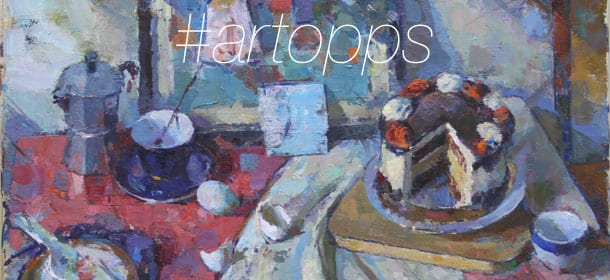
See below for upcoming exhibits, contests, and everything you can enter or apply for. You can click the banner above to view recent opportunities posts. This week’s banner: detail from a painting by instructor Marsha Staiger.
Good luck!
Art in the Open
Deadline: December 15. Professional artists working in all media are invited to participate in Art in the Open 2014 (AiO). From Friday, May 16 through Sunday, May 19, artists will use Philadelphia’s Schuylkill River Banks as their studio space, creating art “outside, on- site.” More on Art in the Open →
Exhibit proposals: Bethesda
Deadline: ongoing. River Road Unitarian Universalist Congregation (RRUUC) in Bethesda, Maryland invites proposals for exhibits to be displayed in the gallery of its Fellowship Hall. The gallery is 42 by 43 feet, with one full wall of windows. Two walls are available for hanging art with approximately 60 feet of wall space. Exhibits are about six weeks in duration. Proposals are welcome year round from individuals or groups, with rolling acceptances. There is no entry fee. RRUUC charges a commission of 20% on work sold. More on exhibiting at RRUUC →
In case you missed them, these announcements from recent posts have deadlines still to come:
Virginia artists
Deadline: December 1. Artists residing in the state of Virginia are invited to submit works for the Virginia Museum of Contemporary Art’s (MOCA) annual juried exhibition, “New Waves 2014.” More about the exhibit →
Art in City Hall Deadline: December 6. The Art League and the City of Alexandria, in conjunction with the Mayor’s initiative to promote the arts citywide in Alexandria, continue to support Art In City Hall. This juried exhibit enhances the environment of Alexandria’s City Hall and promotes the talents of local artists. The exhibit will be juried by an outside, independent expert in the arts, and will hang for eight months on the second floor of the Alexandria City Hall. Members of The Art League, Del Ray Artisans, the Torpedo Factory Artists’ Association, Empowered Women International, and Convergence Art Center are invited to participate. This fall, the exhibit theme is “Intersections of Art and History.” More about the exhibit here →
Bethesda Fine Arts Festival Deadline: December 6. The Bethesda Fine Arts Festival (May 10 & 11, 2014) features 130 booth spaces. The Bethesda Arts & Entertainment District advisory committee will select the artists. All original fine art and fine craft is eligible to apply. More about the festival →
Myths & Legends
Deadline: December 6. This exhibit at the Annmarie Sculpture Garden & Arts Center in Solomons, Maryland celebrates works of art that bring to life fantastical myths, legends, fables, folktales, fairy tales, and the like. More about the exhibit (PDF) →
Northern Virginia Fine Arts Festival
Deadline: December 7. The Northern Virginia Fine Arts Festival (May 2014) is produced by the Greater Reston Arts Center and is a competitive, juried, outdoor event showcasing the best contemporary fine art and craft from around the country. The Festival is held in the streets of Reston Town Center, an upscale, elegant, shopping destination. More about the festival →
Artists in Action
Deadline: December 13. Annmarie Sculpture Garden & Arts Center in Solomons, Maryland seeks artists working in any media to submit proposals to set up a working studio space in the Main Gallery for 1-2 week periods. More about the call (PDF) →
ArtFields
Deadline: December 13. Submissions are open for ArtFields, an Artfest Competition and Celebration to be held in the historic community of Lake City, South Carolina. Emerging and professional artists can submit one piece of 2-D (no larger than 72″ x 72″) or 3-D artwork. Selected artists will be invited to exhibit their work in one of the historic downtown Lake City venues, from a former mercantile to a barbershop for ten days. Art competition winners will be determined by popular choice and juried panel votes. Voters will have to be present in Lake City, SC to cast their votes during ArtFields. Cash prizes totaling $100,000 will be awarded to winning artists. More about ArtFields →




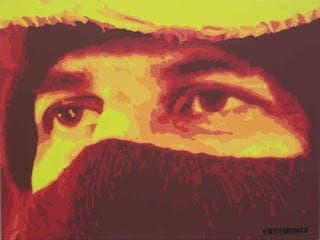

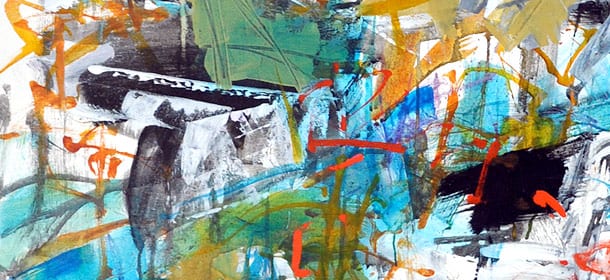
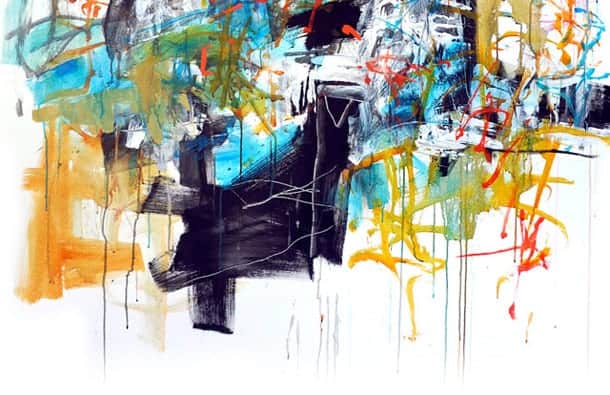
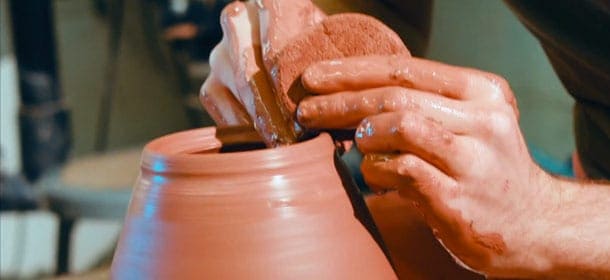










 For a special gift — one that’s literally one-of-a-kind — you can’t really beat art, whether it’s a new class or workshop, or an original piece to hang on the wall. To show the art-lover in your life that you care, here are some holiday gift ideas from The Art League: