With Summer registration starting May 11, you might be tempted to think it’s too late to join Spring classes. Au contraire!
There are no fewer than 16 classes starting in May, including lots of fiber arts and jewelry courses. So look below for the list, and as always, contact the School office if you have any questions (or if you want to join a class that’s already in session). The full catalog, as always, is here.
Deadline: July 31. The Arts Club of Washington in Northwest DC continues its support for the visual arts with the Call for Entries for the 2016–2017 gallery season. Exhibitions are scheduled monthly from September 2016 through May 2017. Read the call for entries
Mattawoman Creek Art Center
Deadline: August 15. The Mattawoman Creek Art Center, located at Smallwood State Park in Charles County, Maryland, is seeking artists of all media to exhibit their art in individual shows. The Mattawoman Creek Gallery is spacious, light filled, and overlooks the Mattawoman Creek. More about this opportunity
Athenaeum call
Deadline: Ongoing. Artists who live or work in Virginia, Maryland, or the District of Columbia may submit a proposal for a solo or group show at the Athenaeum. Read the call for artists
King Street business
Deadline: None. Sonoma Cellar, a new wine-tasting room opening on King Street, is seeking artists to display their artwork on an 8- to 12-week rotating basis in the second floor bistro. Sonoma Cellar is looking for traditional and contemporary paintings, with the preferred genres of landscapes, animals, seascapes, abstracts, wine-inspired themes, sunrises or sunsets, California- or Virginia-inspired themes, and other possibilities will be considered. It will not take a fee or percentage of sales. Please contact [email protected] directly with images of the pieces you would like to be considered.
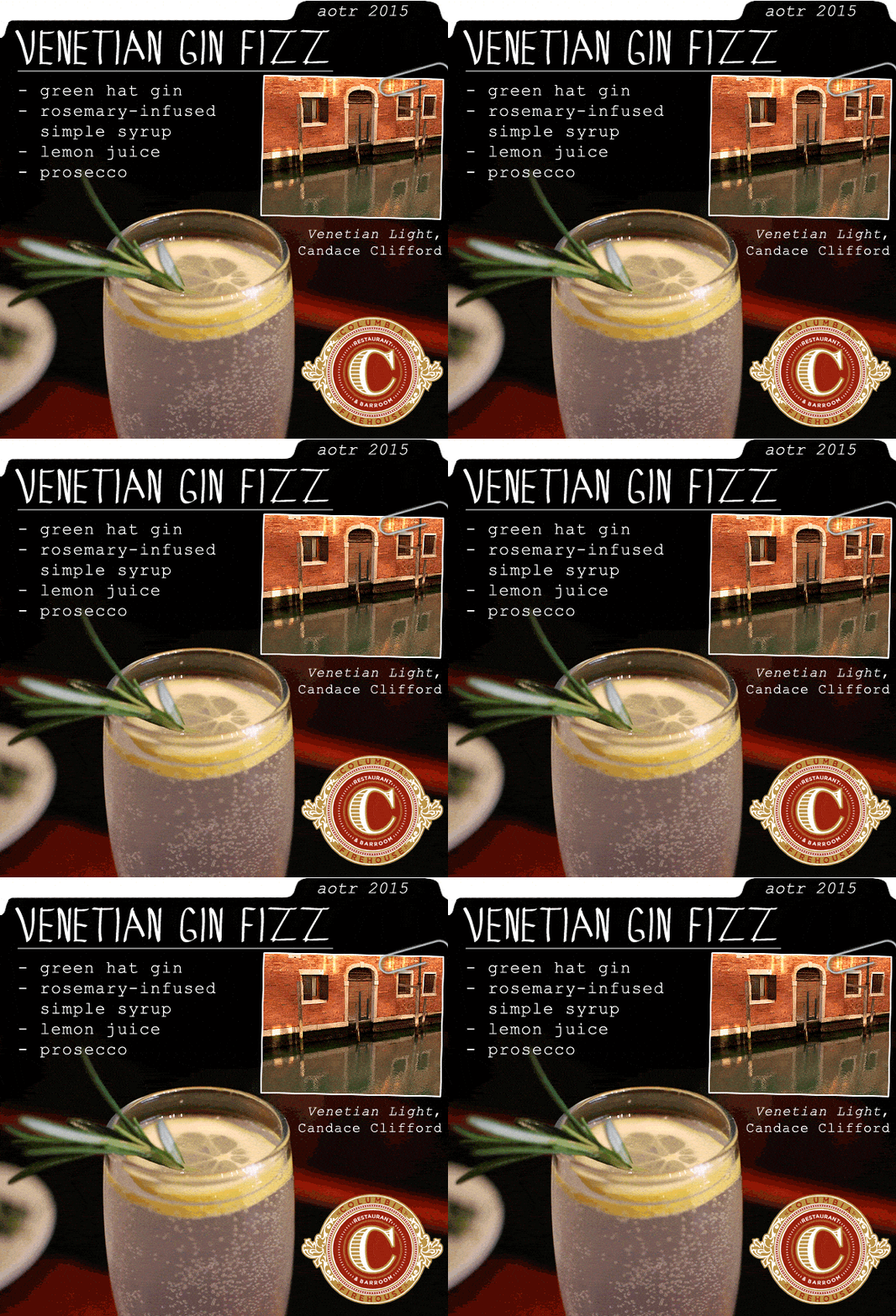
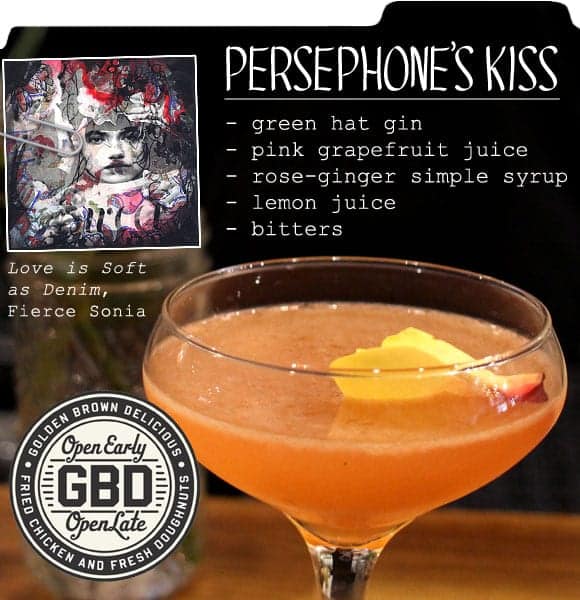
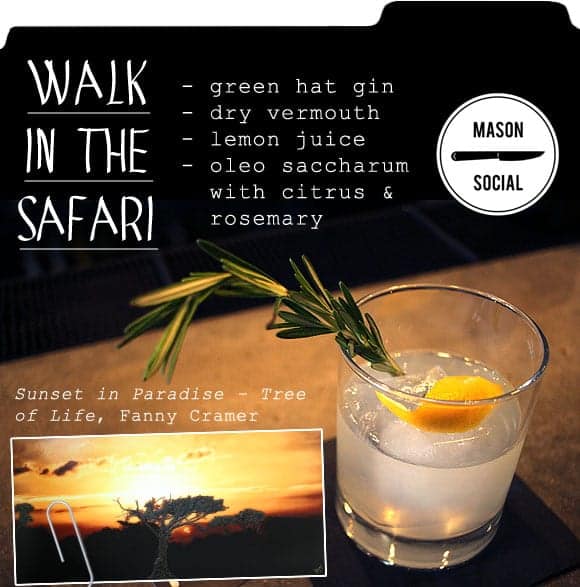
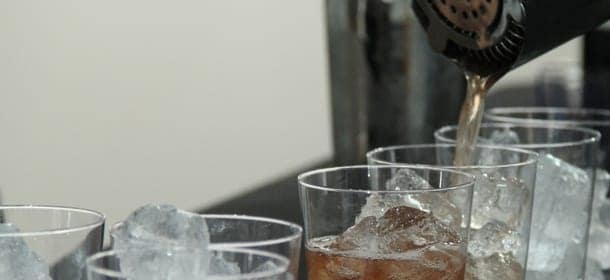
So far, we’ve posted three videos from the Art on the Rocks mixologists, previewing what they’re bringing to the party May 1. Stay tuned for three more drink reveals and all six appetizers, too!
(And if you’re looking for some music for your Friday, may we suggest DJ Ayes Cold? She’ll be performing at Art on the Rocks!)
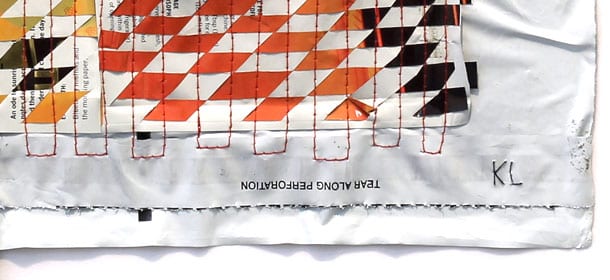
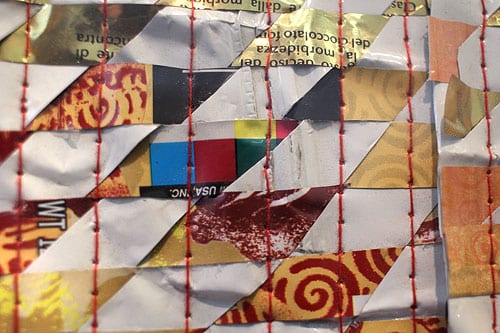
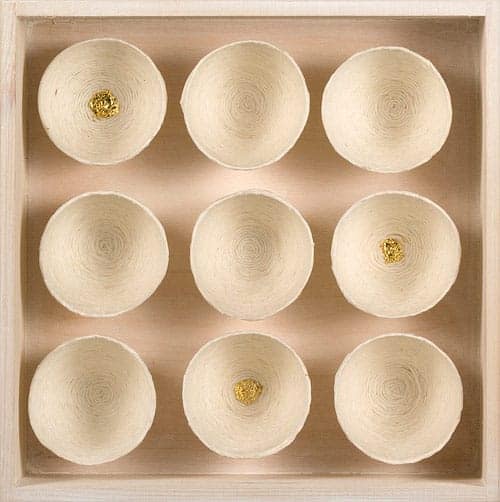
Where does Purpose come from? It’s made from re-used packaging materials. It comes from Haiti, where the creator invented a process to turn ubiquitous trash into fabric. And it also comes from the hands and mind of Kevin McCarthy, the artist recognized this month with the Anne Banks Collage Award in the “Bits & Pieces” exhibit. She explained the origins of Purpose in our Q&A:
How did Purpose come to be?
Kevin McCarthy: Purpose was made using a process that I developed to make fabric out of trash when I was living in Haiti. I was working with Haitian artisans in design and development, at the time. In Haiti, I was struck by all of the trash on the streets and in the environment. You could see layers of it in the ground that built up over the years, and people living all around it. I wondered if there was anything else that could be done with the “material” and realized that’s exactly what it was. I experimented and developed a process for repurposing this used packaging material into fabric that was functional, and also beautiful and conceptual. I made products with the fabric, and taught Haitian women how to weave and sew and we sold purses and other accessories to generate income for them. But I always thought the texture and the control the process offered was well suited for fiber art, and the process is completely unique. I have not seen it anywhere else.
What different processes and materials went into Purpose? Purpose is made of coffee, butter, and shipping packaging that is woven and stitched.
As a fiber artist, how do found materials fit into your artwork?
Fiber is really quite broad because it can include materials other than those typically used to make fabric. Fabric can be made of anything, really. Using found materials lets me stretch the definitions and purpose of the raw materials I use, and of fabric structures.
I was raised outside of the United States — in West and East Africa — for the first eighteen years of my life. These are places where fabric is both functional and decorative, and often communicates things about an individual’s social role. To me, my work is about identity and culture. How do we define ourselves? More specifically, as a white American woman who never lived in the U.S. until the age of eighteen, how do I define myself? By pushing the boundaries and application of unusual materials — found materials — in my art, I can explore my own identity and definition of self.
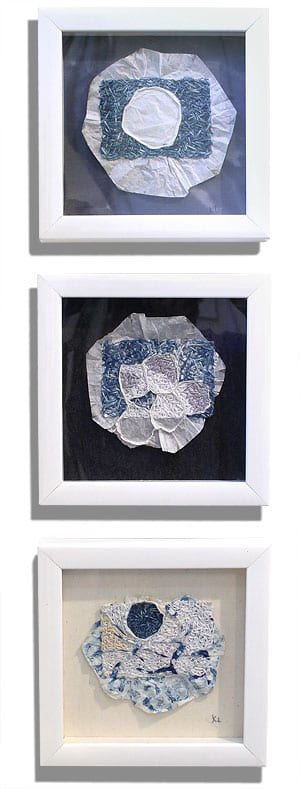
Ecumenical Blue, Triptych by Kevin McCarthy (from the April All-Media Exhibit)
The framing and presentation of my fiber art is also very much an intentional part of my artwork that I’m not sure people notice. I present my work in a box frame, splayed, behind glass, somewhat like an ancient textile fragment you might see in a museum. This presentation refers to the way we separate foreign cultures and practices from our own, what we are comfortable with. The way we preserve and examine its exoticness. It’s not necessarily bad or good; I just think it’s interesting because fabric is intimately tied to everyday life so it’s about people and how they live, what they believe, and what their values are.
When I go to exhibitions of textile and fiber artwork, I always want to touch the objects, even though I understand and appreciate the necessity to protect ancient fabric fragments and also more contemporary work. The glass and frame, in my work, is a physical representation of the conceptual barrier between the artwork, where it came from, what and whom it represents, and the viewer.
What is fiber art, and why are you a fiber artist?
Fiber art, to me, is more about process than anything else. It only partly has to do with materials used. Fiber art is different from textiles and fabric but rooted in textile-making techniques. A lot of it is sculptural and conceptual, like the work of Anni Albers (also a printmaker), Sheila Hicks, Yinka Shonibare, Nick Cave, and Olek. There are many artists who use fiber art elements, approaches and concepts in their work, like Magdalena Abakanovicz, Eva Hesse, Judy Chicago, and El Anatsui.
Fiber is everywhere, in every culture.
I am a fiber artist because I grew up around cultures in which textiles played a key role in communication. I also come from a family of artists, and my mom is a master knitter and a weaver, and she knows how to do almost any other fabric-related process you can imagine. She taught me to knit and weave when I was very young and she collected textiles and garments in the places we lived: Mali, Burkina Faso, and Kenya.
She always talked about how they were made and why they were important and beautiful. That’s where my understanding and appreciation for textiles came from and since I was raised in a family of artists, art-making was a natural form of communication and exploration for me. Also, my dad loves mechanics and is very good with his hands, and I think that really aligned in my mind with the skill that I appreciated in fiber work. Fiber art constantly entertains my mind and my hands. As I work, I think about personal and global social and cultural issues that I find both intellectually and physically intriguing and satisfying. Fiber is everywhere, in every culture. It communicates about and impacts people that are intertwined with our daily lives, whether we know it or not.
Purpose (detail) by Kevin McCarthy
Is this part of a series? If so, how has the series changed up to this point?
This is part of a series. The first pieces are very monochromatic or black and white. Over the last year, I’ve experimented more with the pattern, even composition, that I can create by controlling the way I weave the pieces together. I’ve also experimented a little with using the non-colored side of the trash, which is usually silver, to create different effects. I’ve experimented a little bit with the inclusion of different kinds of plastic packaging material within the structure and on the surface. I’d like to go much much larger and create something that maybe even suggests movement and flexibility.
What are you working on now?
I’ve been doing a lot of very small embroideries with found materials including old photographs and tea bags. I like working small because it’s very portable, which fits my desire to travel and live abroad, and intimate. I can get fine detail and intricate effects, but I think it requires more attention from the viewer and gets overlooked more often than the larger work that sort of overwhelms you. I will keep working small, but I will also keep trying to push the process I used to make Purpose to create something more overwhelming.
Deadline: May 29. The Aaron Siskind Foundation is offering a limited number of Individual Photographer’s Fellowship grants of up to $10,000 each, for artists working in photography and photo-based art. More about the fellowship
InLight Richmond
Deadline: May 31. 1708 Gallery in Richmond, VA invites proposals for InLight Richmond 2015, the annual one-night, public exhibition of light-based art and performance. Proposals should involve, be inspired by, investigate, or interpret themes of light, from light as medium to light as concept. InLight Richmond 2015 will take place on the grounds of the Virginia Museum of Fine Arts. Selected artists will receive a $300 stipend as well as opportunities to win $2000 in prizes. More about InLight
17–27 year old artists
Deadline: May 31. VisArts in Rockville, MD welcomes artists ages 17 – 27 in the DC, Maryland, Virginia, area to submit their application for review for our second Gen-Y exhibit in our Kaplan Gallery from June 23 – August 24 2015. Jurors: Peter Dubeau, Associate Dean for Continuing Studies at MICA, and Molly Nuzzo, Assistant Professor of Art at Montgomery College. More about the Gen-Y exhibit
Artist panel discussion
Friday, April 24. “Watch This! Revelations in Media Art”: Eve Sussman, David Behrman, and Camille Utterback discuss how, for each artist, the manipulation of technology has become an integral part of the artistic process. More about the panel
Coming Apart, pastel and acrylic, by Barbara Steinacker (click for a larger image)
The last time we interviewed Barbara Steinacker, it was about a landscape painting for “Flora & Fauna” in 2013.
Lately, this pastel artist has ventured into abstract compositions like the one above, which won the Carol Bruce Pastel Award this month. We asked her what it’s like for a landscape and portrait artist to try abstraction:
How would you describe Coming Apart? How did it come together? Barbara Steinacker: I was doing a series of abstract paintings using tertiary triad colors. Coming Apart came out of my attraction to the blue-green/magenta/yellow-orange combination. The design of the curved lines was inspired by a garden sculpture that I saw in Florida. So I started with that and let the rest just happen.
You typically paint landscapes and portraits, so did you find this piece a radical departure for you?
Yes. I’ve been doing abstract paintings for only about a year. I became interested in doing abstract work the year before last when I met and was inspired by the work of Debora Stewart, a well-known abstract pastel painter, at the International Association of Pastel Societies convention in Albuquerque. I’ll be taking a workshop with her in Maine this coming August.
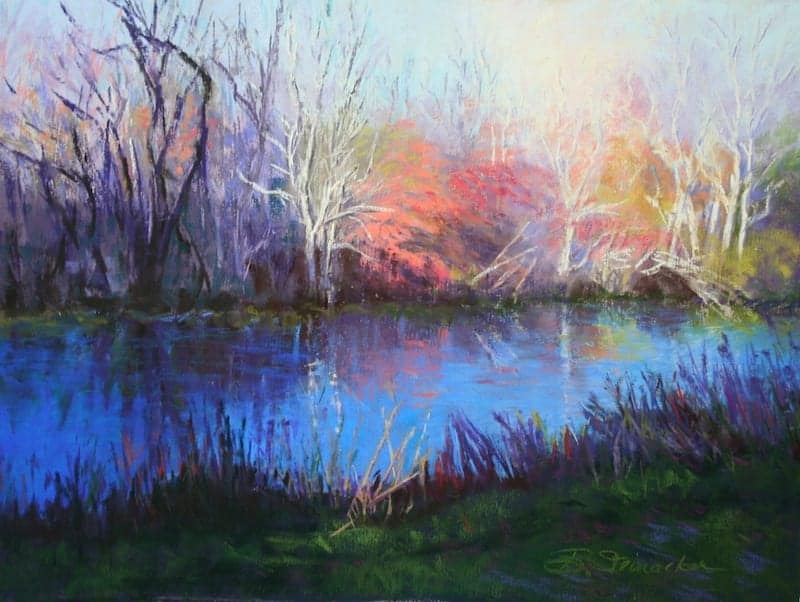
Bombay Hook NWR Autumn-5 by Barbara Steinacker
The biggest change in my process is that the information for the painting comes from within rather than from the land in front of me, as in plein air painting, or from a person modeling, or from a photo reference. The abstract painting may start from a particular image as in Coming Apart — that was inspired by a particular garden sculpture and desire to use certain colors — but then it “takes off” from there.
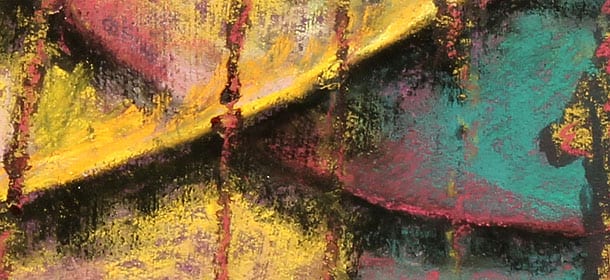
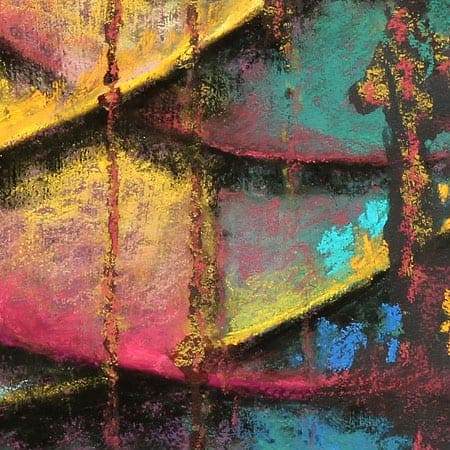
Coming Apart (detail) by Barbara Steinacker
Where does the acrylic come into this painting? Is that a new approach for you?
The acrylic enters the picture as an underpainting. And a watered-down version of acrylic paint produced the drips that I then painted over with pastel. I’ve also often used an underpainting in my landscape work consisting of acrylic paint mixed into a pumice gel medium to cover the surface before applying pastel. That combination provides texture as well as color under the pastel.
You know The Art League offers classes in painting, drawing, ceramics, fiber arts, sculpture, jewelry, and every other medium under the sun.
Did you know there’s also a class in crime-solving?
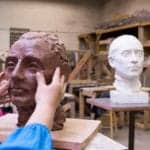
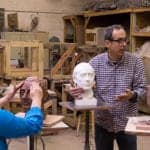
Forensic artist Joe Mullins teaches “Mystery Solved: Facial Reconstruction” evenings at The Art League. Students start with only a cast skull, and over seven weeks, they reconstruct a mystery face bit by bit.
How does it work?
Like lots of other classes at The Art League, achieving a proper likeness starts with anatomy. In this case, that means building up layers of muscle and tissue on top of the cast skull, like in the video above. Add in details using other information — age, sex, ancestry — and a picture begins to emerge.
Why do we do it?
Forensic facial reconstruction is useful for solving mysteries both ancient and modern. For his work as a Forensic Imaging Specialist at the National Center for Missing & Exploited Children, Mullins helps identify unknown crime victims. (See this New York Times article about how his New York workshop created faces to match to murder victims.) He’s also reconstructed a 2,500-year-old mummy’s face.
Deadline: April 27. “Borders & Boundaries” examines work inspired by the outsider’s perspective. The theme extends to geographical boundaries, personal boundaries, societal boundaries, and everything in between. This exhibition is open to national and international artists working in all media. Our juror is Clint Mansell, Director of Principle Gallery in Alexandria, VA. More about “Borders & Boundaries” →
Virginia watercolorists
Deadline: June 6. The Central Virginia Watercolor Guild 2015 Annual Show is scheduled to open on Friday, September 4 at the McGuffey Art Center in Charlottesville. This month long juried show is open to Virginia resident artists, 17 years or older. Each artist may submit two original paintings in watercolor or other water media for consideration. More about the watercolor show →
Digital fabrication residency
Deadline: June 15. Digital Fabrication Residency (Easton, MD) is a professional development program engaging artists with digital tools for project visualization and fabrication workflows for 3D printing, CNC routing, laser cutting, digital embroidery, textile printing, animation and other platforms. Residents learn software workflows and become knowledgeable in current applications of technology in the production of art. More about the residency →
New paintings 2016
Deadline: July 10. The University of Mary Washington Galleries is proud to host the tenth Mid-Atlantic New Painting biennial exhibition! The competition is open to artists 18 years of age and older, living in Delaware, the District of Columbia, Maryland, New Jersey, New York, Pennsylvania, Virginia, and West Virginia. Entries must have been completed within two years of the application deadline. More about the painting exhibit →
Re-runs: the announcements below have appeared here before, but it’s not too late to apply!
Strictly Painting 10
Deadline: April 17. From McLean Project for the Arts: All Mid-Atlantic artists (DC, VA, MD, PA, NJ, DE, WV) are invited to submit up to 4 jpegs of paintings or works related in some way to painting completed in the last two years and not previously exhibited at MPA. More about “Strictly Painting” →
Photography exhibit
Deadline: April 17. Candela Books + Gallery in Richmond, VA is holding its fourth annual invitational and juried exhibition. UnBound4! will be a summer group exhibition. Proceeds from a gala event will raise funds to purchase select works from the exhibition. Read the call to photographers →
Interactivity: Sight and Sound
Deadline: April 17. Sounds, music or voices seen as colors is referred to as synesthesia. Artists are invited to consider this concept and propose an exhibit of works that might connote or express it for an exhibit at Montgomery College. More about “Interactivity: Sight and Sound” →
Small Works on Paper
Deadline: April 20. Bloomsburg University of Pennsylvania invites all artists to participate in a juried exhibition of small works on paper in conjunction with The 25th Annual International Conference on Virginia Woolf. Works on paper (15″ x 11″ or smaller) in all traditional and experimental visual arts media, including photography, will be considered. More about the exhibit →
Academy Art Museum Craft Show
Deadline: April 20. The Academy Art Museum Craft Show in Easton, MD is an annual, indoor juried craft show featuring approximately 65 artists from across the United States. More about the show →
Out of Order at Maryland Art Place
Installation: April 21. For this annual fundraiser at Maryland Art Place, any artist is welcome to hang one original work of art on the first come, first served installation day — taking place on Tuesday, April 21, 2015 from 7:00 am to midnight. Sales are split 50/50 between the artist and MAP. More about More about Out of Order →
MIX: Adventured in Mixed Media
Receiving: April 26–27. For this exhibit at Del Ray Artisans in Alexandria, artists are invited to combine two or more mediums and shake up your imagination. Mixed media compositions can convey visuals that are quirky, abstract, political, environmental and social. Think: Paint, Graphite, Textiles, Jewelry, Found Objects, Collage, Sculpture, Shadowboxes, Altered Books and beyond. Del Ray Artisans and Artistic Artifacts have teamed up to create this collaborative juried exhibit. The juror is Rosalee Lamanna, a mixed media artist and 22-year owner of Beads Ltd in Alexandria, Virginia. More about the exhibit →
Tabletop ceramics
Deadline: May 1. The Art League presents its annual, international juried exhibit of ceramic works designed for food, drink, and the table. This year’s juror is Trevor Dunn. More about “Tabletop” →
MPAartfest
Deadline: May 1. McLean Project for the Arts’s MPAartfest is a one-day juried fine art and craft show and sale featuring the work of more than 40 local and regional visual artists. The festival is Sunday, October 4, 2015. More about the festival →
Art Uniting People
Receiving: May 1. This exhibit is open to anyone whose life has been affected by mental illness, substance use disorders, or intellectual disabilities. This includes those who have been diagnosed with one of these conditions, family members, friends and caregivers. More about the exhibit →
DC artists
Deadlines vary. The DC Commission on the Arts and Humanities offers several funding programs for individuals and nonprofit organizations located in the District of Columbia. More about FY16 grants →
Purchase for permanent collection
Deadline: May 3. Amazon Web Services seeks to purchase a wide range of original artwork in various media for their corporate office in Washington D.C. from artists who are either current students, alumni, or faculty of Virginia Commonwealth University School of the Arts (VCUarts) from all campuses or artists eighteen years and older who live, work, or have studios in the Metropolitan D.C. region. More about the project →
New deadline: May 15. The Smithfield (Virginia) Fall Festival of the Arts is a juried outdoor fine art show featuring accomplished travelling artists from throughout the Mid-Atlantic region. There will be live entertainment throughout the day on an adjacent stage. The show has openings for more than 80 artists in the first year, and room for expansion in the future. We welcome artists working in Ceramics, Drawing, Fiber/Leather, Glass, Jewelry, Metal, Painting, Photography, Wood, and other media. Prizes include $1,000 for Best in Show, and $200 prizes for first place in each category. More about the festival →
DC photography competition
Deadline: May 22. FotoDC is holding two spring competitions for photographers: Faces of DC 2015 and Places of DC 2015. Judges will select cash prizes and images to appear in online and offline exhibits.
Photo ’15
Deadline: July 1. You are invited to submit to Photo ’15, a national juried fine art photography exhibit at Multiple Exposures Gallery at the Torpedo Factory. The juror is Sarah Greenough, Senior Curator and Head of the Department of Photographs at the National Gallery of Art. More about the exhibit →
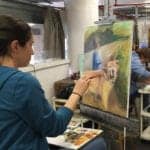
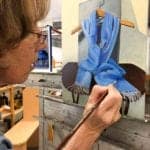
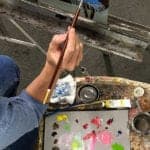
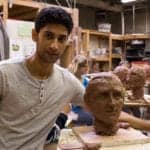
Spring classes just started on Monday, but there’s already so much happening! See below for some of what we did at The Art League this week, and click here to start a slideshow.
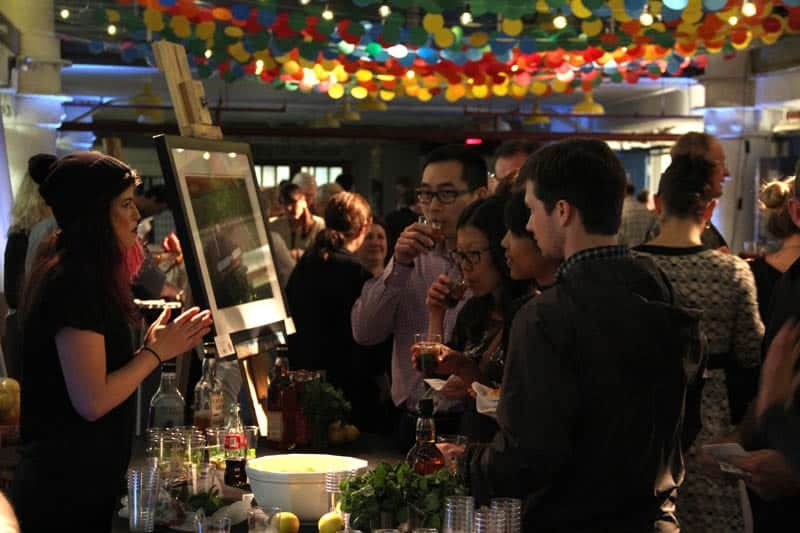
What: Six works of art paired with six new cocktails, six appetizers, and jams by DJ Ayes Cold Where: The Art League, 105 North Union Street, Alexandria, VA (Google Maps) When: Friday, May 1, 7:00–10:00 pm Tickets: $45 early bird; $55 after April 12. Get ’em here. Must be 21 years of age or older to attend with valid ID.
Ticket holders sample all of the delicious pairings and vote for their favorite at the event. A panel of experts, including representatives from Catoctin Creek Distillery, Green Hat Distillery and the Hour Shop, will crown the winner of the most creative cocktail, appetizer, and artwork pairing.
In the mood for something new and artistic to see?
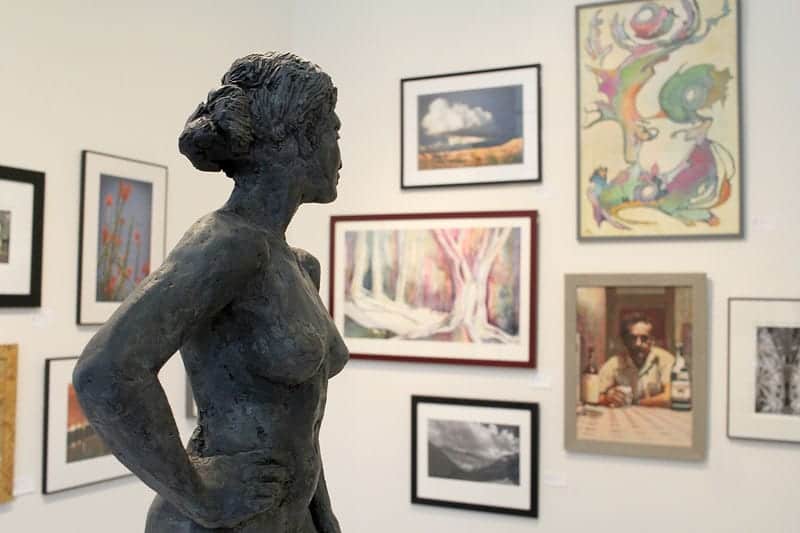
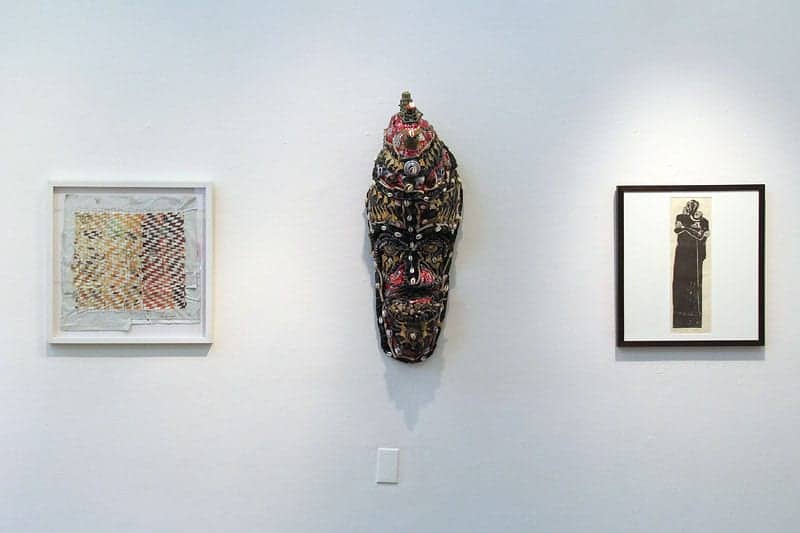
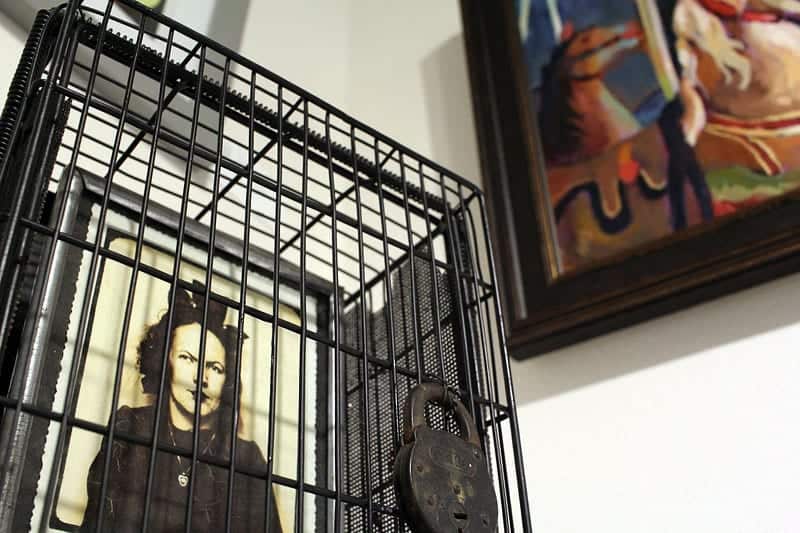
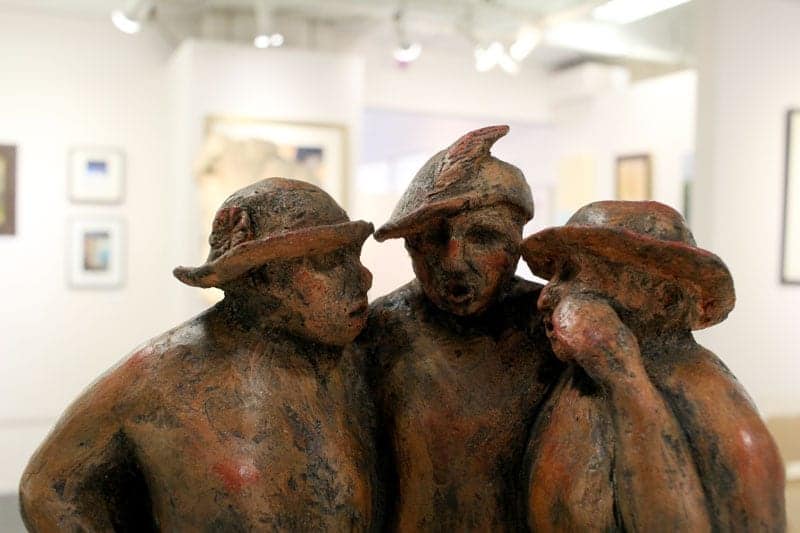
You’re in luck, because this month we have two group exhibits for you: Bits & Pieces, the found object exhibit juried by Millicent Young, and the April All-Media Exhibit, juried by Jayme McClellan. There’s an opening reception tonight, Thursday April 9, at 6:30 pm, and the exhibits are both open through May 4. Here’s some of what you can see:
Anthropos by Hal AdkinsThe award winners in “Bits and Pieces,” by (left to right) Kevin McCarthy, Noah Williams, and Viviane de Kosinsky.Black Widow by Doug SternGossip by Janet LeggDetail from Happy Together by Trupti VakhariaDetail from Silent Visitor by Brent EricksonDetail from Treat Tuesday by Dale Hoffmeyer
Deadlines vary. The DC Commission on the Arts and Humanities offers several funding programs for individuals and nonprofit organizations located in the District of Columbia. More about FY16 grants →
Purchase for permanent collection
Deadline: May 3. Amazon Web Services seeks to purchase a wide range of original artwork in various media for their corporate office in Washington D.C. from artists who are either current students, alumni, or faculty of Virginia Commonwealth University School of the Arts (VCUarts) from all campuses or artists eighteen years and older who live, work, or have studios in the Metropolitan D.C. region. More about the project →
Deadline: May 22. FotoDC is holding two spring competitions for photographers: Faces of DC 2015 and Places of DC 2015. Judges will select cash prizes and images to appear in online and offline exhibits.
Red Bull Art of Can
Deadline: June 15. Red Bull Art of Can is a nationwide creative competition. We invite designers, animators, sculptors, and artists of all disciplines to create 3D art, physical or digital, using a can of Red Bull as inspiration. More about the competition →
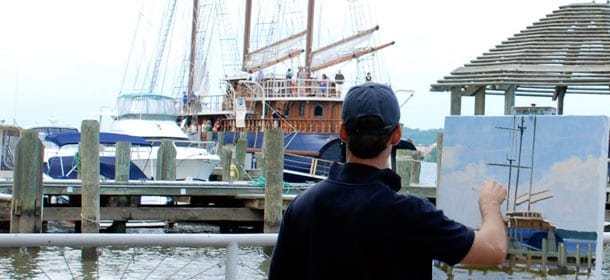
When the weather’s beautiful and the skies are blue, it doesn’t matter what you’re doing — reading, cooking, writing a blog post — you want to do it outside.
For painters, that’s called painting en plein air. It’s a French phrase that means, simply, “in the open air.” Why don’t we call it painting al fresco? Because the French got there first! (Specifically, the Impressionists were famous plein air aficionados, taking advantage of the first portable paint tubes.)
Painting outside isn’t just about enjoying the sun and the breeze, although that’s certainly a big part of the fun. It’s also a great way to paint from direct observation, whether that means a landscape, a cityscape, or even something like a portrait.
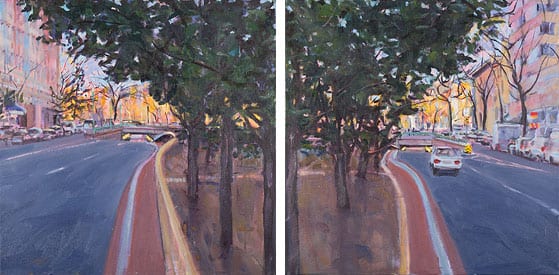
Median Trees #1 and #2 by Mike Francis.
So what do I need to get started?
“When I sit down to make a sketch from nature, the first thing I try to do is to forget that I have ever seen a picture.”
— celebrated plein air artist John Constable
Packing for a plein air painting session is like packing for a hike: travel light, be prepared, and you’ll be a happy painter!
Paints: Some oil painters use alkyd paints for their faster drying time. Color-wise, each of our instructors has their own recommended palette, but the lists for Mike Francis, Fred Markham, and Sara Linda Poly have these colors in common: Titanium White, Ivory Black, Alizarin Crimson, Quinacridone Red (a.k.a. Permanent Rose), Ultramarine Blue, and Cadmium Yellow Medium.
Palette: Something that won’t blow away! Glass, plexiglas, and wood are all recommended.
Easel: This will likely be your biggest new purchase. A French easel is larger, but heavier. A pochade box is more portable for longer trips and smaller paintings. Pochade boxes mount on top of tripod legs, which you might have to purchase separately. Sara Linda Poly recommends the Easyl, Open Box M, Sienna, and Sun Eden brands. Some models will have a hook to hang your solvent, and some have shelves for your other supplies. If they don’t, you may need to keep them on the ground.
Other: You’ll definitely miss sunscreen and/or a hat if you forget it. Depending on your location, a warm jacket, windbreaker, and bug spray might be necessary. Bring a water bottle and snacks to prolong your painting time! Finally, bring a trash bag for used rags so you can leave the landscape as pristine as you painted it.
What classes are available? (updated for 2017)
The Art League offers a few classes and workshops for plein air painting every year. Other classes sometimes take field trips outside, but these are geared toward plein air:
The idea is simple: we challenged six mixologists from six local restaurants to make a new cocktail. For inspiration, they’ll select a piece of art from our April exhibits, and they’re also bringing along an appetizer each that pairs with their cocktail and chosen artwork.
On Friday, May 1, you’re invited to try all six drinks, all six appetizers, and vote for the best and most creative pairing. Our competitors have gotten very creative in the past, and we’re excited to see what happens this year!
Tickets are $45 through April 12 and $55 after that, so buy early! Here are the competing restaurants:
One of the less familiar terms in The Art League School catalog is “surface design.”
What is that, anyway? We asked two artists who should know: Candace Edgerley and Julie Booth, who both teach surface design classes at The Art League.
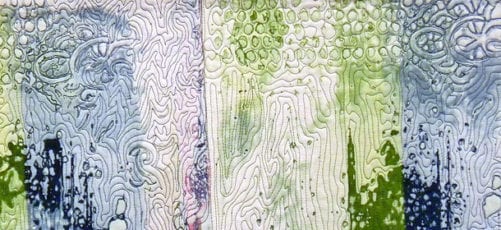
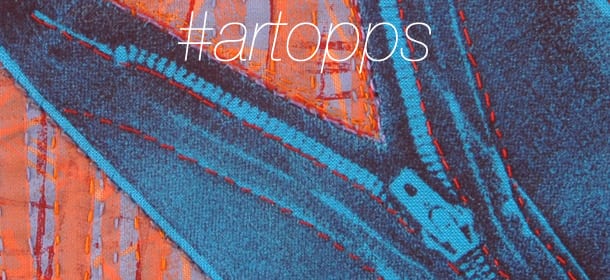
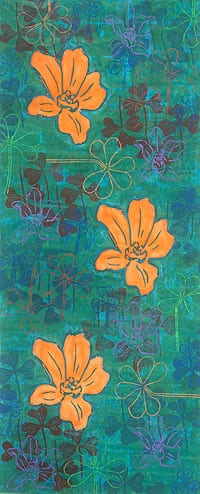
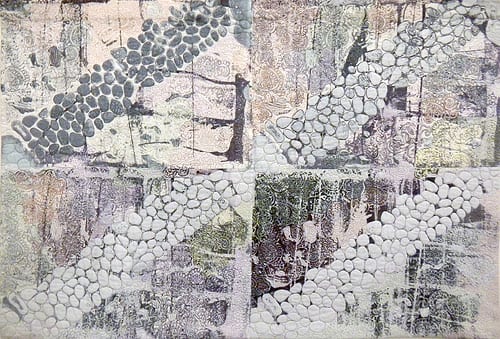
What is surface design and what can you use it for? Candace Edgerley: I think the best definition of Surface Design comes from the Surface Design Association: Surface Design encompasses the coloring, patterning, and structuring of fiber and fabric. This involves creative exploration of processes such as dyeing, painting, printing, stitching, embellishing, quilting, weaving, knitting, felting, and papermaking.
You can find surface design everywhere you look. Someone had to design the pattern or create the color on your sheets, blankets, towels, curtains, coats, sweaters, socks, shirts, everything you wear. Your favorite quilt was designed and stitched by hand or machine. Someone had to spin the yarn, dye, and knit or crochet your sweater. Whether done by hand or machine, someone had to design the item. My definition includes both functional and non-functional items. Non-functional items such as sculptural baskets; wall quilts; embroidered, dyed, woven, stitched wall art; fiber installations. The list is endless.
Julie Booth: I define surface design as any technique that manipulates or changes the surface of a fabric. This would include: painting, dyeing, printing/stamping, stenciling, applying resists, stitching, embellishing (e.g. adding beads), collaging, weaving, etc.
What I love about using surface design techniques is that I have control over what I want to design for a particular functional or non-functional piece. If I can’t find it commercially, I can make my own piece of fabric using colors I’ve mixed and designs I’ve created.
Julie Booth, Fabric Painting and Printing
What is your favorite surface design technique? Julie Booth: I have a number of favorites! First on the list is relief printing. I love to carve my own blocks from materials that range from commercial rubber products (such as Speedball Speedy Carve) to vegetables! I enjoy creating print blocks from materials I have on hand such as recycled cardboard, paper and plastic. In fact, I just published a book called Fabric Printing at Home that uses materials you can find in your kitchen to design beautiful one-of-a-kind fabrics.
Candace Edgerley: One of my favorite techniques is referred to as “deconstructed screen printing.” This is a process of applying dye to a silk screen, allowing the dye to dry in the screen, then printing the design in the screen onto the fabric. The results are always somewhat unpredictable and amazing. This is a class that is being offered beginning April 14 and will be offered again in the fall. Additional techniques such as Thermofax screens and photo emulsion are also covered in this class.
Candace Edgerley, Screen Printing
Julie Booth: I also love to hand stitch fabrics. I find the process very meditative and the results can be very personal pieces of art that can tell a story or even provide a healing experience.
Candace Edgerley: Shibori is the Japanese resist dye technique which is another of my favorites. Fabric can be folded and clamped, stitched and gathered, or bound to create areas that will resist the dye. These techniques also allow the fabric to be manipulated in such a way to retain its shape transforming the 2D to a three dimensional form. Shibori classes will also be offered in the fall.
Shibori collar by Candace Edgerley
Julie Booth: This semester, I’m offering two surface design classes. Fabric Painting and Printing: Surface Design starts on April 15 and covers a broad range of techniques including: relief printing, gelatin monoprinting, stenciling, screen printing and fabric resists. Students are encouraged to come up with an independent project that incorporates a variety of these techniques. Fabric Painting, Printing and Stitching to Tell a Story with Cloth, starting on April 22, focuses on using surface design on fabric techniques to create a story. We discuss the definition of “story” and expand upon the more traditional view of story. In addition to using printing, stenciling and resist techniques, students learn basic hand stitching techniques to add another dimension to their final art pieces.
What experience and supplies does a first time student need? Julie Booth: No prior experience is necessary in my classes. I welcome newcomers to surface design. I love to share my knowledge and always find that I learn something new from my students. I provide all the fabric paints, print blocks, brushes and tools needed for a nominal materials fee. I do have supply lists for my classes that include such items as cotton fabric (available for purchase in the classroom) and foam core boards and plastic to create portable work surfaces.
Candace Edgerley: No previous experience is necessary for the classes I teach at The Art League. Most of the supplies needed for the surface design classes are provided by The Art League. Students usually bring a few extra yards of fabric to classes for projects. Dyes, fabric, and a screen for printing are included in the materials fee for the screen printing classes.