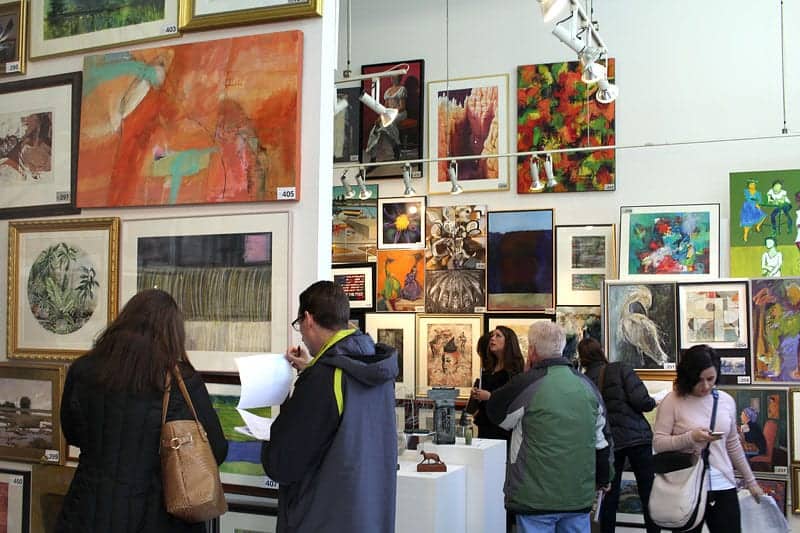
Do you love the arts in Alexandria? Want to let others know how great it is to discover local artists at The Art League? You can vote in two online polls to spread the word.
Click here to vote for The Art League for the Best Place to Discover a Local Artist in the Express Best of 2015. (And, of course, feel free to fill out the rest of the categories as well.)
Click here to vote Alexandria for the top town for crafts lovers in American Craft Week’s poll.
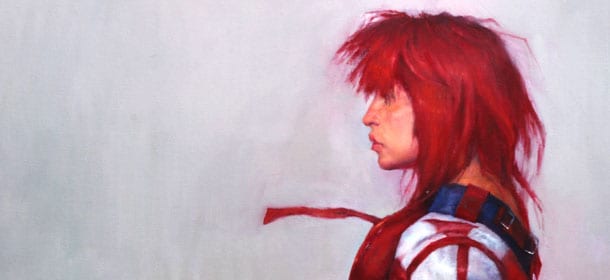
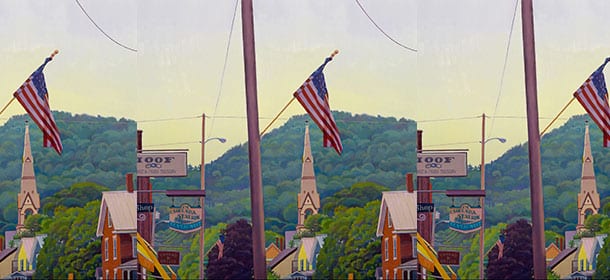
This year’s cover image is Finale!, an oil painting on canvas by Sara Linda Poly.
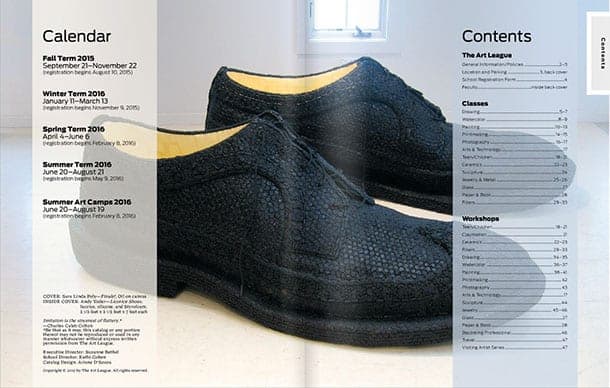
This edition covers classes from Fall 2015 through Summer 2016. Registration for Fall term will start Monday, August 10 by mail, in person, and online. The online database will be updated soon with 2015–16 classes, and we’ll let you know when that’s available. (Update: we’re online!)
Extended deadline: August 7. Dance Place is seeking artists to create semi-permanent (2-5 years) public art works for an Arts Park that will be in the public space between Dance Place and the Brookland Artspace Lofts. Installation of selected public art works is anticipated for May-June or August 2016. Read the call for artists →
Implicit Bias
Deadline: August 15. This is a multi-site exhibition at The Joan Hisaoka Healing Arts Gallery and at Busboys and Poets Restaurant locations in Washington, DC. “Implicit Bias – Seeing the Other: Seeing Our Self” is an exhibition that seeks to explore the unconscious racial bias that affects our decisions, choices, friends and beliefs about others. More about this exhibit →
Art Challenge
Deadline: August 15. The Liquitex, Winsor & Newton, and Michael’s Art Challenge is seeking submissions from new, emerging and professional artists for their first-ever fine art competition. The winning artist will be selected to display their work in a gallery show at The Collective Art Tank in Asbury Park, New Jersey. More about the competition →
Emerging craft artists
Deadline: August 19. This program will recruit approximately 15 emerging craft artists from the DC Metro Area and charter a small bus that will tour two locations, each focusing on a different aspect of making, marketing, and selling fine crafts. After a day of seeing and learning, participants will have two months to create new works. Then on November 2, 2015, the program will culminate by featuring the new works by excursion artists in a Front Window Feature at the Brentwood Arts Exchange. More about this program →
Artist Materials Market
Date: August 22. Artists from the greater metropolitan area are invited to sell and swap their gently used art supplies, tools, materials and ephemera for sale or trade during the 3rd Art Materials Market. There are approximately 20 tables available for purchase at $25. Visual artists from all media are encourage to participate. All spaces must be reserved in advance and are available on a first-come, first-served basis. More information and sign-up is here.
Bader Fund: Artists over 40
Deadline: September 15. The Franz and Virginia Bader Fund was established in 2001 in accordance with the will of the late Virginia Bader to provide grants to visual artists who have reached the age of 40, reside within 150 miles of Washington, D.C., and whose ability to concentrate on their art would be enhanced by receiving a grant. More at baderfund.org →
Paint the Beach
Deadline: October 30. The 6th Annual Paint the Beach returns to Fort Myers Beach, Florida, November 2 to 8. Events include a plein air painting competition and a quick draw event. More about Paint the Beach →
These previously posted opportunities are expiring this week:
Mural project
Deadline: July 31. The Bethesda Arts & Entertainment District announces “Paint the Town,” an initiative to promote more public art murals in downtown Bethesda. The first public art mural project organized by the Bethesda Arts & Entertainment District is the Capital Crescent Trail Retaining Wall. $15,000 will be provided to the artist to pay for supplies and artist’s time. More about the project →
Exhibition proposals
Deadline: July 31. Brentwood Arts Exchange in Brentwood, MD is seeking proposals from artists and curators to present exhibitions beginning summer 2016. Solo and group exhibitions are welcome in all media. Read the call for proposals (PDF) →
Arts Club of Washington
Deadline: July 31. The Arts Club of Washington in Northwest DC continues its support for the visual arts with the Call for Entries for the 2016–2017 gallery season. Exhibitions are scheduled monthly from September 2016 through May 2017. Read the call for entries →
Norfolk residency
Deadline: July 31. The Studio Artist Program at Glass Wheel Studio, located in Norfolk, Virginia, is an immersive studio practice program awarded to 13 visual artists annually. The program welcomes visual artists working in all media. Artists will receive partially subsidized studio space, access to communal studio equipment, and public presentations/pop-up exhibition opportunities. More about Glass Wheel Studio →
Gallery B
Deadline: August 3. The gallery, a non-profit arts space, is available to interested artists and arts organizations for one-month rentals. All media including, but not limited to, painting, photography and sculpture is eligible to use the space. Gallery B does not take a commission on any artwork sold during the exhibition. Apply for an exhibit →
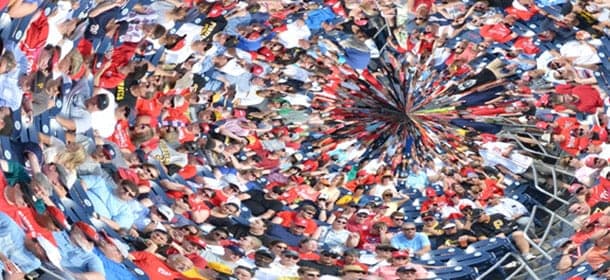
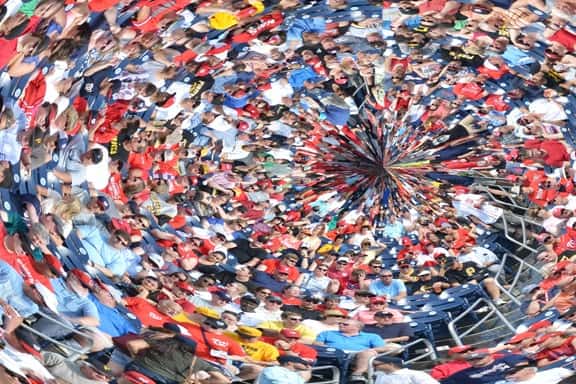
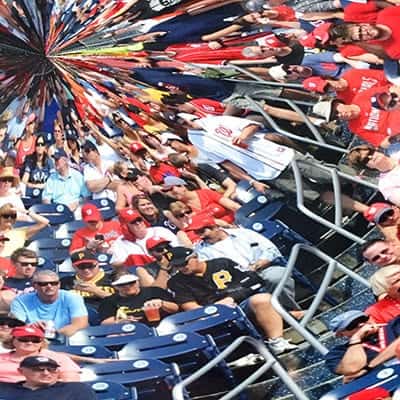
In what looks like a case of The Wave gone wrong, these Nats fans are twisted into a baseball tornado — a “maelstrom,” as exhibit juror Jennifer Lindsay put it. Lindsay chose Take Me Out to the Ballgame for the Oerth Kirstein Award, and we asked photographer (and yoga teacher) David Kosar to tell us more about it.
Who won, the Nats or the Pirates?
Exciting game. The Nats won 6-0. My boy Bryce Harper homered, his 23rd for the season, and Max Scherzer pitched a no-hitter and an almost perfect game.
How was shooting that day?
Shooting was fantastic, especially since it was a fast game. Fun shooting the crowd and documenting many of the high points. The fan who won fan of the game, a contest at each Nats game, was in our section; and Teddy won the Presidents race, surprising everyone, so the curse may be gone now (it’s bad luck when Teddy wins).
Take Me Out to the Ballgame (detail)
What was your goal with this photograph?
Just to get accepted in the show; nothing more. Hit a dry spell there for awhile. I’m always elated just getting a photograph accepted, and glad to see the Art League jurors are beginning to view photography more favorably and including more in shows. Photography is still viewed as the redheaded stepchild and not perceived as an art by quite a substantial number of people in the art world, including jurors.
What gave you the idea to edit it this way? What’s your process typically like, from shooting to editing and printing?
Interestingly, I already had my two pieces selected, printed, and getting ready to frame on submission day. Then for some reason, call it kismet, divine providence, the universe, or yoga (yep, I teach yoga), something told me to think further about the theme “Gatherings” and look at some crowd shots.
“Photography is illusory. What you observe and sense in a photograph really isn’t there.”
I pulled two shots from the Nats game, liked the one that was ultimately selected the best (mainly because there is lots of red in it — my favorite color), and started playing with different ideas, filters, etc. When I finished with the basic idea, I knew this was the piece to be submitted, and eliminated one of the two originals. It took about three hours to finish the final image (there is some painstaking editing in one area of the image). Had a feeling that it was going to get into the show, but little did I know it would get the award; furthest thing from my mind.
I’m sure you’re probably chuckling at the yoga reference. What does yoga have to do with photography? This may surprise you, but it is part of my process. Shooting and editing are very spiritual in the broad sense of that definition. When you are focused, consciously aware, and in the moment, you realize that’s all that exists, and the clarity that comes is phenomenal. Yoga has a large influence on my photography work, as it does on my life.
I’ve been told that my style of photography is abstract. As a rule, in my typical process, I do my abstract work with the camera and not in editing. That’s the real challenge, and to me, the sign of a true photographer: using the camera to get the desired effect and not the computer.
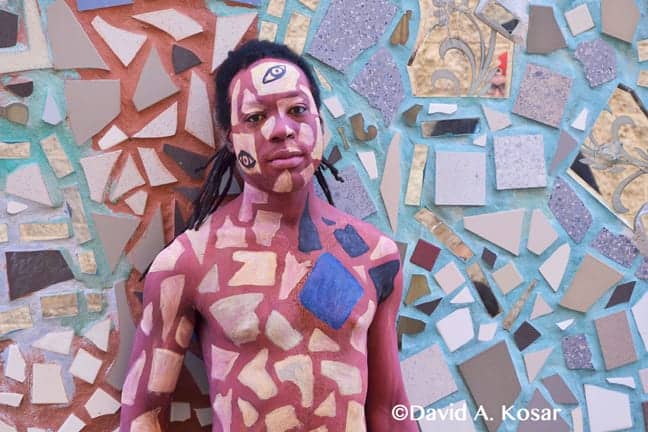
Variegated by David Kosar, from the June 2014 exhibit “Neo-Expressionism”
Take Me Out to the Ballgame is obviously one of the exceptions to my rule. This image just lent itself to do something different, fun, artistic, and push the boundary between photography and art. The editing that I generally do on photos are the basics: cropping, color balances, contrast if needed, etc.; similar to what we used to do in the darkroom. Cropping is very key to many of the abstracts I do. Once I achieve the desired effect in the original image, many times I look for a very small, interesting area in the image, then crop and enlarge just that section. The results are amazing and very abstract.
What’s your favorite thing to take pictures of?
Funny, I get asked that all the time. I don’t have a favorite thing to shoot, which surprises most people. I just love taking pictures; always have, and don’t limited myself to a favorite or specific thing. Art is all around us. It’s everywhere, if your mind is open. From the simplest things to the most horrific, it can be art.
You should see some of the trash on streets that I’ve shot and what the final image looks like. It’s up to the creative mind to see that and transform it into a photograph and art. As you can tell, I very much consider photography art.
Why are you a photographer? What keeps you coming back?
I’m a photographer because of the love and joy it brings me. A day without photography is a day without sunshine. And in all candor, it’s fun, and it’s in my blood. Life is supposed to be fun.
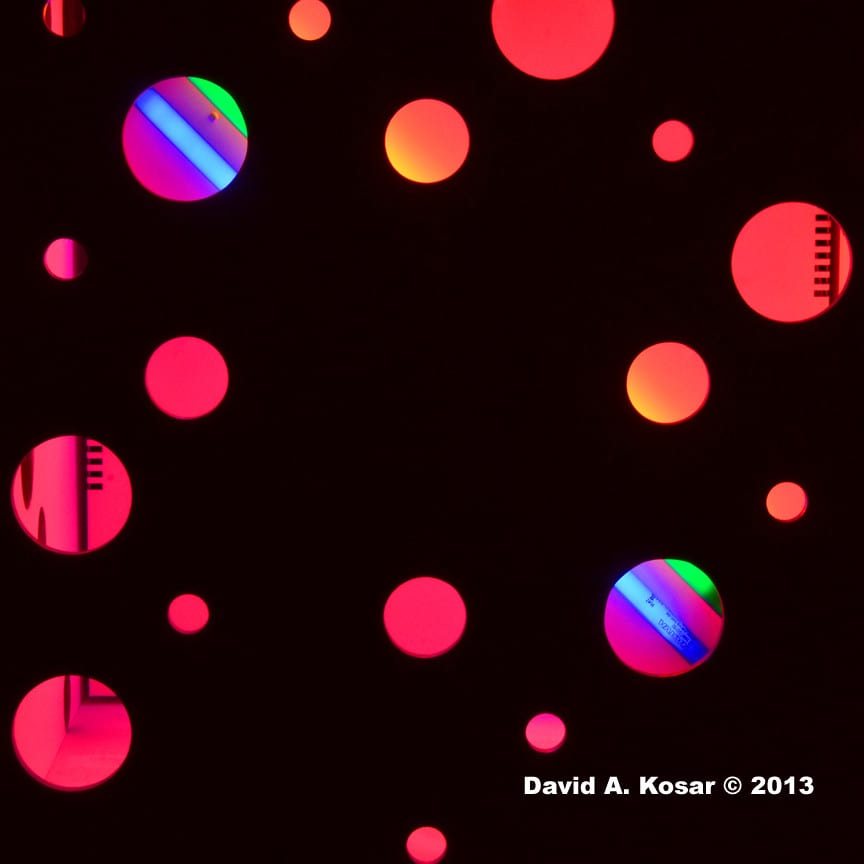
Orbs by David Kosar, from the March 2014 exhibit “ColorField”
Photography is illusory. What you observe and sense in a photograph really isn’t there (the secret about photography that isn’t discussed). The emotional responses, perceptions, and interpretations you may have to a particular photograph are solely the results of your life experiences, regardless of the photographer’s creativity or intent. It is this illusion that makes creating and viewing photographs enjoyable, exciting, and fun. And one the reasons I keeping shooting.
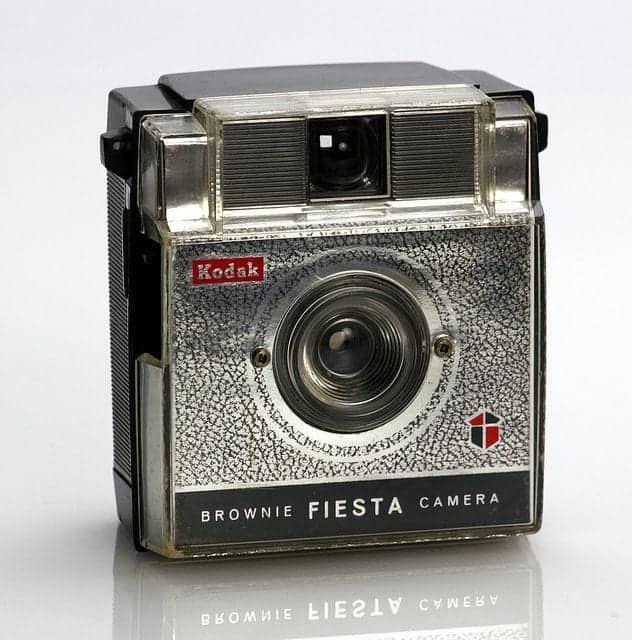
In the past 10 years, my style has evolved into what it is today, far from my original roots in photography, which was primarily photojournalism as it’s called today (back in the day it was just news photography). What I do today with photography, I pretty much do for myself. I got my first camera, a Kodak Brownie, from Santa Claus when I was eight years old (1962) and have been taking pictures ever since.
A 1962 Brownie Fiesta.
Apparently, Santa heard that I was always tinkering with my dad’s camera, just taking strange black and white pictures in the house without a flash, and even taking the camera apart and ruining his film. It took my parents awhile to figure out that it was me doing that and not my older brother. My passion grew as writer/editor and photographer in high school when I was on the newspaper and yearbook staffs (general and sports photographer); college newspapers and television station (two degrees in journalism); reporter and photographer at my hometown newspaper; and as a political newsletter writer/editor/photographer for a national trade association where I was the director of state legislative affairs (state lobbyist). At one college I attended, I was on the newspaper staff, hung out with the photographers, who took me under their wings and taught me a lot of what I know. They were my first mentors and gave me my formal training.
Next time you whip out your phone for another level of Candy Crush, why not try something that tests your creativity? We tried out seven apps with an addictively artistic bent.
Please note: the reviews below are for the iOS versions.
Colorfy
coloring books for adults
for: iOS, Android
cost: free (pay for more colors & pages)
Colorfy is ridiculously popular right now, just like the physical coloring books for adults that inspired it. Nothing too complicated here: pick a drawing, pick a color, and tap to color between the lines. It’s pretty satisfying to see a white page fill up with color.
Brain Dots
drawing plus gravity
for: iOS, Android
cost: free (pay for more pens & pencils)
Draw levers, ramps, catapults, boulders, a giant shoe — whatever it takes to reunite the blue dot and the pink one. Brain Dots is a series of hundreds of puzzles that you solve with a pencil (or pen, marker, paintbrush … you’ll unlock more tools with slightly different effects as you play).
In a nice touch, this app shows a thumbnail of your completed puzzles, so you can share your most elegant solutions with others. Or you can go back and create a solution that’s truly a thing of beauty. Two complaints: there are too many ads, and the controls are sometimes unresponsive.
It’s often said of great writers that they “paint with words.” TypeDrawing takes that idea and runs with it. Write your message, from a single letter or symbol to a short story; pick your font and color; and draw! You can import photos to draw on top of, or start from scratch. We were pleasantly surprised to see a large variety of fonts, so you can create your masterpiece in Superclarendon and then do it again in Gill Sans Bold Italic.
Three examples of what you can do with TypeDrawing (the image on the right is a screenshot from the App Store)
Glitché
glitch your photos
for: iOS (try Glitch! on Android)
cost: $0.99 (pay more for high-resolution exports)
With its bare-bones, green-on-black interface, using this app is an experience in itself. Glitché gives you tools to scramble, stretch, colorize, pixelate, and otherwise glitch-ify your photos. And like any app inspired by the late 1990s should, Glitché lets you make weird gifs!
for: iOS (try Draw – Your Messaging Keyboard on Android)
cost: free
Why text when you can draw? Inkboard adds another keyboard to all your messaging apps, so when words and emojis won’t cut it, you can send doodles to amuse and annoy your friends. There are similar keyboards out there to try, but we like this one because it’s free and pretty simple to use.
(To use this keyboard on your iPhone, you’ll need to activate it. Go to Settings → General → Keyboard → Keyboards → Add New Keyboard … and Inkboard should appear. Then, when you’re typing a message, cycle through your keyboards by clicking the globe and/or ABC symbol in the bottom left.)
Tayasui Sketches
simple sketchpad
for: iOS (try SketchBook on Android)
cost: free (pay for more tools & features)
We could write an entire series of posts just on sketchbook-style and art studio apps, but this is a great place to start. Even the free version has some pretty powerful tools to draw and paint with. You can also pay for more tools (like an airbrush) and Photoshop-style layers, and in a welcome move, you can try out those extras before you pay for them. We loved picking what paper to use and seeing the pleasant translucency effects with the marker and paintbrush (see below).
On the negative side, this app only works in portrait mode, and we found the controls a little finicky sometimes — especially the “swipe left to undo” function. Also, there’s no way to work on more than one project at a time, so you’ll need to start over each time you want to draw something new.
Update: We figured out how to work on multiple projects. Here’s how: pinch with two fingers to zoom out. You might have to try a couple times, but eventually, your canvas will shrink and you’ll see a gallery view. That’s where you can choose a different project to work on, or export your finished drawing.
Lapse It
stop-motion studio
for: iOS, Android
cost: free (pro version: $0.99)
This app is probably the most involved and technical one here, but making stop-motion movies is fun enough that it made the list. Lapse It helps the process a lot by showing you a ghost image of each frame you capture, so you can see how far to move things before you hit the shutter again. You’ll want some kind of tripod to hold your camera still for the best results.
Stop-motion isn’t the only appeal: if you’re serious about time lapses, you can use the tools here to have much more control over your captures than what the iPhone camera allows.
Have we missed any fun art apps? Let us know in the comments!
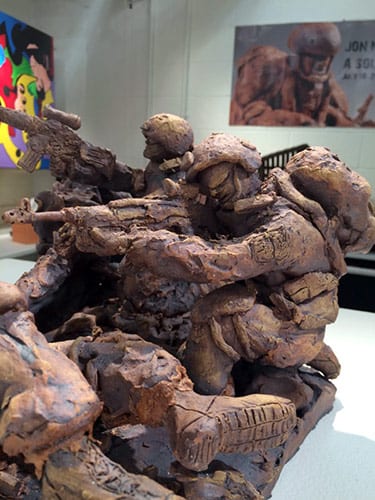
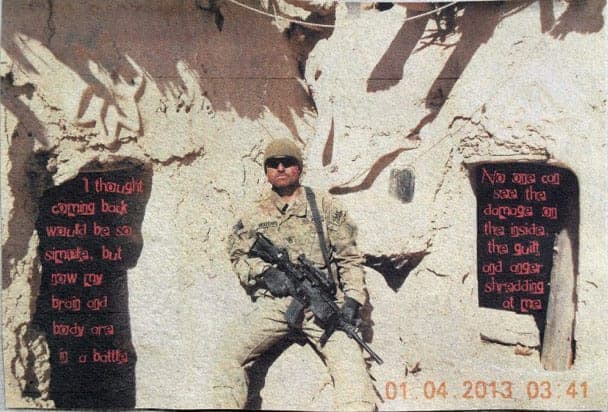
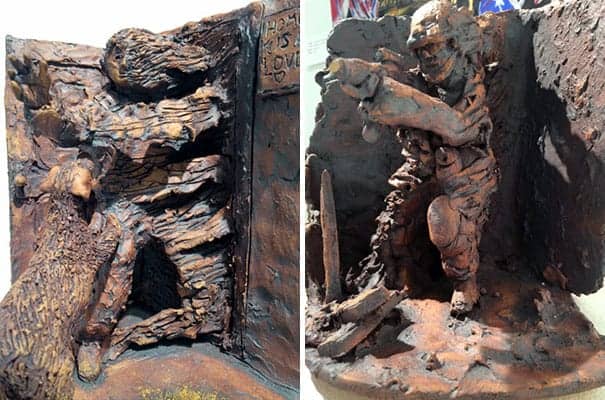
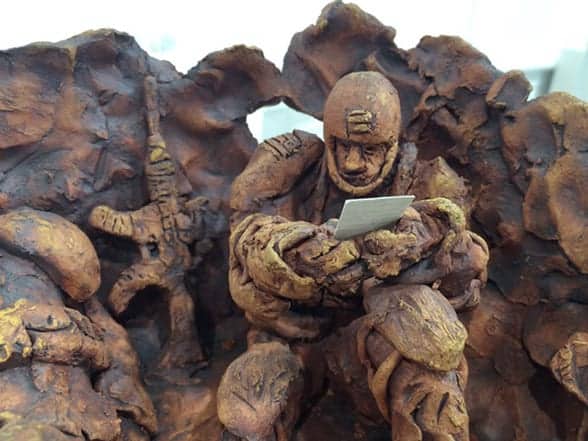
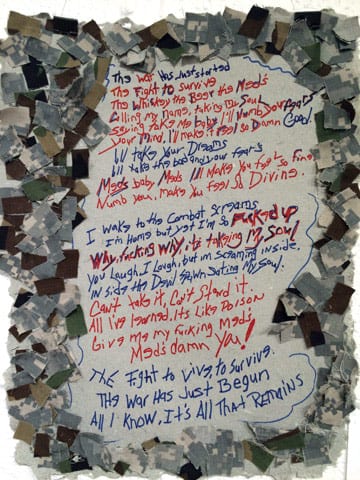
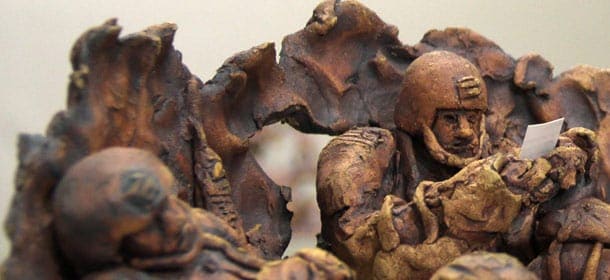
Good news! The exhibit by Army Staff Sgt. Jon Meadows has been extended through Monday, July 27. There’s been a great response to this exhibit so far. Please stop by to see Jon’s story in clay, paint, and paper!
Jon suffered a frontal-lobe traumatic brain injury in Afghanistan in January 2013, which affected his vision, cognition, and fine motor skills. Shortly after returning home in 2013, Jon began his journey in art through The Art League’s IMPart program, with no prior art experience. Jon’s doctors, fellow veterans, and his artist instructors were immediately amazed by his masterful and emotive sculptures. His work has since expanded from his clay sculptures to also include paintings, drawings, and poetry.
Artists from the greater metropolitan area are invited to sell and swap their gently used art supplies, tools, materials and ephemera for sale or trade during the 3rd Art Materials Market. There are approximately 20 tables available for purchase at $25. Visual artists from all media are encourage to participate. All spaces must be reserved in advance and are available on a first-come, first-served basis. More information and sign-up is here.
Small Wonders
Deadline: September 10. Small Wonders is currently open for entry. This exhibition is hosted by the Maryland Federation of Art and will be on display at Circle Gallery (18 State Circle, Annapolis MD) from November 27 – December 23, 2015. Any original 2-D artwork not exceeding 11″ and 3-D artwork not exceeding 7″ and following entry guidelines is eligible. Juror: Georgia Deal, Professor at the Corcoran School of the Arts and Design. Awards total $1000. More information at mdfedart.org.
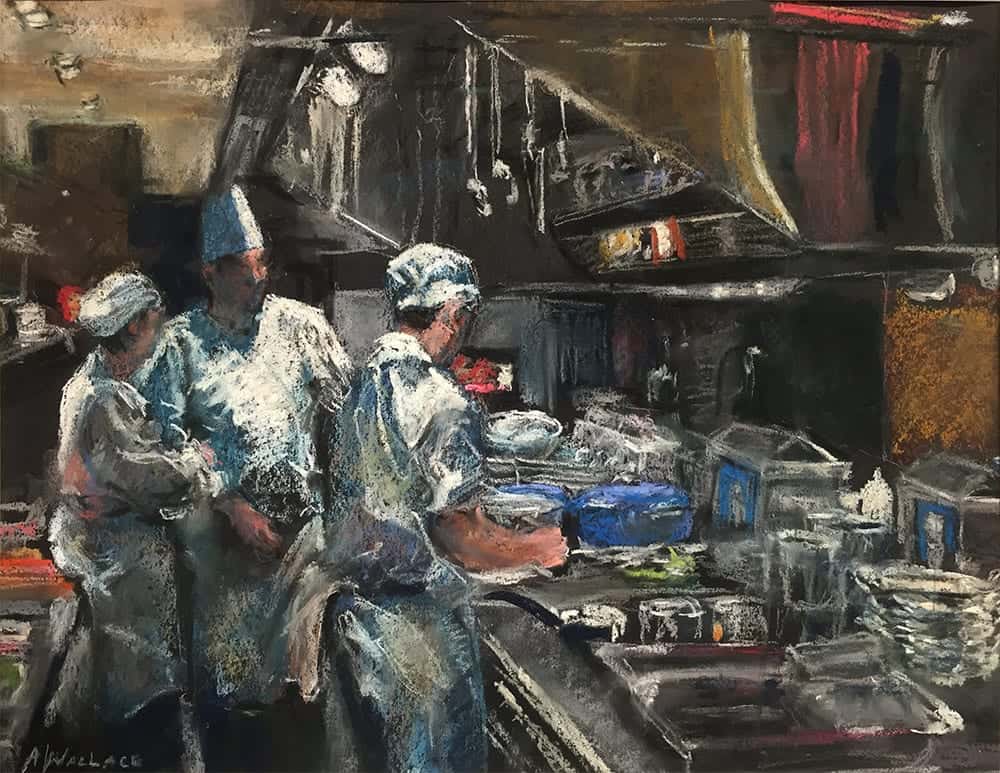
Prep Gathering, pastel, by Ann Wallace, winner of The Art League Award in “Gatherings.” (click for larger image)
Picture “Gatherings,” and who crowds around you in your mind’s eye? They’re likely the people you spend the most time with from day to day: your family, friends, and coworkers.
That last group, perhaps the most under-celebrated of the bunch, is the subject of the pastel painting above, which won the second place Art League Award in “Gatherings.” The figures project a relaxed atmosphere, eschewing cliches about hot tempers and frayed nerves — this kitchen is more Ina Garten than Gordon Ramsay.
The artist, Ann Wallace, told us more about her love of pastel and the kitchen:
Where is Prep Gathering? What made this scene stand out to you as worthy of painting?
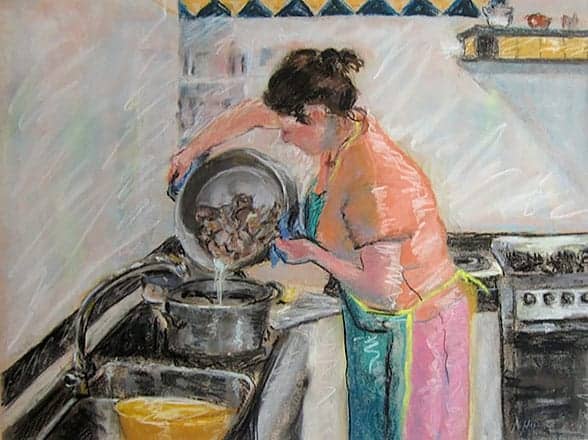
Ann Wallace: Prep Gathering is the kitchen of The Blue Duck Tavern in Washington, DC. It is the second in my kitchen series. The first is a pastel of a woman cooking clams in Tuscany. I love thinking about the story behind kitchen scenes, because in my college days I worked at a restaurant and remember fondly the camaraderie among the wait staff and cooks. I intend to continue working on these kitchen and restaurant themes.
Woman Cooking Clams by Ann Wallace was selected for the 2014 exhibit at The Art League, “The Feminist Movement in Art.”
What do you like about working in pastel? Do you work in other media?
I love pastel because of its immediacy and spectacular colors. I also work in oils, charcoal, gouache, acrylic and egg tempera. I am now working on egg tempera still life pieces and pastel portraits at the Art Students League of New York.
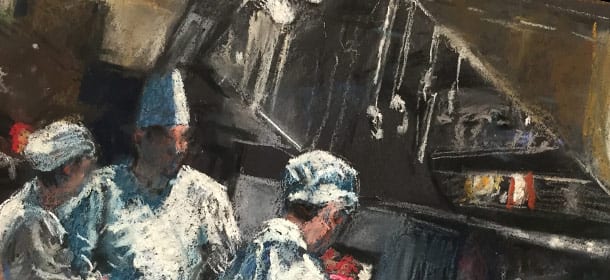
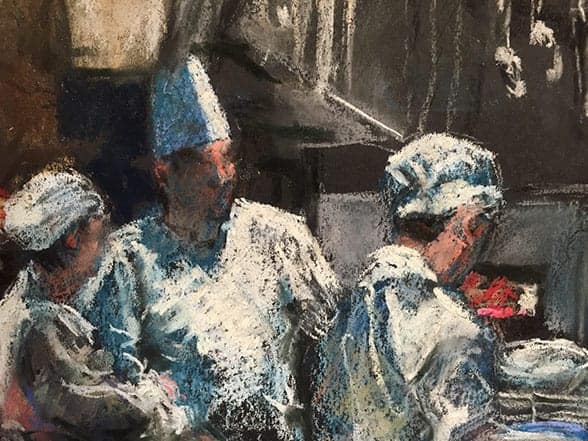
Unlike oils or any other wet medium, pastels bring you in direct and instant contact with your subject matter. There is no mixing with a medium or with other colors. You simply choose a color from your box that resembles what you are looking at and, if necessary, layer other colors immediately on top of the first color. I chose pastel for Prep Gathering because it is by far my favorite medium, and because I knew it would give me the atmospheric look that I had in mind.
Prep Gathering by Ann Wallace (detail)
What’s your creative process like, from an idea to a finished piece?
My thought process for portraits and figures is always the same: “Is there a story in what I am seeing?” In landscapes, I look for distance and what the scene evokes. Still life paintings have all these aspects but also require a significant concentration on lights and shadows.
How do you know when a piece is done?
I know when I have finished a painting by looking at it when it is almost there and asking myself is there anything that will make it better without detracting from its freshness.
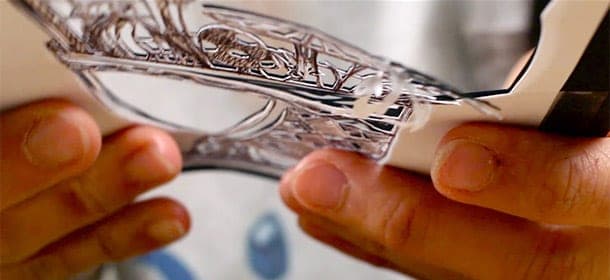
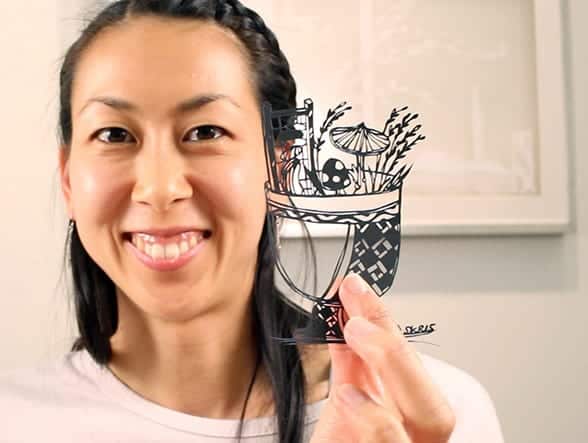
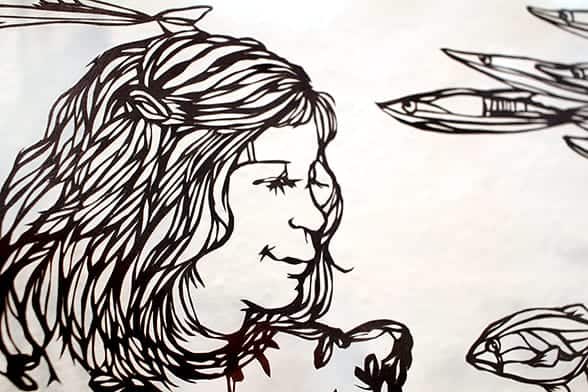
Shiho K. Rice’s pieces in “Quietly Cutting Through” did, in fact, start out as drawings. Then they went under the knife, creating a drawing that uses no ink or pencil at all — just paper and negative space.
The artist graciously agreed to demonstrate the process for us, and you can see the results in the video above. She also told us more about this medium — a traditional Japanese art — and how you can try it yourself, in this Q&A:
How did you first get involved in kirié?
When we moved to Washington, DC from NYC in 2012, to take care of my father-in-law, I was trying to do something small creatively in my free time. So, cutting paper was one of the new media I tried out.
How did you learn how to do it?
Are there other kirié artists who you look up to?
I taught myself kirié.
Since I did not start making art with the kirié technique, my expression or voice isn’t tied to the technique. It just happened that I found kirié and working with paper to be a very good match with me and my style. So, there isn’t any kirié artist that was a big influence on me.
But, if I would pick one artist, that would be Seiji Fujishiro, who is a shadow cutout picture artist. His world is very playful, and makes me happy just looking at his artwork. He is now 91 years old, and still making beautiful artwork. Being able to make artwork for rest of my life and creating playful and happy images are some things I would like to achieve over my lifetime.
What’s your favorite thing about making kirié?
When I found a way to cut the paper as intricate as my drawings, I loved the feeling of my drawings transformed into a paper image. I enjoy drawing, but kirié makes my drawings more fragile and precious. That’s why I started to make kirié my media.
Your least favorite thing?
When I almost see the end of the cutting process, I start to feel sad. Especially when I don’t have any more drawings waiting for me. So, I tend to make a few drawings before I start cutting.
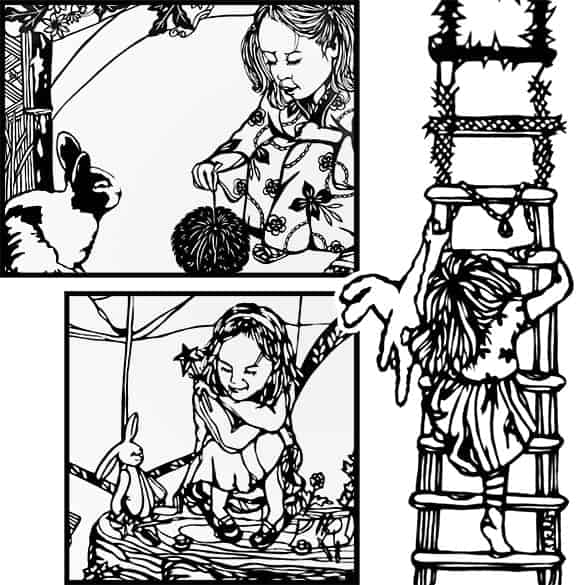
Details from (clockwise from right) One I, Magic Wand, and Hanabi by Shiho K. Rice.
Where do your scenes come from? Do the recurring “characters” of the young girl, bunnies, etc. have a special meaning to you?
My scenes come from observations of daily life, my childhood memories, and my imagination. When those characters are in my drawings, I feel safe and protected like a family. So, they are kind of my guardians.
What kind of knife and paper do you use?
I use an X-Acto knife. I don’t have specific papers I use, but I prefer them to be as thin as copier paper and a similar smoothness.
Do you have any tips for someone who wants to try cut paper art for the first time?
In the demonstration video, I put my fingers in front of the knife. But I would avoid that, because the knife could get caught on the paper or mat, and your hand can slip.
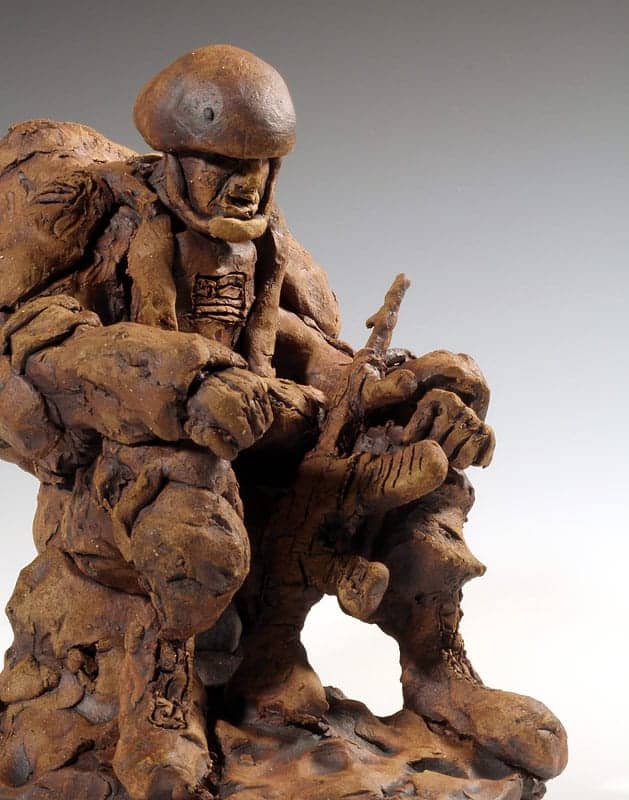
“You’re just lost in the moment of making something.” — Jon Meadows
You might remember Jon Meadows’ sculptures from the IMPart Ceramics Exhibit in 2013–14. Since then, his body of work has grown to include paintings, drawings, and spoken word pieces as well. Meadows’ new solo exhibit, “A Soldier’s Voice,” opens tomorrow and runs from July 18 to 24 in studio 12 of the Torpedo Factory (just down the hall from The Art League Gallery). You can find more information about the exhibit here.
You’re invited to the opening reception, Saturday, July 18 at 6:00 pm. We’d love to have you come! Please RSVP here.
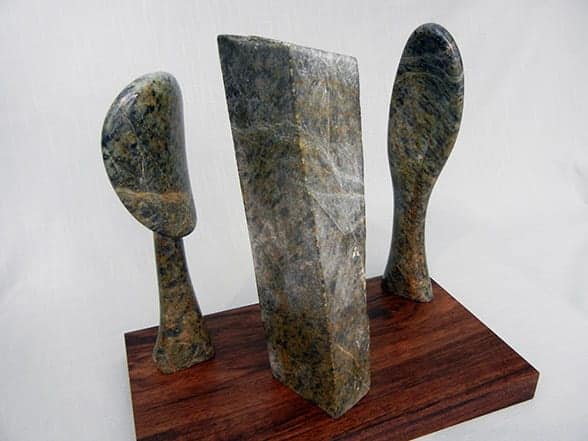
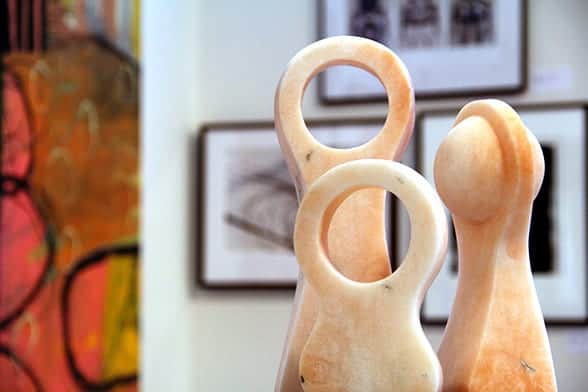
This is a guest blog post by sculptor John Ploch, whose sculpture Khaivani won Best in Show in the juried exhibit, “Gatherings.” We asked him why he is a sculptor.
Khaivani by John Ploch
Over 40 years ago I was watching the Winter Olympics and they showed a profile of a female American speed skater. She carved alabaster in her free time as an artistic outlet. I remember thinking at the time how interesting that was, but although I never pursued it at the time, the memory stayed with me.
Fast forward to the fall of 2002. My wife and I were walking through the Torpedo Factory and I got to talking to an artist who at that time had a studio there selling her stone sculptures. I relayed my speed skater story and said that it was something that I had thought would be interesting to do but I didn’t know how to go about it. I think her exact words were, “Why don’t you take the class through The Art League, that’s what I did!”
So I started taking the Wood & Stone Sculpture class in the Winter of 2003 and have taken it every term since then. I’ve been lucky enough to have three very good teachers, especially Nick Xhiku and currently George Tkabladze. The are both world-class artists in their own right, superb at teaching, and I feel blessed to call them my friends.
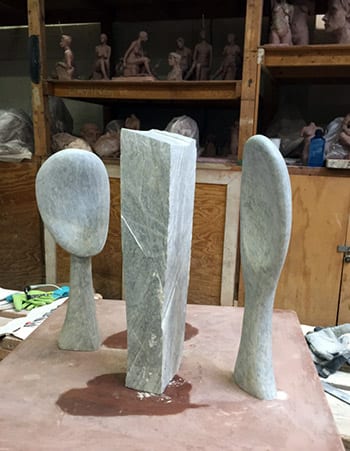
Khaivani in progress in The Art League’s sculpture studio. The carving was done at this point, but not the wet sanding and polishing. I was working on finding the right placement for the three pieces.
I really enjoy the process of finding the perfect line or curve in the finished sculpture. Working in three dimensions, you always need to be aware of how the piece looks and is progressing from all points of view. I constantly look at the piece to make sure that the surface or line on which I’m working speaks well and compliments adjacent lines and surfaces. It’s hard to define, but when it’s right, it’s right and is clearly seen. I don’t always get there, but it’s the journey that is so enjoyable.
I also love the class experience. There are others in my class, some who have been there almost as long as I and some who I’ve known for five or ten years and we’ve become a family. We know and care about each other and our wives, husbands, and children. I miss them as much as the creative process in the class during the between-term breaks.
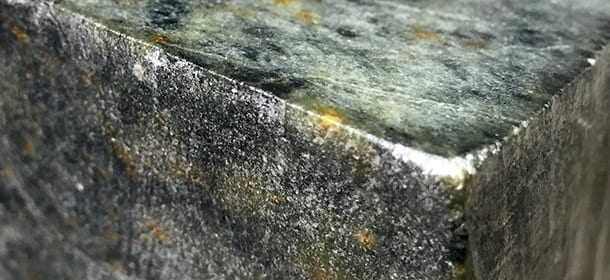
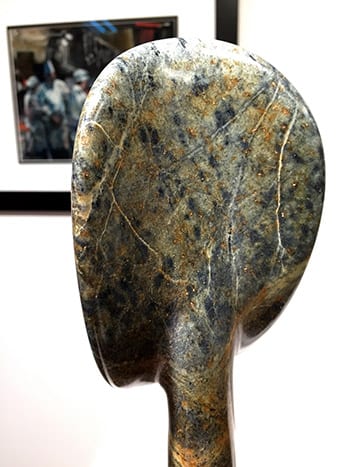
I usually work in alabaster or else a Virginia soapstone called steatite. Alabaster comes in a variety of colors and the steatite finishes to a lustrous black color, so when I saw the green in the soapstone I thought of doing some trees.
Khaivani (detail) by John Ploch
My teacher, George is originally from the country of Georgia and “Khaivani” is the English phonetic spelling of the Georgian word for forest. The stone from which the three pieces came was originally twice as large. I first cut it in half and used the remaining half for a piece that I have submitted for annual the August “Taking Shape” sculpture show. The class that I take is called “Wood & Stone Sculpture” and this is first sculpture that I’ve done that incorporates both stone and wood, so I entitled it “Saturday Morning” in honor of the class.
The right way to go about creating a sculpture is to draw the sculpture on paper first, and/or to make a clay model from which to work. I don’t do things the right way. I can’t draw to save my life and never had much luck with clay. I am able to see what I want the finished piece to look like in my mind though. I only do abstracts which helps, since I can change my mind as I go along. That’s not something you can do if you’re going for a representational sculpture. If you start out to sculpt a dog, for instance, you’re pretty much committed to completing a dog. With abstracts, the mind can flow as the work flows.
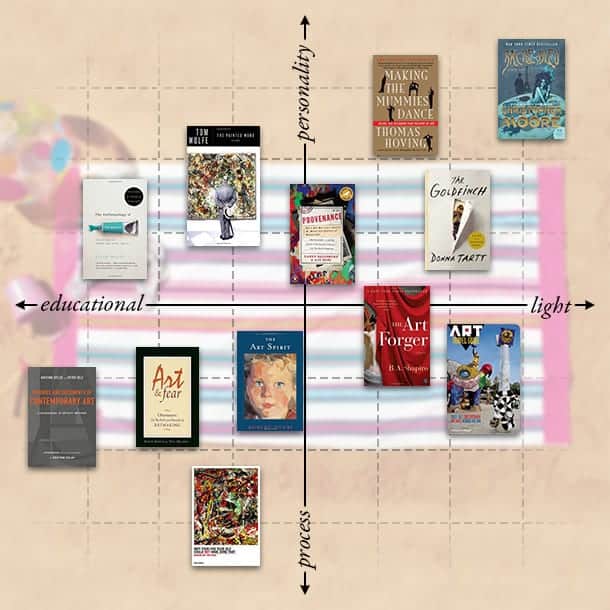
Ah, summer. A time when we can finally return to painting outside, pack our suitcases with sketchbooks … and regular books! Get your Kindle charging and find your library card, because we’ve compiled some of our favorite visual art-related books (and a few on our wishlist).
What are you reading this summer? Do you have any recommendations to share? Let us know in the comments!
Why Your Five-Year-Old Could Not Have Done That
by Susie Hodge (Prestel, 2012)
With the ambitious subtitle, “Modern Art Explained,” this book responds to the mutterings of museumgoers everywhere by illuminating the talents of some misunderstood artists from the past century. This one also has a companion book on photography, Why It Does Not Have to be In Focus by Jackie Higgins.
In the oldest book on this list, the author of The Electric Kool-Aid Acid Test and The Right Stuff takes aim at art criticism. Tom Wolfe’s 1975 book is number one on the list of local artist and art blogger Lenny Campello’s favorite art books. Whether you worship Clement Greenberg or you get the sense the art world has left you behind, Wolfe is sure to get you thinking and push a few buttons.
The Anthropology of Turquoise
by Ellen Meloy (Vintage, 2003)
“Colors challenge language to encompass them,” writes artist Meloy in this poetic look at color. She puts a new perspective on the deep emotional connection we all have to color with an approach that is both scientific and personal (and, of course, anthropological). This book is also full of fascinating facts like this: “It has been shown that the words for colors enter evolving languages in this order, nearly universally: black, white, and red, then yellow and green … with green covering blue until blue comes into itself.”
Art Travel Guide: Must-See Contemporary Art Sites Across the USA
by Connie Terwilliger (ArtNetwork, 2012)
Take this along on your road trip-slash-pilgrimage, or just daydream along with the photos. The author identifies 120 places you probably haven’t heard of, including sculpture parks and performances.
This well-loved novel and Pulitzer Prize winner tells the story of a teenager who comes into possession of a valuable painting that changes his life.
By the way, if you’re trying to pack light, be aware The Goldfinch is over 700 pages long.
Art & Fear: Observations on the Perils (And Rewards) of Artmaking
by David Bayles & Ted Orland (Image Continuum Press, 2001)
Among the huge number of advice and self-help books out there for artists, Art & Fear stands out for its clear writing and compelling premise: “Artmaking involves skills that can be learned” and “Art is made by ordinary people.” Written by working artists and teachers, this could be one to keep handy for when the realities of making art get you down.
If you aren’t familiar with the name, Robert Henri was a beloved art teacher and a figure in the Ashcan School. You might have seen his paintings at the National Gallery of Art. Henri died in 1929, but you can still benefit from his advice, which this book collects in the form of his letters, articles, and sayings.
Chances are, you know if this is your kind of book after reading the title. It’s exactly what it says on the tin: essays, statements, and interviews by and with contemporary artists from Duchamp to Banksy. Installation artists, performance artists, and others are also included.
Both a murder mystery about Van Gogh and “a novel about the color blue,” according to its author, the novel’s main characters are a fictional baker-painter and Henri Toulouse-Lautrec. Moore is a hilarious writer, so expect this one to be very funny and very weird.
A novel about art, theft, and forgery, with a backdrop of the real-life art heist from the Isabella Stewart Gardner Museum in Boston. Starting with a newspaper clipping about the anniversary of the thefts and the main character picking paintings for a studio visit, the two threads come together for a tale that, hopefully, isn’t too familiar to Art League readers. This is a past pick of The Art League Book Club, which recommended it to us.
Provenance: How a Con Man and a Forger Rewrote the History of Modern Art
by Laney Salisbury and Aly Sujo (Penguin, 2010)
Art-related crime is always a sexy topic for a book (or a movie), but we limited ourselves to two choices on this list. Unlike The Art Forger, this tale is nonfiction: the real people John Drewe and artist John Myatt are the main players. But just like the other book, it’s a captivating story thrillingly told.
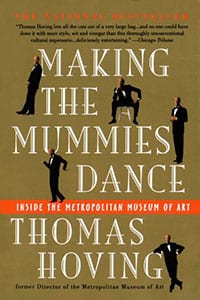
Another Art League Book Club pick, this is for those of you who wonder what goes on in the inner circle at places like the Met. It’s a memoir by a former director of the museum, with some gossip and behind-the-scenes details. For other books about the Met, see this blog post.
Mentoring program Space of His Own needs mentors, now!
Carpentry-based mentoring program Space of His Own pairs fifth-grade boys with men from the Alexandria community to help the next generation develop confidence and learn life skills in a creative and fun environment. The program meets one night a week from 5:30 to 8:00 pm, night TBD.
Research shows that positive, caring relationships with adults:
Improve school performance
Help children develop the resilience to succeed despite obstacles
Provide youth with a sense of belonging
Do you have what it takes to be a mentor with SOHO?
If you are open to new experiences, an active listener, reliable, okay with getting your hands dirty, and enthusiastic and energetic, then YOU already have all of the qualities needed to be an exceptional mentor!
It’s easy to become a mentor!
Attend a one-on-one orientation session
Fill out an application
Complete an interview and receive a satisfactory background and reference check
For more information on how to become a mentor with the Space of His Own program, please email [email protected] or call Haley at 703-746-4687.
Washington Area Lawyers for the Arts is holding a panel, “Galleries 101: Law for Visual Artists,” on July 21 at Hamiltonian. Admission is $30 for non-WALA members. For the rest of WALA’s Summer Education Series, click here.
Public art
Deadline: July 27. Dance Place in Northeast is seeking artists to create semi-permanent (2-5 years) public art works for an Arts Park that will be in the public space between Dance Place and the Brookland Artspace Lofts. Read the call for proposals →
Light City Baltimore
Deadline: August 31. Premiering in 2016, Light City Baltimore is the first large-scale, international light festival of its kind in the United States. All artists are welcome to create and perform works that delight and entertain, as well as challenge, provoke thought, and speak to the important issues of our time. Artists and artist collaborative groups working in all media and genres of both the visual and performing arts are encouraged to apply. Read the call for entry →
Re-runs: the announcements below have appeared here before, but it’s not too late to apply!
National pastel exhibit
Deadline: July 15. The Maryland Pastel Society’s national juried “Shades of Pastel” Exhibition will be held October 5 – 28, 2015 at Hill Galleries at the Old Naval Hospital in Washington D.C. More than $6500 in cash and merchandise awards are to be awarded. More about this exhibit →
Drawing & painting
Deadline: July 15. “Perspective” at Hillyer Art Space is a juried exhibition that examines contemporary painting and drawing. This exhibition is open to all artists living locally and nationally. Juror: Cory Oberndorfer. More about the exhibit →
Water theme
Deadline: July 15. Water Works is the title and theme of this Maryland Federation of Art organized exhibition. Any 2-D artwork in which water is clearly depicted as the primary force, object or consequence will be considered by the juror. More about the exhibit →
Mural project
Deadline: July 31. The Bethesda Arts & Entertainment District announces “Paint the Town,” an initiative to promote more public art murals in downtown Bethesda. The first public art mural project organized by the Bethesda Arts & Entertainment District is the Capital Crescent Trail Retaining Wall. $15,000 will be provided to the artist to pay for supplies and artist’s time. More about the project →
Exhibition proposals
Deadline: July 31. Brentwood Arts Exchange in Brentwood, MD is seeking proposals from artists and curators to present exhibitions beginning summer 2016. Solo and group exhibitions are welcome in all media. Read the call for proposals (PDF) →
Arts Club of Washington
Deadline: July 31. The Arts Club of Washington in Northwest DC continues its support for the visual arts with the Call for Entries for the 2016–2017 gallery season. Exhibitions are scheduled monthly from September 2016 through May 2017. Read the call for entries →
Norfolk residency
Deadline: July 31. The Studio Artist Program at Glass Wheel Studio, located in Norfolk, Virginia, is an immersive studio practice program awarded to 13 visual artists annually. The program welcomes visual artists working in all media. Artists will receive partially subsidized studio space, access to communal studio equipment, and public presentations/pop-up exhibition opportunities. More about Glass Wheel Studio →
Gallery B
Deadline: August 3. The gallery, a non-profit arts space, is available to interested artists and arts organizations for one-month rentals. All media including, but not limited to, painting, photography and sculpture is eligible to use the space. Gallery B does not take a commission on any artwork sold during the exhibition. Apply for an exhibit →
Sense of place
Deadline: August 14. Annmarie Sculpture Garden and Arts Center invites artists to enter its exhibit, “Finding Our Place: The Geography of Art.” What informs your work? A physical location or a virtual world ? Do you know “where you are?” All media welcome; small to large-scale installations; new media encouraged; indoor and outdoor works accepted; cash awards. More about “Finding Our Place” →
Mattawoman Creek Art Center
Deadline: August 15. The Mattawoman Creek Art Center, located at Smallwood State Park in Charles County, Maryland, is seeking artists of all media to exhibit their art in individual shows. The Mattawoman Creek Gallery is spacious, light filled, and overlooks the Mattawoman Creek. More about this opportunity →
Bicycling theme
Deadline: August 15. The 2015 UCI World Road Cycling Championships will be held in Richmond, VA in September 2015 and this art show is in conjunction with the city’s numerous events surrounding the races. More about the exhibit →
Scale theme
Deadline: August 31. Live An Artful Life® Gallery in The Plains, VA invites artists residing in MD, VA, and DC to interpret “scale.” With this show, artists have a unique opportunity to create two paintings in any medium, of two scales: one miniature measuring 8″×10″ or smaller and one medium size painting at 18″×24″. More about the exhibit →
Art Howard County 2015
Deadline: August 31. Applications are now being accepted for this biennial, juried exhibit. Visual artists 18 years of age and older who live, work, or study in Howard County, MD are eligible to apply. Juror: Paula L. Phillips, Community Arts Professor, Maryland Institute College of Art. More about Art Howard County 2015 →
Hillyer Art Space
Deadline: September 27. Hillyer Art Space in NW DC is now accepting proposals for solo exhibitions for our 2016/2017 exhibition season. Hillyer presents monthly exhibitions and each accepted artist is given a room in our three room gallery space to present their work. Read the call for artists →
Wings from Chains
Deadline: December 18. Wings From Chains at the Athenaeum in Alexandria invites artists to consider women’s roles and responsibilities in society — yesterday, today, and tomorrow — and explore the transformation from oppression to liberation, shame to pride, or drudgery into art. Contemporary, historical, stereotypical, and fictional references are all welcome. This exhibition is timed to coincide with the annual meeting of the Women’s Caucus for Art in Washington, DC in February, 2016. More about the exhibit →
Athenaeum call
Deadline: Ongoing. Artists who live or work in Virginia, Maryland, or the District of Columbia may submit a proposal for a solo or group show at the Athenaeum. Read the call for artists →
kiri-e: “cut picture” Scherenschnitte: “scissor cuts” papel picado: “perforated paper”
Ever since paper was invented, people have been cutting it to make art. In fact, according to legend, the first piece of paper quickly became the first paper people chain.
But papercutting has a long, rich history far beyond what you made with safety scissors back in elementary school. Case in point: Shiho K. Rice’s exhibit “Quietly Cutting Through,” at The Art League through August 3. Rice’s art form is called kirié (also called kiri-e or kirigami), the Japanese art of papercutting.
Whispers by Shiho K. Rice (click for full size)
It starts, and ends, with a single piece of paper — in between, taking on a much holey-er appearance. Black paper, as seen in this exhibit, is traditional, sometimes backed with colored paper. Rice uses a craft knife (and a lot of patience) to cut through two layers: her original drawing on white paper, and the black underneath. (Video coming soon!) Here are how some other cultures and artists have cut, scissored, punched, and otherwise transformed paper into art:
Mexico: papel picado
Photo by Tim Lewis used under a Creative Commons license
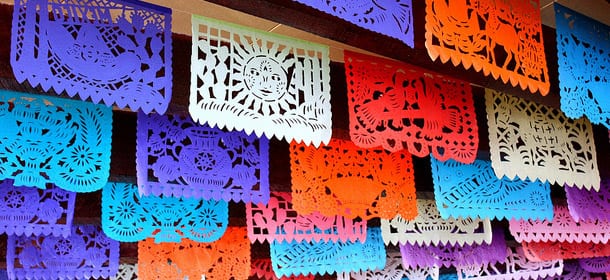
Papel picado is characterized by tissue-like, colorful paper. Instead of being framed and hung on the wall, these are strung up as banners to celebrate events like weddings, quinceañeras, and the Day of the Dead. According to the Guild of American Papercutters — whose papercutting museum you can visit in Pennsylvania — instead of scissors or knives, these artists punch out their designs using sharp chisels, 40 to 50 sheets at a time.
Germany, Switzerland, & USA: Scherenschnitte
by Annette von Droste-Hülshoff
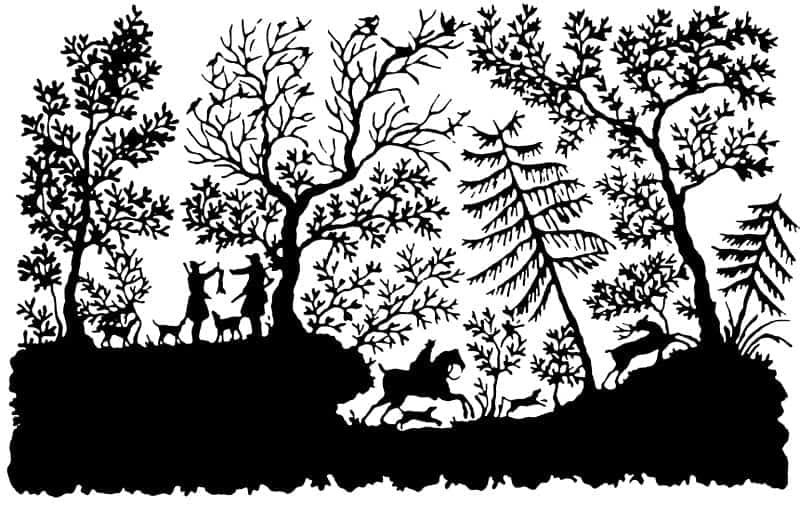
Starting in Switzerland and spreading to colonial America via German immigrants, Scherenschnitte is more pictorial than the graphically oriented papel picado. Artists use scissors and often fold the paper for symmetry — just like your paper snowflakes!
Like Kara Walker’s work below, this kind of art is sometimes called a silhouette. Traditionally, silhouettes were cut from black paper and originated as an affordable way to make a portrait.
Jewish papercutting
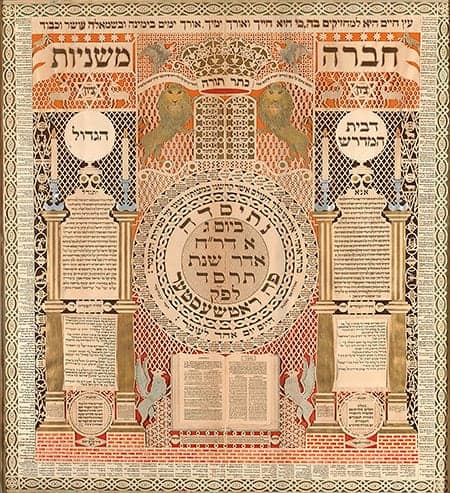
Memorial Tablet and Omer Calendar, Ink, paint, pencil, and watercolor on cut-out paper, by Baruch Zvi Ring, 1904
“This relationship of form and ground, as well as the horror vacuii evident in this composition, are characteristic of Eastern European folk art. Only the text and the American form of the eagles framing the Crown of the Torah mark this work as having been made in the United States.” — The Jewish Museum
Like Scherenschnitte, the Jewish papercutting tradition made its way to the United States with European immigrants. Here, it was used to embellish religious documents.
Kara Walker
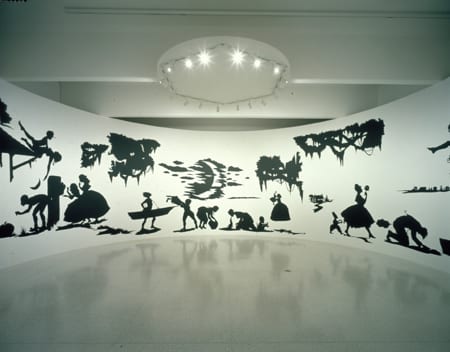
Slavery! Slavery! Presenting a GRAND and LIFELIKE Panoramic Journey into Picturesque Southern Slavery or “Life at ‘Ol’ Virginny’s Hole’ (sketches from Plantation Life)” See the Peculiar Institution as never before! All cut from black paper by the able hand of Kara Elizabeth Walker, an Emancipated Negress and leader in her Cause, cut paper on wall, 1997
“What the cyclorama and the silhouette have in common is that they’re complete opposites, but they’re sort of not relegated to art. … [The cyclorama creates] an illusion of space, whereas the silhouette, of course, flattens out space and identity.” — Kara Walker
Where the early silhouette portraitists saw cut paper as a way to capture a person’s likeness, Kara Walker saw the opportunity for caricature, and a metaphor for shallow stereotypes, simplification, and frozen points of view. Walker started as a painter and has utilized a huge variety of media in her work — including, last year, a monumental sugar-coated sculpture — but is probably best-known for her cut-paper works.
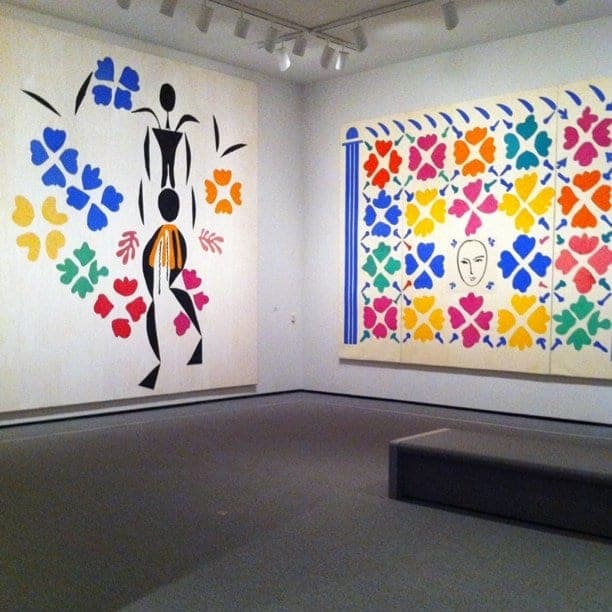
Cut-outs were the final chapter in Matisse’s career, with a palette more papel picado than Scherenschnitte. Matisse painted the paper first, then cut it out with scissors. Like Kara Walker, some of his works were room-sized — see the Swimming Pool for an example.
Our artists, juror, volunteers, and Gallery staff have been hard at work installing the July exhibits: “Quietly Cutting Through” by Shiho Rice and “Gatherings,” the juried group exhibit. Now it’s your turn to attend a “gathering” — tonight at 6:30, you can come to the opening reception to enjoy some refreshments and meet the artists!
The “Gatherings” award-winners, as selected by juror Jennifer Lindsay, clockwise from bottom: Khaivani, soapstone, by John Ploch; Prep Gathering, pastel, by Ann Wallace; and Take Me Out to the Ballgame, photograph, by David Kosar.
“Gatherings” proved an inspirational theme for our artists, who tell stories of the relationships between people, animals, objects, and shapes. Juror Jennifer Lindsay’s curatorial projects are collaborative artworks, and she brought the same sensibility to the jurying process.
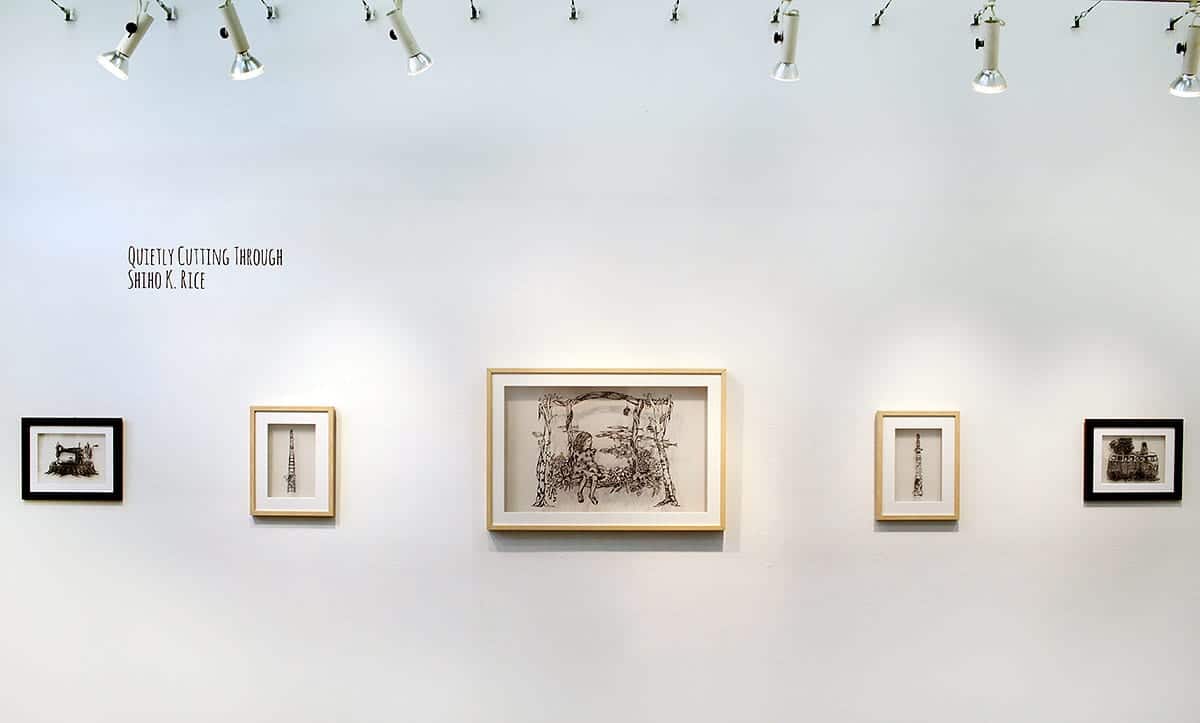
“Quietly Cutting Through” is more of a solitary pursuit, the story of an artist, her knife, and lots and lots of patience. Kirié is the art of cutting a single sheet of paper into an image: in Rice’s case, a series of dreamlike scenes inspired by her childhood. Every piece you see here started as just that — a single piece of paper:
“Quietly Cutting Through” (click for larger image)“Quietly Cutting Through”
If you’re curious how that happens, we’ll have more for you in a future blog post. For now, enjoy these exhibits!
Deadline: July 10. “Taking Shape” is this year’s edition of The Art League’s annual sculpture-only exhibit. Entry is online only. Juror: sculptor Jessica Beels. More about “Taking Shape” →
Chinese opera
Deadline: July 15. This exhibition has Chinese opera and its famous masks as its theme. More about the exhibit →
Norfolk residency
Deadline: July 31. The Studio Artist Program at Glass Wheel Studio, located in Norfolk, Virginia, is an immersive studio practice program awarded to 13 visual artists annually. The program welcomes visual artists working in all media. Artists will receive partially subsidized studio space, access to communal studio equipment, and public presentations/pop-up exhibition opportunities. More about Glass Wheel Studio →
Sense of place
Deadline: August 14. Annmarie Sculpture Garden and Arts Center invites artists to enter its exhibit, “Finding Our Place: The Geography of Art.” What informs your work? A physical location or a virtual world ? Do you know “where you are?” All media welcome; small to large-scale installations; new media encouraged; indoor and outdoor works accepted; cash awards. More about “Finding Our Place” →
Art Howard County 2015
Deadline: August 31. Applications are now being accepted for this biennial, juried exhibit. Visual artists 18 years of age and older who live, work, or study in Howard County, MD are eligible to apply. Juror: Paula L. Phillips, Community Arts Professor, Maryland Institute College of Art. More about Art Howard County 2015 →
The Art League is closed Saturday, July 4, including the Gallery and all Saturday classes.
That means you only have Friday, Sunday, and Monday left to see these exhibits:
“Potomac Skies”
From the June All-Media Exhibit, juried by Claire Kelly, director of exhibitions at the National Portrait Gallery. Foreground: Adam by Melanie Vacchio.“Tabletop”
If you happened to be in the gallery around midday last Monday, you might have wondered what was going on in the solo gallery, where eight people were sitting around enjoying a lively discussion. They were members of The Art League book club, which meets about every six weeks and is organized by outgoing gallery director Rose O’Donnell.
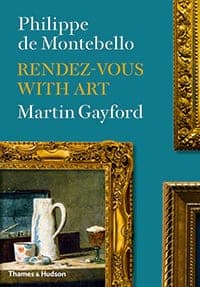
For this meeting, we had chosen two books by former directors of the Metropolitan Museum of Art in New York: Making the Mummies Dance by Thomas Hoving (Simon and Schuster, 1993), and Rendezvous with Art by Philippe de Montebello (Thames & Hudson, 2014). Although Hoving’s tenure at the museum was only 10 years (1967-1977) compared to Montebello’s 30-plus (1977-2008), Hoving’s is the book that really got our attention. It is a gossipy, opinionated, and very entertaining inside look at the upper echelons of donors, collectors, curators, politicians, etc. who make up the Met elite.
Hoving himself comes across as an outsized personality who was in his element wheeling and dealing to raise money for blockbuster exhibitions, big-ticket items for the collection, and badly needed renovations to the buildings. He even titles one chapter “Toadying,” and readily admits to being the toady-in-chief when he needed to be. While acknowledging mistakes he made along the way, his tone is generally one of self-congratulation. The general consensus among us was that he probably had much to congratulate himself about, but that he was also pretty ruthless in his personal relationships.
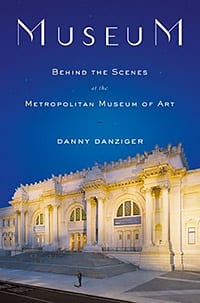
Montebello’s book doesn’t focus on the Met at all, but rather is a compilation of his commentaries on art in various collections — interesting, but lacking structure and narrative flow. Some of us also read Museum: Behind the Scenes at the Metropolitan Museum of Art by Danny Danziger (Viking, 2007), a more down to earth and personal view of the Met through interviews with its employees. All in all we had an interesting conversation about the books, the Met, and art museums in general.
For our next meeting, we’ll be reading a biography of Marcel Duchamp by Calvin Tomkins, or we can choose another book about Duchamp’s life and art. If you love art and books, come join us!
— Caroline Town
Interested in joining the book club? Email [email protected] for details.
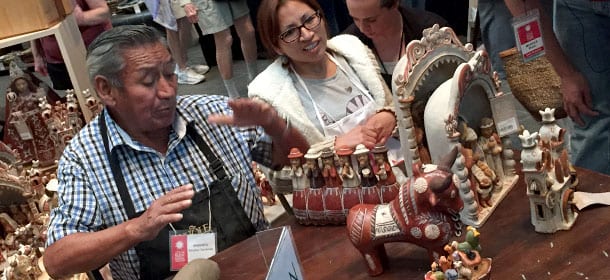
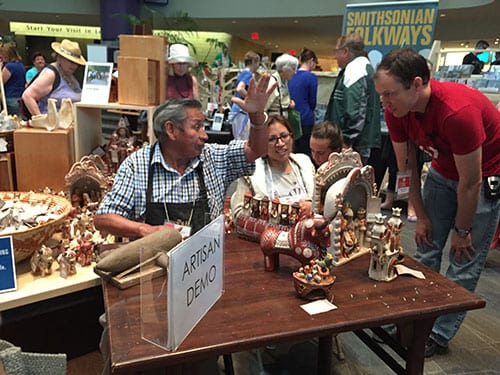
Some of The Art League staff took a little field trip today to the Smithsonian Folklife Festival. There are only a few days left, so if you’re interested in crafts, be sure not to miss it!
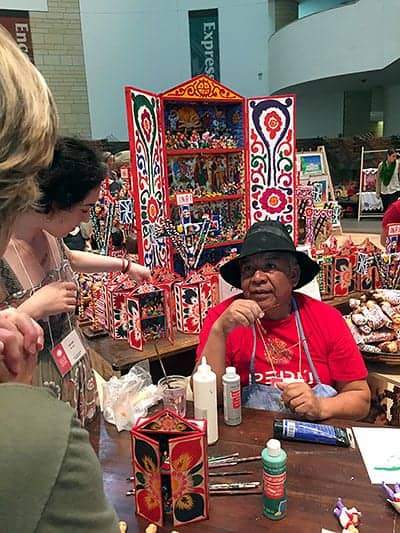
Tin sculptures, retablo (portable wood and clay altars), ceramics, incredible carved gourds, weaving, chicha printing, painting, musical instruments, and more were represented at the Marketplace (indoors at the National Museum of the American Indian, seen below) and in the festival’s tents, where you could watch artists at work.
Of course, while we were there for the art, we couldn’t help but enjoy some of the music, too. And food — try the carapulcra!
Mamerto Sánchez Cardenas and Deniss Sánchez Aparicio (seated) spoke about their traditional ceramic sculptures and bowls. Their clays and paints use only all-natural materials, which they have to hunt down themselves. Some are easier to find than others.Retablo artist Alfredo Lopez Morales demonstrated how he paints the small clay figures that go in these portable altars.

 Click here to vote for The Art League for the Best Place to Discover a Local Artist in the Express Best of 2015. (And, of course, feel free to fill out the rest of the categories as well.)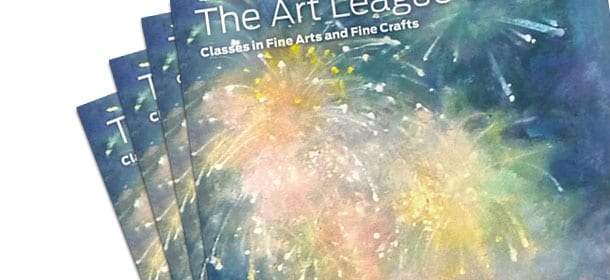

 coloring books for adults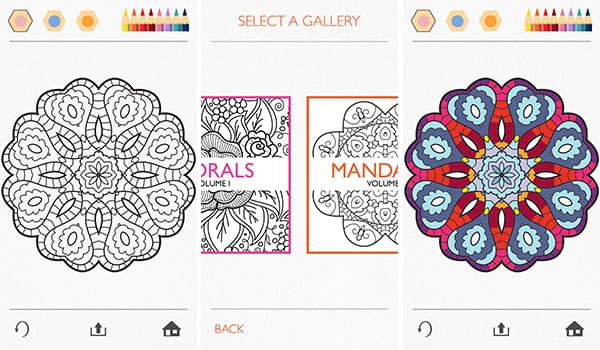
 drawing plus gravity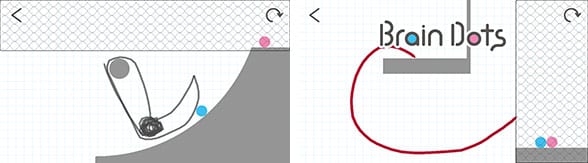
 draw with your favorite fonts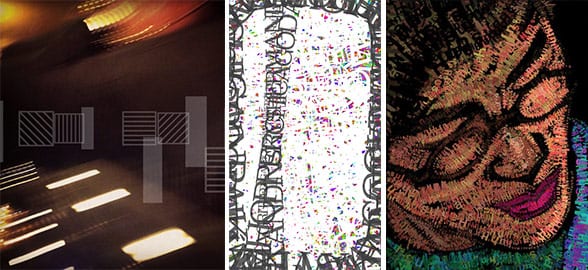
 glitch your photos
 text your doodles
 simple sketchpad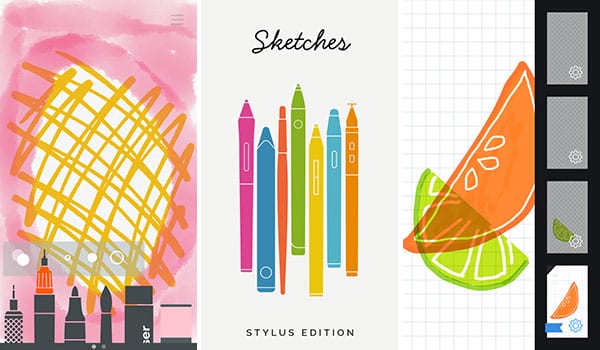
 stop-motion studio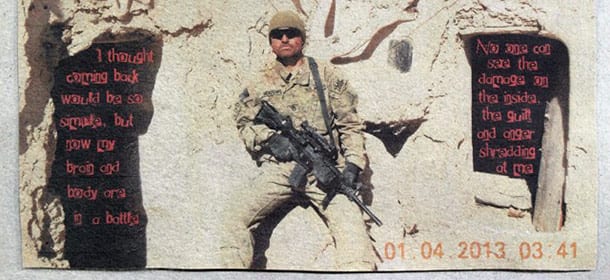

 Why Your Five-Year-Old Could Not Have Done That
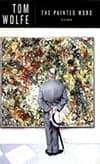 The Painted Word
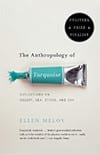 The Anthropology of Turquoise
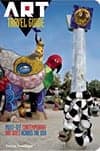 Art Travel Guide: Must-See Contemporary Art Sites Across the USA
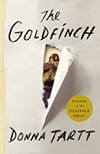 The Goldfinch
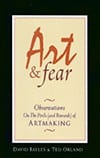 Art & Fear: Observations on the Perils (And Rewards) of Artmaking
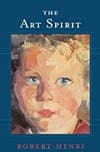 The Art Spirit
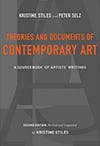 Theories and Documents of Contemporary Art
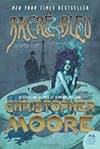 Sacre Bleu: A Comedy d’Art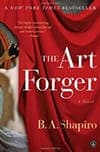
 Provenance: How a Con Man and a Forger Rewrote the History of Modern Art
 Making the Mummies Dance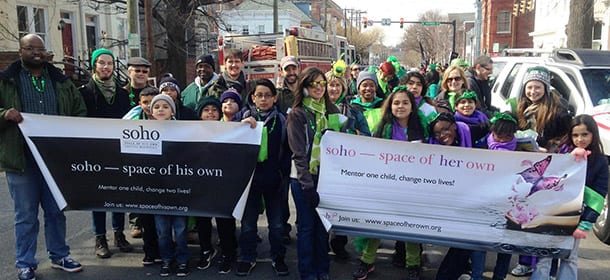










 chelons of donors, collectors, curators, politicians, etc. who make up the Met elite.
 Montebello’s book doesn’t focus on the Met at all, but rather is a compilation of his commentaries on art in various collections — interesting, but lacking structure and narrative flow. Some of us also read Museum: Behind the Scenes at the Metropolitan Museum of Art by Danny Danziger (Viking, 2007), a more down to earth and personal view of the Met through interviews with its employees. All in all we had an interesting conversation about the books, the Met, and art museums in general.