Michelle Obama on IMPart!

It’s not every day the First Lady mentions you in a speech!

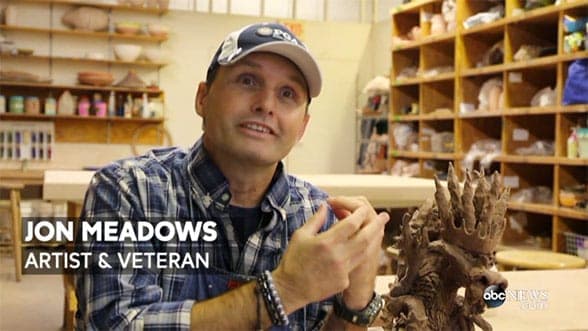
On Wednesday, Michelle Obama, Jill Biden, and Prince Harry toured Ft. Belvoir. Jon Meadows had his artwork on display at the USO Center, and, well, here’s what happened next:

Michelle Obama: “Earlier today, I caught up with one of those tremendous caregivers who I’ve gotten to know over the years.  Her name is Melissa Meadows.  And her husband Jon sustained severe brain and nerve injuries in Afghanistan almost three years ago.  And his injuries were so serious that one of his doctors described him as an ‘advanced Alzheimer’s patient.’

Melissa, like so many in this room, dropped everything.  She left her job as a nurse and cared for Jon full time, helping him in and out of bed, managing the family’s finances, managing Jon’s medication, all of his appointments, and so much more.  And while she was supporting her husband, Melissa started supporting other caregivers as well.  She helped organize a network to help other caregivers share information and ideas here at Fort Belvoir. …

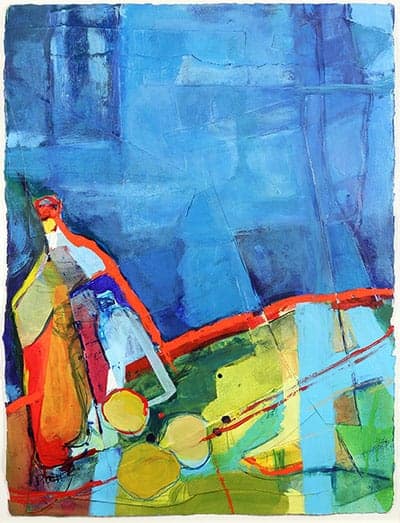
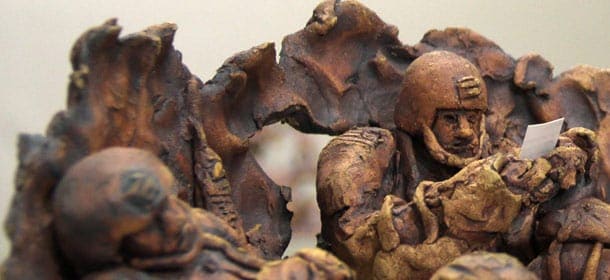
And today, with Melissa’s support, her husband Jon continues to recover.  I got a chance to spend some time with them and saw his amazing art work — another incredible therapy that is happening here at Fort Belvoir.

So it’s just amazing to see. It’s been amazing to keep up with their story. And as all of you can imagine, recovery, it’s a long road. There are starts and stops. There are good days and bad.  But Melissa, Jon, they are fighters, just like all of you.  Jon has made incredible progress. And as I said, through the art therapy program with the USO and The Art League, he’s unlocked this amazing talent for sculpture and painting that he didn’t even know existed. I actually commissioned him to do a piece for the President’s Christmas present from me, so please don’t tell him. Jon even has his own pop-up art exhibition in Alexandria.”

Thank you to Mrs. Obama for your support of the IMPart program, and good choice on your Christmas present! Read her full remarks here. For more about IMPart, click here.
Energy Through Line: A Q&A with Guy Jones

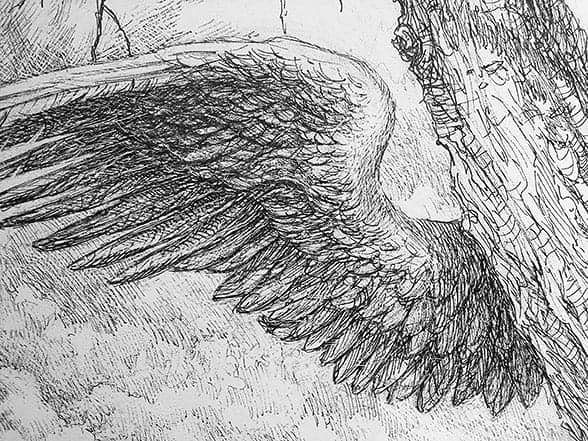
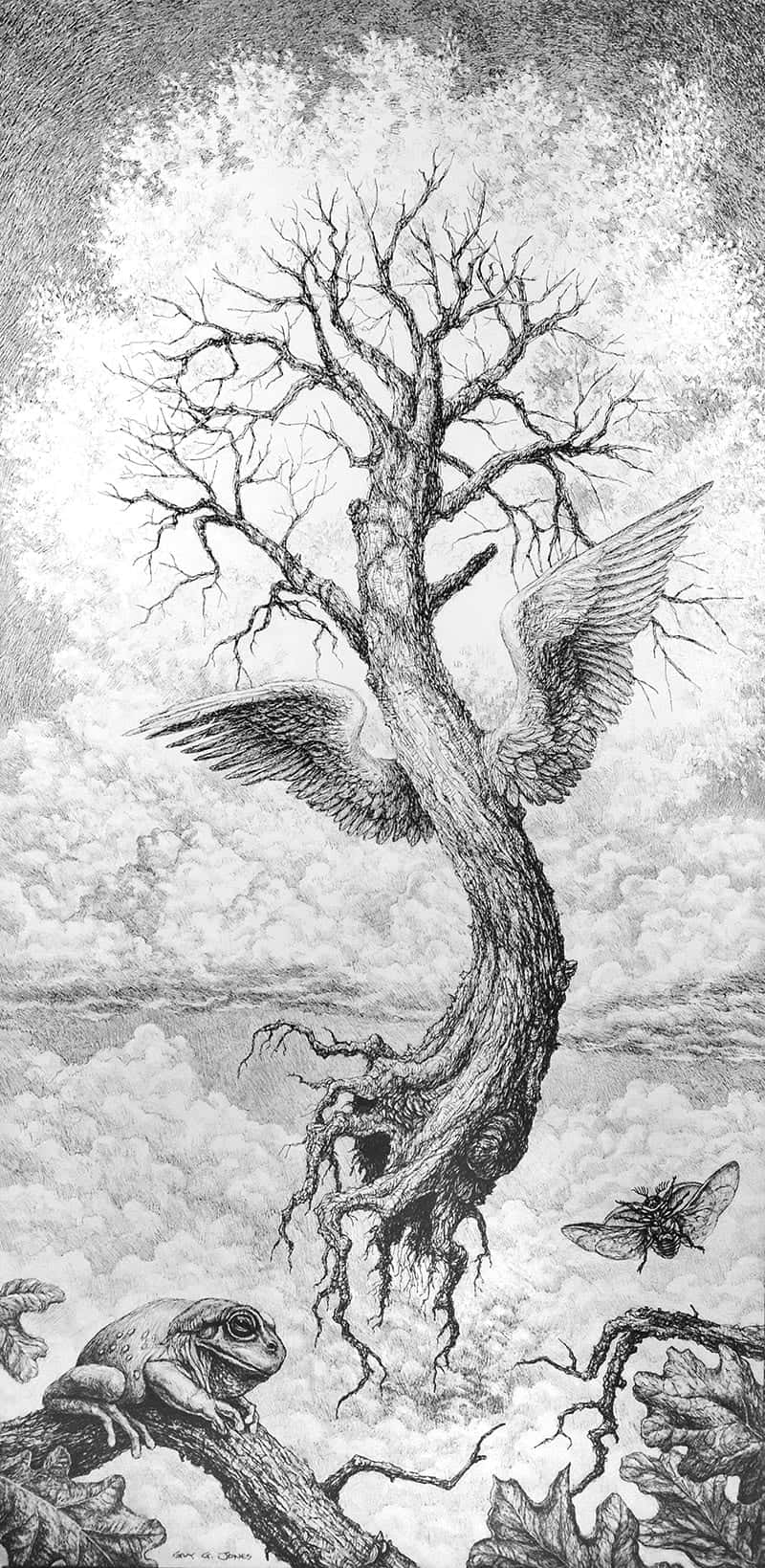
Resurrection, pen and ink on gesso board, by Guy Jones
Resurrection, pen and ink on gesso board, by Guy Jones. Sold.

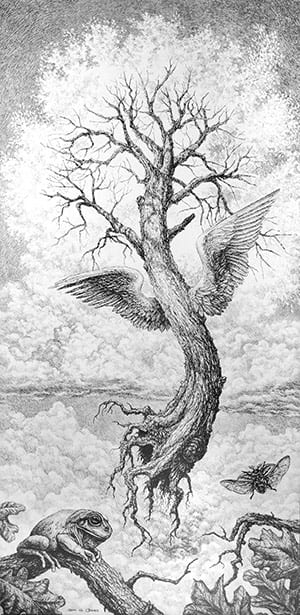
The Torpedo Factory recently lost two longtime resident artists. Friend and fellow artist Guy Jones has memorialized them in this three-foot high drawing, which happened to be selected as Best in Show by the juror for this months’ “Superstition & Belief” exhibit.

We asked the artist to tell us about his chosen medium — pen and ink — and the inspiration for this piece, his largest to date:

How would you describe Resurrection?
Resurrection is a vision. It’s a view into the other side: what lies beyond this realm. It is “other worldly.”

What was the inspiration for this piece? What was your goal?
I was not inspired; I was shown. The image hit my brain like a bolt of lightning. I found out after three days of rough sketching that a fellow artist friend had passed away the day I had this vision, and that my artist studio mate was dying (and passed away three days later). They are both present in this piece.

My goal was to share this vision. Bob is the frog and Marcel is the beetle. This image was a gift from them.

Resurrection by Guy Jones (detail)

What does the winged tree represent to you?
The winged tree came before anything else was conceived. It represents rebirth. When I look at that tree, I see the doorway to the “other side.” There is this old tree next to the path at Huntley Meadows Park that captivates me and perhaps inspired my vision.

Why are you an illustrator? What keeps you coming back to drawing?
I was wired to draw.

I have illustrated but do not consider myself an illustrator. I draw. I draw energy through line. I have always loved pen & ink, don’t know why. I really prefer black & white.

“When it’s done, it can really surprise me. I like that.”

Can you elaborate on the idea of “energy through line”?
You see, everything is energy, has spirit. I draw the energy behind the image. I just happen to use pen & ink (line) to express this energy.

What tools did you use to create Resurrection?
Resurrection is “straight up” pen & ink on gesso wood panel. That’s it.

I use Micron pens. They are felt tip but use archival ink.

When are you most happy, creatively?
Pieces rarely end up the way they start. I go into it pretty loosely. When it’s done, it can really surprise me. I like that.

What are you working on now?
Currently I am a Torpedo Factory Artist on the 3rd floor in Studio 329. I’m gearing up for the holiday season. I plan on making larger pieces in the near future. “Resurrection” is the largest piece I have done. I usually work fairly small.

Why is this piece the largest you’ve done?
Well, I had this large panel for a while but was more comfortable working smaller. Then I had the vision and I knew I had to use the large panel.

First came the tree. Everything else just followed. That’s usually how it goes.

Save $10 on Art on Tap Tickets (Ends Today!)

Art on Tap

Do you enjoy art? Beer? Food? How about all three?

We’ve invited seven breweries and seven restaurants to pair their beers and original appetizers with seven works of art by Art League artists.

At the second annual Art on Tap, you can try all seven triplets and vote for your favorite. We’ll also have live music and video art to enjoy.

Tickets are only $35 for a limited time! Buy your ticket by Friday, October 23 to take advantage of this early bird deal before the price rises to $45.

Buy tickets on Eventbrite

Art on Tap participants


What is Sgraffito?

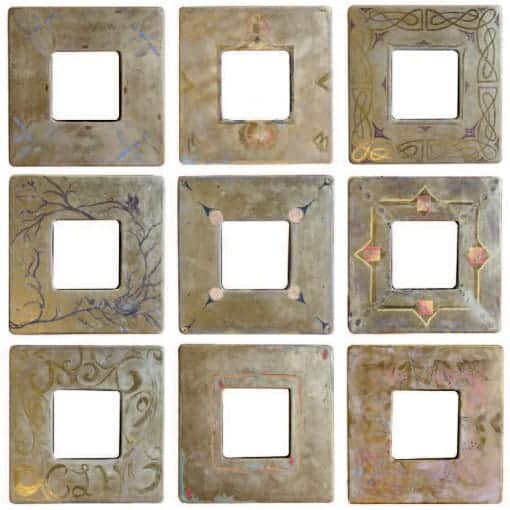
Student work from past Sgraffito and Granito workshops taught by Bill Adair.

Sgraffito & Granito Workshop
Friday, November 13, 2015

Next month, master gilder and frame historian Bill Adair is opening up his Gold Leaf Studios for a special Art League workshop. The technique he’ll be teaching is one that’s not familiar to many modern artists, though it’s been around for hundreds of years.

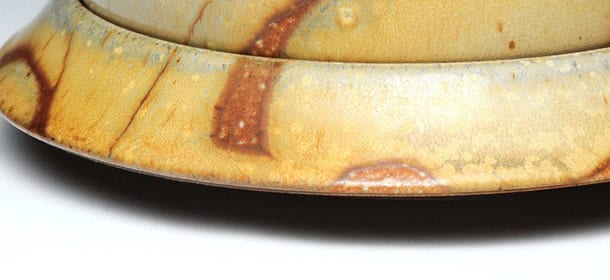
sgraffito: (Italian) scratched away

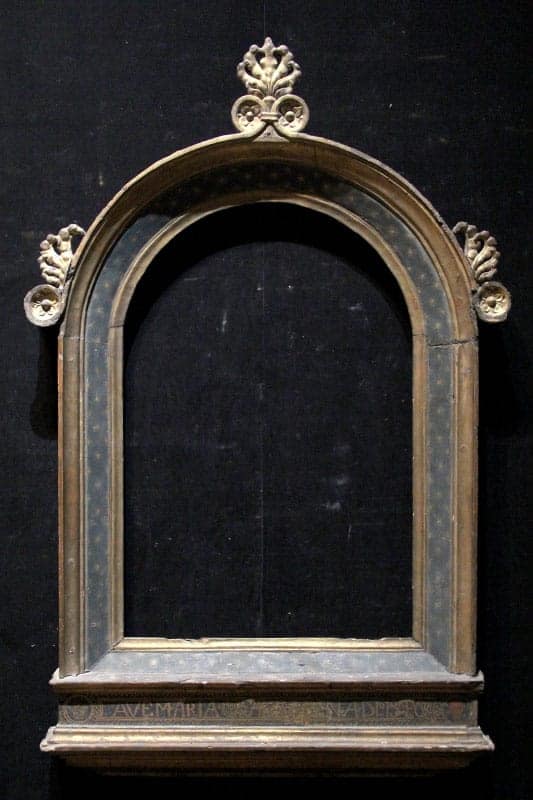
Sgraffito is used to refer to any technique where a surface is scratched to reveal what’s underneath. Ceramics artists may recognize it as a surface decoration technique. In framing, it dates back to the Renaissance, which is when this frame, now at Gold Leaf Studios, was made:

Sgraffito stars

See those gold stars against the blue? That’s sgraffito. First, the frame is gilded (covered with gold leaf). Then, it’s painted over with tempera paint — in this case, blue. When the paint is dry enough, it’s scratched away with a tool to reveal the gold again. Watch how in this video (the scratching starts at about 2:30):

And what about the other part of the workshop, the granito?

granito: (Italian) grained, made grainy

Another traditional frame decoration technique from Italy, granito is all about creating texture, using punches, stamps, and other tools. You can read more about both these techniques in this article by Bill Adair in Picture Framing Magazine.

Artist Opportunities #293

Painting by Art League sumi-é instructor Charlene Fuhrman-Schulz

Every Tuesday, we gather a variety of artist opportunities around the DC area and beyond. Find one below and enter today — good luck! Click here for recent opportunities posts, and submit your opportunity listing here.

Artomatic 2015 last chance!

Deadline: first come, first served. Don’t miss your chance to participate in Artomatic 2015, opening October 30! Read the registration guide here, and check out this helpful blog post on How to Sell at Artomatic.

Wings

Deadline: October 26. This exhibit at ArtSpace Falls Church is an all-media, juried show open to all artists. The theme is “Wings.” For more information, see page 2 of the catalog here.

Craft sale

Deadline: October 28. All Crafts Considered is NPR’s annual arts and crafts event. More about All Crafts Considered →

Public art

Deadline: November 8. The City of Alexandria, Virginia invites artists and artist teams to submit their qualifications to be considered for a public art project as part of the Simpson Park Playground and Passive Space Renovation. Read the Request for Qualifications →

Photography exhibit

Deadline: November 18. For “Simply” at the Center for Fine Art Photography, photographers are asked to capture the everyday in an extraordinary way. All subject matter accepted. All capture types and photographic processes are welcome. More about this exhibit →

Vivid: Abstract Expressions

Deadline: November 30. This exhibit at ArtSpace Falls Church is an all-media, juried show open to all artists. The theme is “Vivid: Abstract Expressions.” For more information, see page 2 of the catalog here.

Some Spaces Remaining for Andrew Wyeth Studio Trip

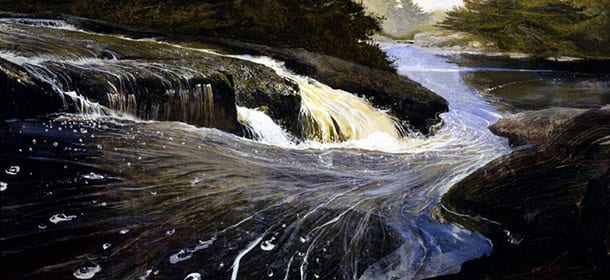
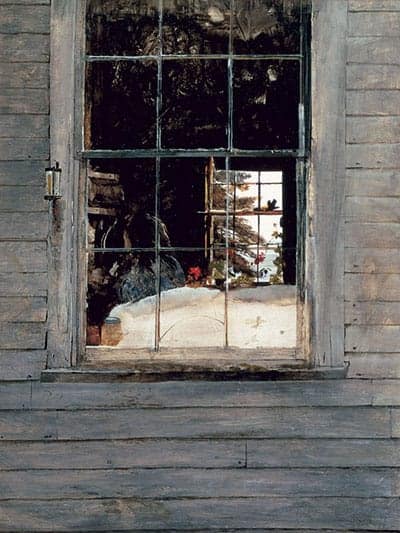
Geraniums by Andrew Wyeth. Cover image: The Carry by Andrew Wyeth.

See where one of the great American artists of the 20th century lived and worked!

You can sign up for this trip through Thursday, October 22 at 5:00 pm. For more information and to register, contact Travel Workshop Coordinator Margaret Cerutti: 703-683-1780 x 13 or [email protected].

Day Trip
Monday, October 26, 2015
Andrew Wyeth’s Studio, the Brandywine River Museum and Kuerner’s Farm

Originally purchased in 1911, the 18 acre property on the Brandywine was acquired by Andrew Wyeth’s father, N.C. Wyeth, with the proceeds from his illustrations for Treasure Island. It has since served as endless inspiration for a family of extraordinary creativity

A private motorcoach will take you from the Torpedo Factory Art Center to the Brandywine River Museum in Chadds Ford, Pennsylvania to view the Museum’s art collection and receive guided tours of Andrew Wyeth’s studio and neighboring Kuerner’s Farm.

After a small breakfast, the bus will depart from the Torpedo Factory Art Center at 7:15 am. The group should arrive back in Old Town about 7:00 pm.

Cost: $105 per person
Includes: Breakfast snacks, round-trip transportation by private motorcoach, entrance passes to the Museum, Wyeth’s Studio and Kuerner’s Farm, and guided tours of the Studio and Kuerner’s Farm

For the full slate of travel workshop in 2015–16, click here.

Visiting Gold Leaf Studios

Gold Leaf Studios

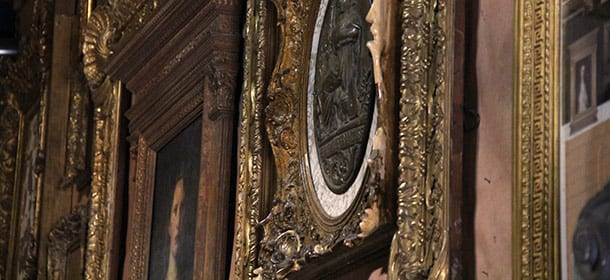
Yesterday, we took a trip to Gold Leaf Studios to see the workshop firsthand — a veritable theme park of frames and framing history located in Dupont Circle.

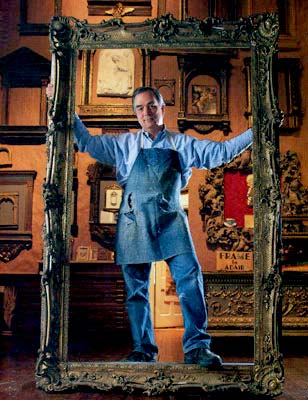
Gold Leaf is the studio and workshop of Bill Adair, a master framer, gilder, and frame conservator and historian:

Bill Adair (courtesy Gold Leaf Studios)

This November, Adair is partnering with The Art League for two projects. First, he’s curating an exhibit on framing and art history in the 19th and 20th century, “Artistic Vision: Redefining the Picture Frame.” And on November 13, he’ll be teaching a workshop on Sgraffito and Granito, two traditional techniques for decorating frames. That workshop will take place onsite at Gold Leaf.

The Gold Leaf Studios building was a carriage house in a former life. Once we arrived, we went upstairs, bypassing the workshop on the first floor. But of course, we still snuck a peek on the way out:

Gold Leaf Studios

Upstairs in the galleries, every wall was filled with examples of frames. And when we say filled, we mean it.

Gold-Leaf-Studios-1

That painting on the left, by the way, is by Abbott Thayer — the painter, teacher, and father of camouflage — and will be in November’s frame exhibit.

There are lots of goodies to take in at this studio, but we’ll share with you just one more of our favorites: this 15th-century Italian frame that shows off some sgraffito stars:

Gold Leaf Studios

To read more about this frame and see some student work from past Sgraffito/Granito workshops, read Bill Adair’s article in Picture Framing Magazine here.
Links:

What’s That Thing? Tortillons

Tortillons, up close.

Do you have a question about art supplies? Let us know in the comments or by contacting us here.
There are lots of cool things in art supply stores, including a fair number that might make you wonder, “what’s that for?”

At The Art League Store, staff members are working artists, so they can answer that question for you. For the inaugural edition of “What’s That Thing?”, we decided to tackle tortillons.

Tortillon

How’s it pronounced?

Tour-tee-ohn, roughly. (Note: if you ask for a “tortle-on,” the store clerk will still know what you’re looking for. We speak from experience.)

It’s French, meaning “something twisted.” Sometimes spelled tortillion, with an extra “i”.

What is it?

A short stick made from tightly rolled paper. You can see what they look like close-up at the top of the post.

What’s it for?

It can be used for blending graphite, charcoal, and pastel. Use it by rubbing and see the effect it has on your drawing. To clean it, you can use sandpaper (also sold in the store) or just grab a new one. They’re very inexpensive.

How’s it different from a blending stump?

They’re used for the same thing, but they have some differences. Tortillons are much smaller and have harder, scratchier paper. They’re made from a sheet of paper in a tightly rolled stick.

In contrast, blending stumps are molded from paper pulp and have a more “velvety” texture, as described to us by store clerk Chris Cardellino. Because they’re larger and stubbier, they’re better suited to large areas of blending, while tortillons can get into the detailed areas of your drawing.

How much are they?

At The Art League Store, they’re $1.20–1.30 for a pack of six (in either Small or Medium). Blending stumps come in a variety of sizes and range from $0.84–2.45.

You can also experiment with making your own: just cut out a trapezoid of scrap paper and roll it as tightly as you can.

tortillon

Five Ceramics Instructors in “Strictly Functional”

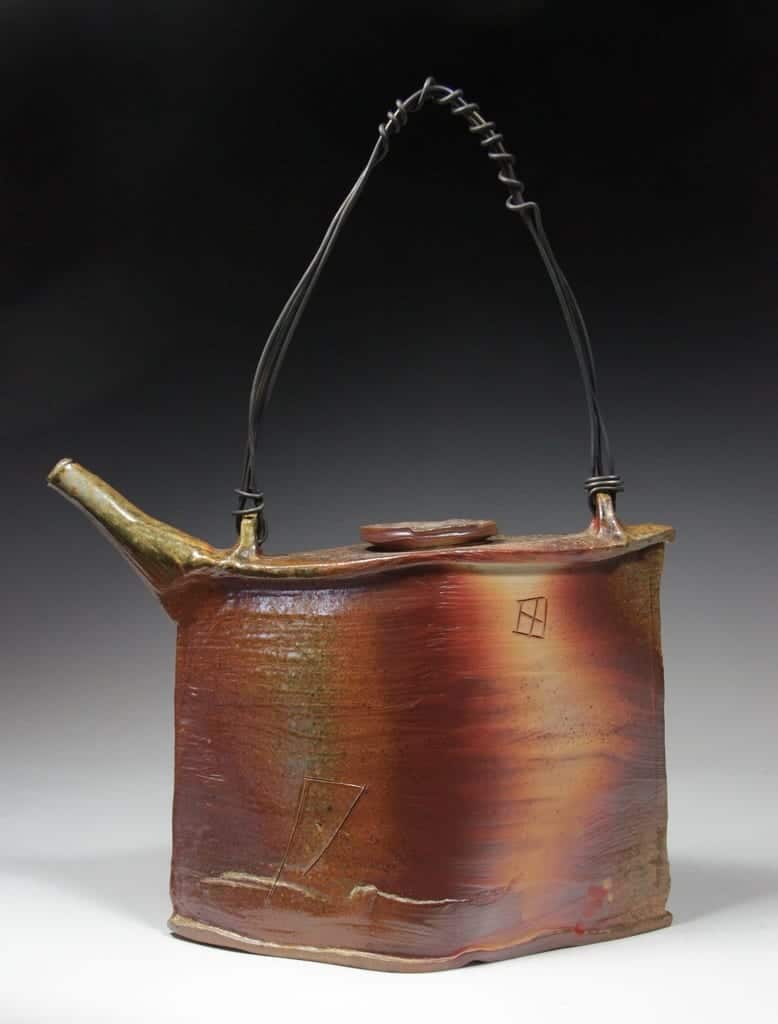
Oval Teapot Adobe with Hollyhocks by Blair Meerfeld.

On view now in Lancaster, PA, the 2015 “Strictly Functional” is the 23rd edition of the big, annual juried exhibit.

And we’re pleased to share that five current and recent members of the ceramics faculty here at The Art League are part of it! Not a bad representation, don’t you think? Susan CohenSusan Greenleaf, Blair Meerfeld, Allison Severance, and Joan Ulrich are all featured, and Joan Ulrich also received a Purchase Award from the L&L Kiln Company for her Nesting Soup and Salad Bowls.

Congrats to the artists on their beautiful, functional work!

Nesting Soup and Salad Bowls by Joan Ulrich

The 23rd Annual Strictly Functional Pottery National, juried by Matt Long, is on view through October 31, 2015 in Lancaster, PA.

Artist Opportunities #292

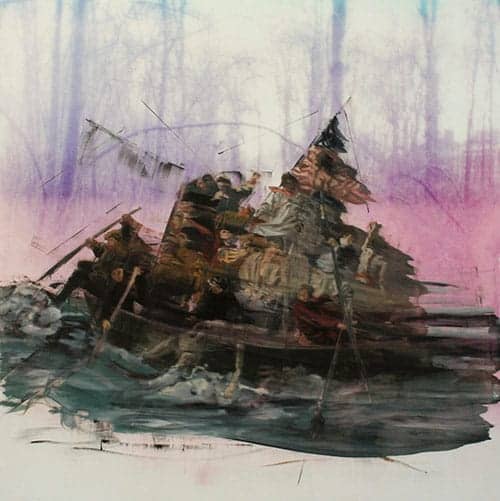
Washington, Medusa, Watson by Art League instructor Matt Pinney. 48” x 48”, oil on aluminum photographic print, 2013
Washington, Medusa, Watson by Art League instructor Matt Pinney. 48” x 48”, oil on aluminum photographic print, 2013.

Every Tuesday, we gather a variety of artist opportunities around the DC area and beyond. Find one below and enter today — good luck! Click here for recent opportunities posts, and submit your opportunity listing here.
VMFA Fellowships

Deadline: November 6. The Virginia Museum of Fine Arts is committed to supporting professional artists as well as art and art history students who demonstrate exceptional creative ability in their chosen discipline. Only current legal residents of Virginia are eligible. More about the fellowships →

Being Her Now

Deadline: November 9. What does it mean to be a woman in the twenty-first century? All forms of media will be considered for this exhibit at Salisbury University in Salisbury, MD. More about this exhibit →

Photography exhibit

Deadline: November 19. The Maryland Federation of Art (MFA) invites all artists residing in the United States, Puerto Rico, Canada and Mexico to enter its 5th annual Focal Point, an open-juried all photography competition. Following exhibition guidelines, any original 2-D or 3-D work created in any form of photography will be considered. More about Focal Point →

Fairfax County Artists

Deadline: January 6, 2016. The Arts Council of Fairfax County is pleased to announce the annual Strauss Artist Grant program for individual artists. Artists in all disciplines including visual arts, creative writing, theatre, dance performance, choreography, film, new media, music composition, and music performance are eligible to apply. More about the Strauss Artist Grants →


What’s New in the Gallery: Superstition, Belief, & Celebration

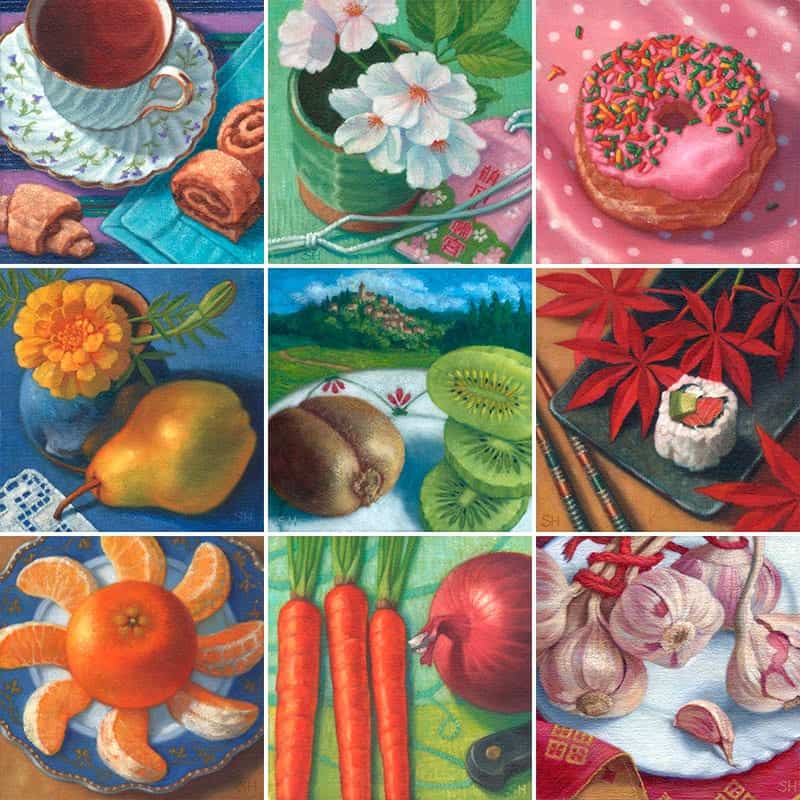
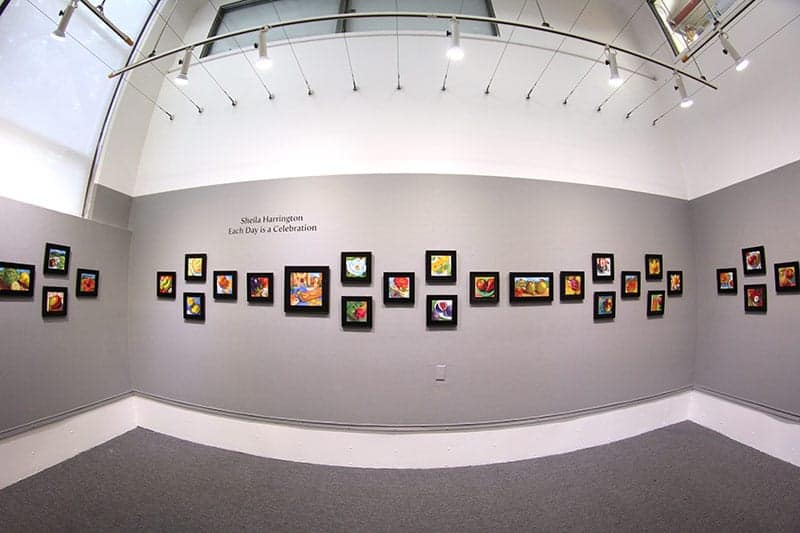
Nine paintings from “Each Day is a Celebration,” a 58-painting series by Sheila Harrington.

Are you superstitious?

Whatever your beliefs, we believe you’ll enjoy our new exhibits for October.

Superstition & Belief,” juried by Joseph Cavalieri, is an exploration of the spiritual and the occult. Art League member artists brought a lot of strong work, some of which is getting us in the mood for Halloween:

The Seer, photograph by Nancy Howren
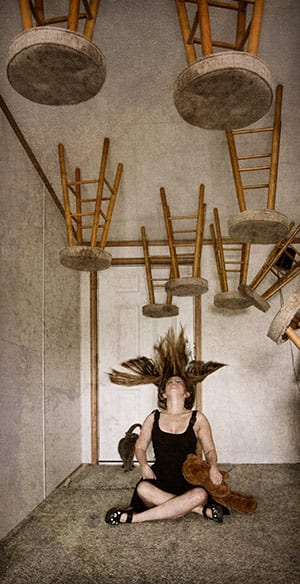
They Keep Going Up, photograph by Roxanne Crouse
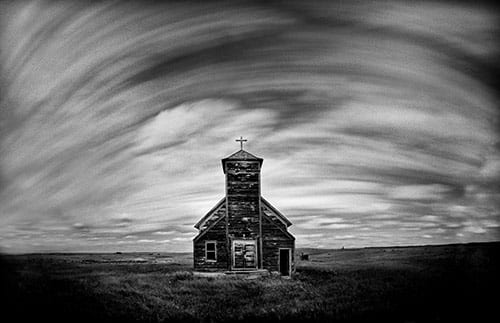
The Church With No Flock by BD Richardson
The Church With No Flock, mixed media, by BD Richardson

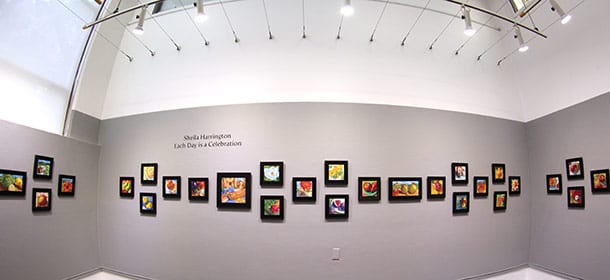
This month’s solo exhibit is seasonal in a different sense. “Each Day is a Celebration” by Sheila Harrington documents a year in the world through the prism of small still lifes. Each painting shows the different foods, flowers, and drinks that graced the artist’s table over the course of a year. You can follow along from spring to summer to fall to winter, enjoying the different sight sensations as you go.

Sheila Harrington - Each Day is a Celebration

Both exhibits are open through November 1 (a Sunday, not a Monday as usual). Come see them! Our gallery hours and exhibit info can be found here.
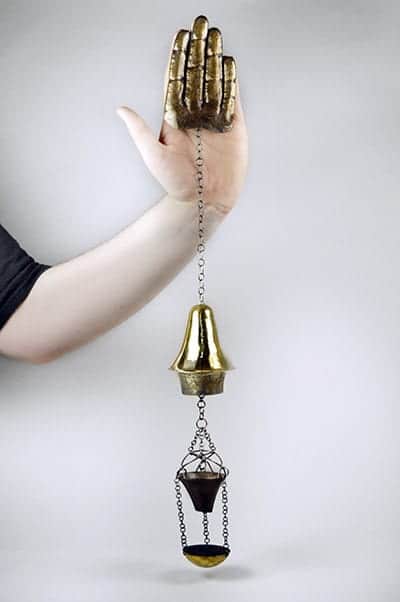
Deconstructed Thurible; copper, brass, and silver; by Ryan Davis.
Resurrection, pen and ink, by Guy Jones was awarded Best in Show.
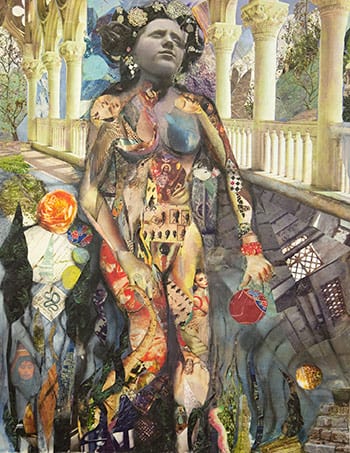
Goddess, mixed media, by Denise Adler.

How to Read a Tube of Paint


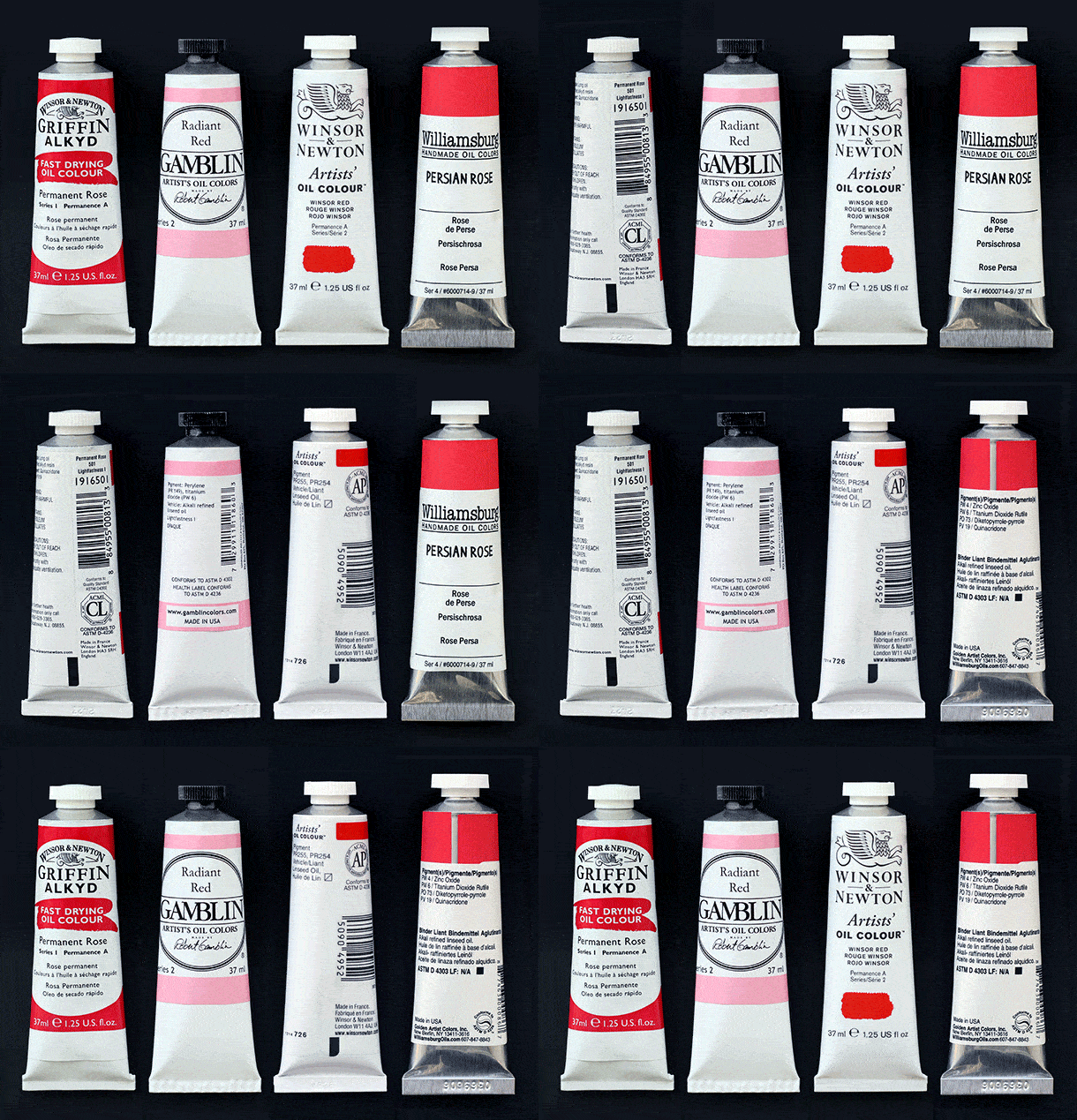
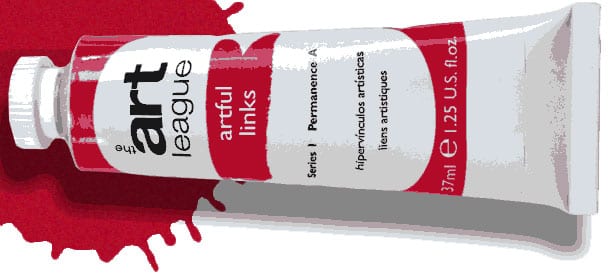
Paint labels, front and back

Do you have a question about art supplies? Let us know in the comments or by contacting us here.
It can be a little overwhelming, standing in front of a rack of artist paints. With dozens or even hundreds of colors to choose from, where do you start?
With the label, of course! While technically written in English (and sometimes Spanish and French too), they can sometimes be a little tough to decipher. But everything you need to know is there, from the pigments used to make the paint, to its archival qualities, to what kind of safety precautions, if any, you need to take.

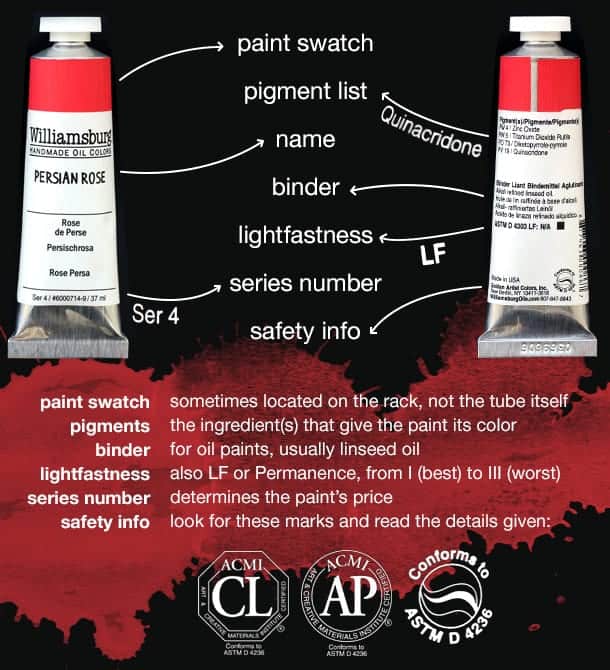
If you ever need any help choosing or reading paint labels, The Art League Store is staffed by knowledgable, working artists who are there to answer your questions. Here’s our quick guide to finding what you need on paint tubes, front and back:

How to read paint tubes

About pigments: Different manufacturers have different “common” names for paints that use the same pigment. For example, Winsor & Newton’s “Winsor Lemon,” Golden’s “Hansa Yellow Light,” and Williamsburg’s “Permanent Yellow Light” all use PY3: Arylide Yellow, but you wouldn’t know that unless you peeked at the back of the label.

About lightfastness: Lightfastness lets you know how permanent (or archival) the paint will be: will the color look the same in a few years or does it lose its vibrancy or shift hues after periods of exposure to light or heat? The manufacturer has tested it for you so you don’t have a nasty surprise years down the road.

About series numbers: The higher the number (or letter), the higher the price. Why are some paints more expensive than others? It’s all about the pigments, which might be from organic sources or manufactured synthetically, and how much they cost the manufacturer.

Of course, these are just the basics — different products have many variables that may or may not be on the label, like opacity and transparency, how thick or thin the paint is (viscosity), and drying time.

Artist Opportunities #291

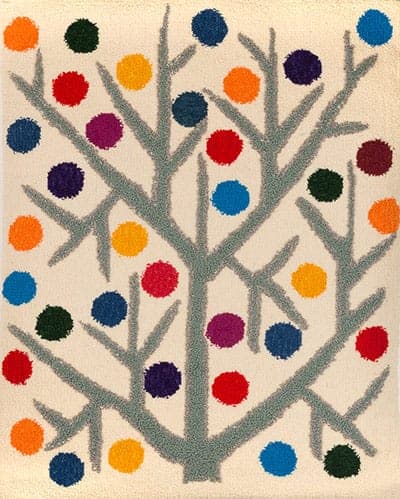
Lollipop Tree rug by instructor Michael Heilman

Every Tuesday, we gather a variety of artist opportunities around the DC area and beyond. Find one below and enter today — good luck! Click here for recent opportunities posts, and submit your opportunity listing here.

Artomatic 2015

Deadline: First come, first served. Artomatic 2015 is here! Find out how to participate by taking a look at the Registration Guide.

NC Residency

Deadline: October 10. Artspace in Raleigh, NC has two residency opportunities. Learn more about them here.

Environmental art

Deadline: October 16. “ecoPOP: Art” is a three-day Pop Up event.  Local artists will display and sell their artwork made from recycled materials  or with an environmental theme. More about the event →

Works With Paper

Deadline: October 24. The theme of the 6th Annual Sitar Arts Center Juried Exhibition is Works With Paper. Submissions must show the manipulation of paper in some form to change the identity or use of the paper to represent your concept or idea. Entrance categories are split into Youth, Young Adult, and Adult. More about the exhibit →

Historical DC art

Deadline: January 3, 2016. The Historical Society of Washington, D.C. invites all artists residing in the Washington metropolitan area to enter its 2016 For the Record juried exhibition and fundraiser. This call is for 2D artwork depicting Washington’s changing built environment. Artists agree to donate their work to the Historical Society if accepted. More about the exhibit →

Eat at the Majestic, Support Alexandria Nonprofits

Majestic and ACT

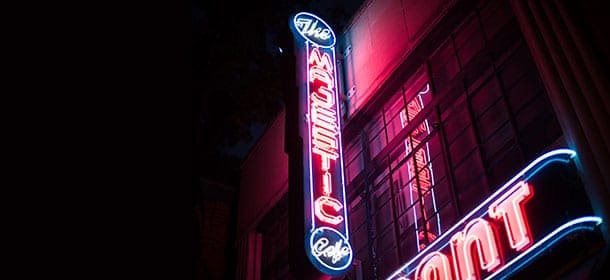
The Majestic Cafe on King Street is offering a special deal with ACT for Alexandria: discounted meals and donations to Alexandria nonprofits (including The Art League)!

Sunday through Thursday, mention ‘ACT’ at the Majestic Cafe for:

  • a free appetizer
  • 5% off your bill
  • 5% of your total purchase goes to the Majestic Cafe Grant Fund for local nonprofits

You can also enter to win a $100 gift card for yourself and $500 for your favorite nonprofit.

Read more about the partnership at ACT for Alexandria.

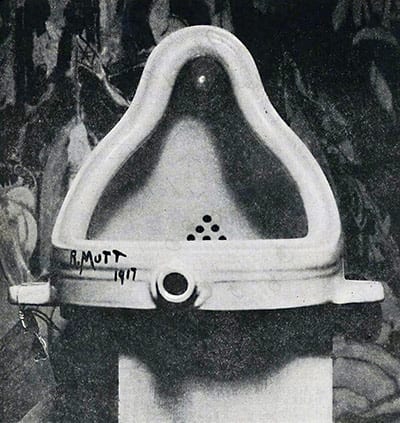
A Fountain of Artful Links

Fountain, 1917, by Marcel Duchamp (?)
Fountain, 1917, by Marcel Duchamp (or is it?)

Every so often, we like to share some of what we’re enjoying on the Internet. Recently we’ve been fascinated by some different takes on art history: reassessing authorship, peeking at old filmstrips, making paint by hand. Dive in and click away!

art-icle

video

resource

video

book

Artomatic 2015 Registration is Open!

‘Artomatic 2015 is a six-week long art festival in Prince George’s County, MD, right by the New Carrollton Metro Station that is “by artists, for everyone.” It is absolutely free to the public. This year’s event features more than 700 artists: Visual art, music, performance, film, and more. Workshops, tours, seminars and other events are held throughout the duration of the show.’

Find out how to participate by taking a look at the Registration Guide. If you’re not familiar with Artomatic, you can see some images from the 2012 show here.

Q&A with Painter Ann Pickett

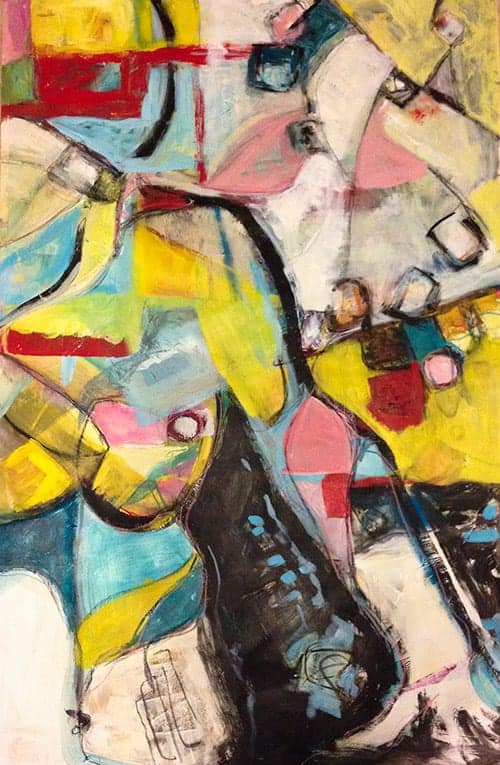
Tumbling Down - Ann Pickett
Tumbling Down by Ann Pickett

A “circus” of color, a “flurry” of paint — Ann Pickett’s latest painting to be accepted to an Art League show seems ready to jump off the wall.

That energy and flow caught the eye of juror Erin Devine, who awarded Tumbling Down the Shayna Heisman Simkin Award for Best in Show. The artist, a graphic designer by day, told us more about this piece and how she works:

How would you describe Tumbling Down?
Ann Pickett: Tumbling Down depicts a figure that appears among the shapes and forms on the paper. This figure seemed to spill out onto the paper, landing solidly on a heavy ground. Tumbling Down is light and circus-like, yet contains a greater metaphor: in life, you find yourself juggling many pieces, but will always find a place to land.

How do you start a painting and how do you end one?
Usually, I choose a few colors and start painting in a flurry. I like to put a lot on my canvas or paper all at once, bold expressive strokes, color, and line, before I really take in what is there. I work very quickly and intuitively, reacting to each stroke as it speaks to me. I paint layer after layer, rotating my canvas, hiding or exposing what is underneath in order to create depth and light.

My palette evolves with my painting; I tend to like lots of colors, and end up having to restrain myself. I always paint from something: landscape, figure, still life. I’m rarely sure when I am done with a painting, but I am very aware when I’m done painting. I usually sit with my painting for days or weeks before I decide if I like it, hate it, or am ready to go at it again.

Still Life Abstracted by Ann Pickett (from the April 2015 All-Media Exhibit)

Do you listen to music while you work?
While I love music, I find that I only paint while listening to music on certain, rare occasions. When I am warming up or playing with paint, listening to something lively to move my brush to can help me get going, but I find that when I am really into a painting, I am so tuned in to what I am doing that music can be distracting.

Why do you paint?
I paint because I love to paint, to express myself in bold colors. Line and form just resonate with me, it feels good and right. I am a graphic designer by day, but painting allows me to let my artistic energy loose, to be brave and bold; it is just fun and freeing. I love the rush that moves through me when I am moving the brush and things begin to happen.

In Tumbling Down, what do you want the viewer to come away with?
I don’t paint with an agenda for the viewer. I want the viewer to look, be drawn into my painting, and want to look more. Really, I want them to step back and say, “I love it!”

What was your first experience with art as a child?
As a kid I loved to draw. My first showing was, of all things, Self-portrait in Swimsuit in 1st or 2nd grade at a parochial school. I can assure you it looked nothing like me! I remember being thrilled to have it displayed. Also, paint by numbers were a big favorite!

What are you working on now?
I am working large at the moment, inspired by landscapes. I am also back to class at The Art League this semester in an abstract class.

The September Open Exhibit is open through Monday, October 5.