The Tabletop: A Place With Special Meaning

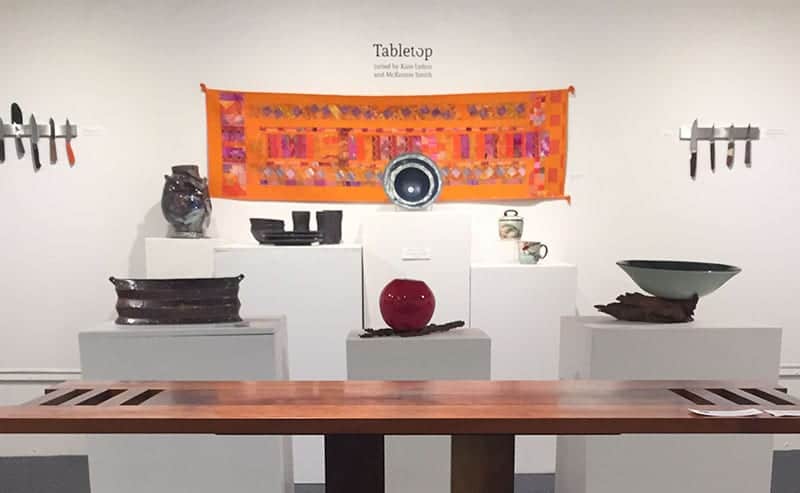
“Tabletop” installation view

“Tabletop” looks a little different this year.

That’s because the exhibit, open through July 3, isn’t only ceramics: glass, fiber, and wood and metal furniture are included this time for an all-media celebration of the table.

Why the table? What’s so special about the art we use there, like a bowl, a tumbler, or a table runner? We asked the exhibit’s jurors — McKenzie Smith for ceramics, Kate Lydon for everything else — to share their thoughts on functional art.
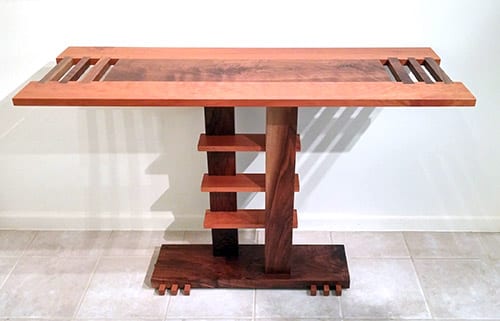
Side Table by George Tkabladze, Best in Show for Functional Art Forms
Pitcher by Diane Kenney, Best in Show for Functional Ceramics
Moon Spirits by Barbara Freeman Warden
Moon Spirits by Barbara Freeman Warden (Equal Merit Award)

In functional art, what sets a successful piece apart?

Kate Lydon: Whether functional or sculptural, key elements — high quality craftsmanship, use of material, balance and form — are key to the success of the work. If the intent of the work is function, the object should be well designed and function perfectly.

McKenzie Smith: What sets a successful piece apart is that it is thoughtful in the way it’s made, in both the form, and relationship to the decoration.

What stood out in the Best in Show piece you selected?

MS: The best of show in ceramics went to Diane Kenney because her Pitcher was beautiful, and showing her mastery of form, surface, and function.

KL: The artist’s craftsmanship, execution and knowledge of woodworking.
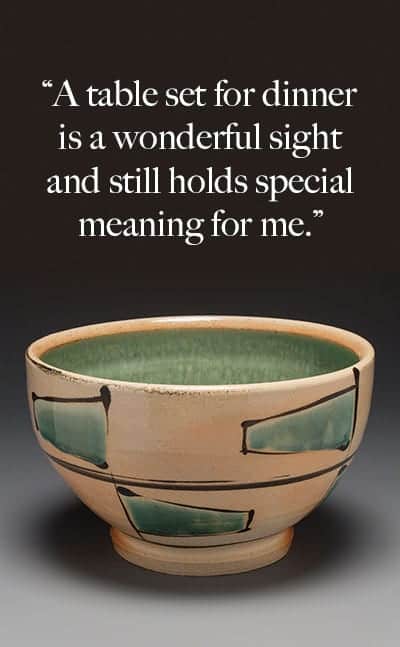
By McKenzie Smith
Quote and artwork: juror McKenzie Smith

What’s your relationship with functional art?

KL: I am engaged by functional art because of the role it has played in the history of decorative arts and more recently in the contemporary craft movement. What is most engaging for me is art that encourages dialogue and an exchange of ideas. For example, a quilt that moves beyond its intended use as a bed covering and is recognized as a piece of art that shares personal narrative or history.

MS: I have been a functional potter for over 30 years. Function is what we do. It is on our minds always, and the pots we make serve the table in daily use.

Cup Caddy, porcelain and pine, by Kate Fisher (Equal Merit Award)

Is there a particular tabletop form or object that holds special meaning for you?

MS: A table set for dinner is a wonderful sight and still holds special meaning for me. Food, family, and friends all play a part in this romance and it is one that is shared worldwide.

KL: Over the years I have gathered together an extensive collection of handmade mugs. I begin each day by selecting a cup — porcelain or wood fired, colorfully glazed or bearing beautiful markings from its firing. Each mug has a unique fit in my hand and offers an engaging dialogue with its artist maker.

“Tabletop” is on view through Sunday, July 3. 
Summer Classes & Art Camp Start Monday!

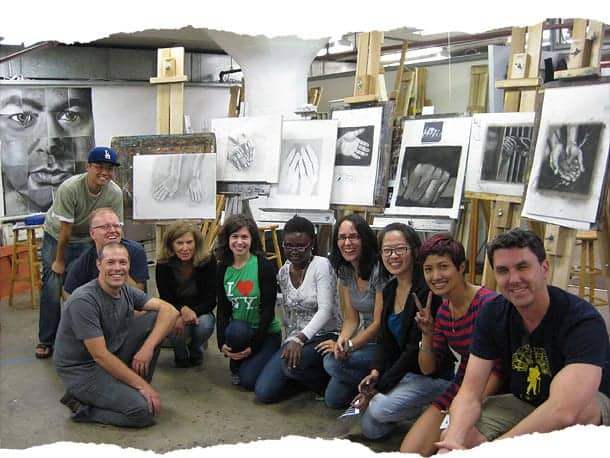
Basic Drawing class

Monday marks the official start of summer!

No, we’re not talking about the solstice. It’s the start of summer classes and Art Camp at The Art League!

  • Classes (in painting, ceramics, drawing, sculpture, photography, fiber arts, printmaking, jewelry, and more!) start on or after Monday, June 20. Many are scheduled to start after July 4, so you can still fit in that vacation.
  • Art Camp runs weekly, Monday to Friday, from June 20 to August 19. Kids ages 5 and up can try lots of different art projects this summer!

Browse the full catalog here! We’ll save an easel for you.

Brian Kirk’s Rust Prints

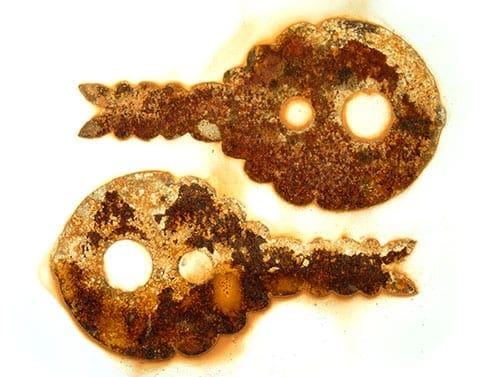
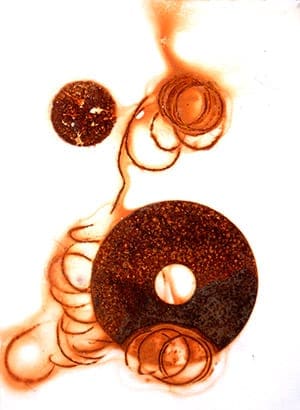
Isopods by Brian Kirk

When Brian Kirk (welder, artist, and Art League instructor) left a cardboard box on his steel welding table, it was an accidental start down a new artistic avenue.

Two months later, he was surprised to discover a beautiful pattern on the box — created by the oxidation of the table below. That led to five years of experimentation and, as with any artistic endeavor, a lot of trial and error.

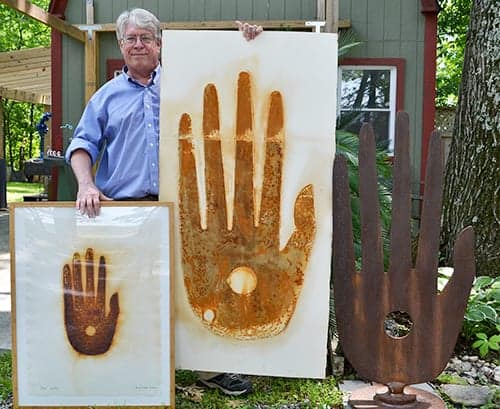
Brian Kirk with two prints and a steel sculpture.

How to Make a Rust Print

Cardboard was the inspiration, but for his on-purpose prints, Kirk uses archival watercolor paper.

He places a steel plate between two sheets of paper, then soaks it for six weeks in water. During that time, the steel oxidizes (rusts) and transfers that rust onto the paper. Afterward, he seals the finished print.

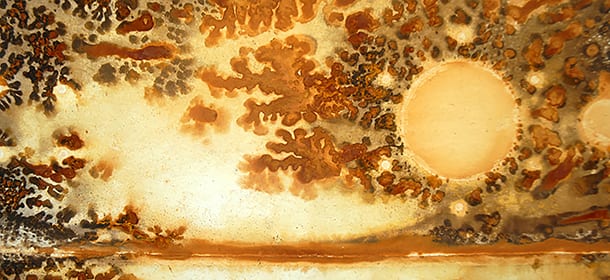
Dancing Moons by Brian Kirk

Each print is unique, and while the outcome is somewhat predictable, Kirk said the interesting and unexpected effects are what make the process enjoyable. By using two sheets of paper, one on top and one on bottom of the steel plate, the process yields two distinct prints each time. The bottom is typically more “watery,” and the top more “crisp,” Kirk said.

Originally, the steel plates were found scrap metal, and then he started to use metal he cut for the purpose with a torch. Today, he’s cutting steel with a laser cutter for precise edges.

Kirk’s background is as a sculptor and welder, but he also has some printmaking experience that guided him on his five years (so far) of diversifying his art practice and trying to perfect the prints.

The exhibit