Artist Opportunities #407

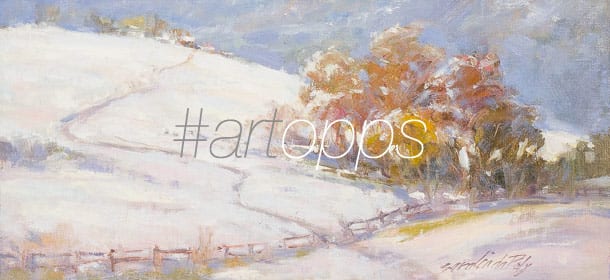
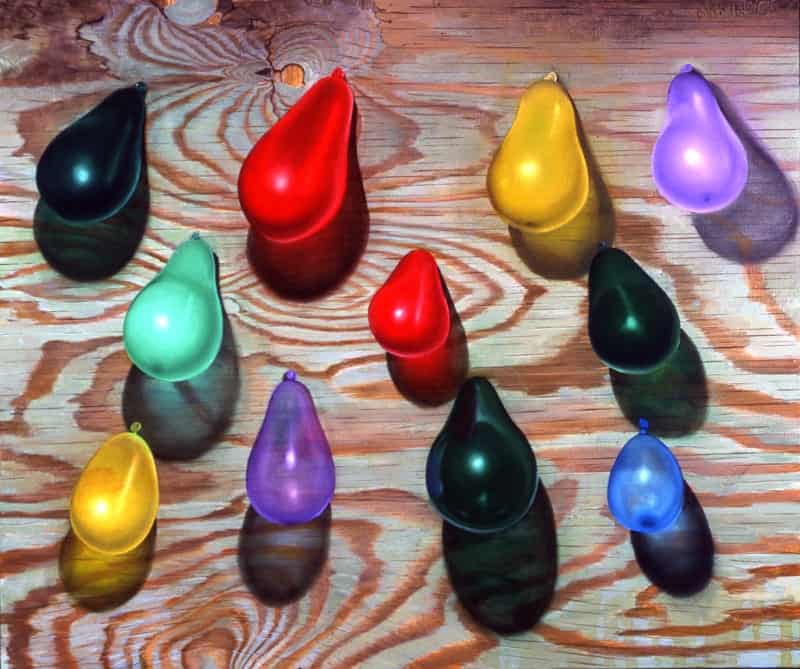
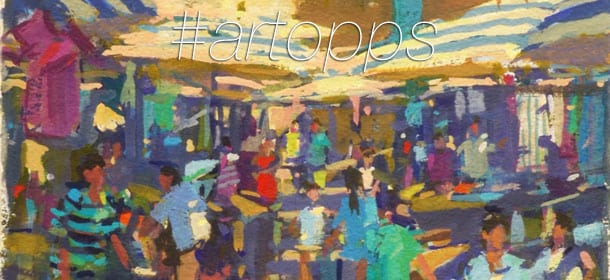
This week’s banner image is a painting by Art League instructor Rick Weaver.

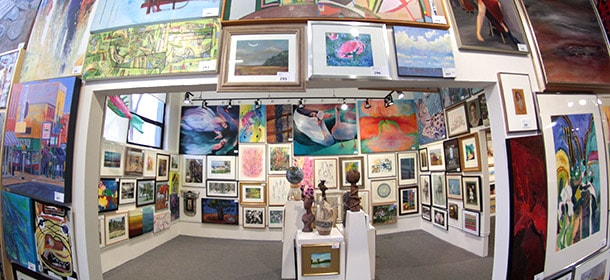
On Tuesdays, we gather a variety of artist opportunities around the DC area and beyond. Find one below and enter today — good luck! Click here for recent opportunities posts, and submit your opportunity listing here.

Landscapes

Deadline: February 15. The Art League (Alexandria, VA) invites members to submit artwork that evokes a sense of place for the exhibit “Landscape,” juried by Timothy J. Clark.

VisArts fellowship

Deadline: March 20. VisArts (Rockville, MD) invites applications and proposals from local, national, and international artists for a six month Studio Fellowship at VisArts at Rockville. The Studio Fellowship provides a unique opportunity for a dynamic individual artist or collaborative artist team to create a new body of work, evolve an existing body of work, or develop a project in a stimulating, supportive environment.

2019 solo exhibits

Deadline: March 30. VisArts (Rockville, MD) invites artists working in all media to apply for 2019 Solo Exhibitions in the Gibbs Street Gallery and Common Ground Gallery.

VA fair

Deadline: April 13. Calling exceptional artisans for the 74th Waterford Fair. Located in the Historic Landmark of Waterford, Virginia, our event draws 18,000+ visitors over 3 days, October 5–7, 2018.

MD craft show

Deadline: May 7. The Academy Art Museum Craft Show (Easton, MD) draws patrons from all over the Mid-Atlantic Region.

NYC volunteer opportunity

Introduce NYC school children to the world of art by giving tours at The MET Museum. Volunteer in this year-round program. Visit us at awnyc.org, contact us at http://awnyc.org/contact-us/ or find us on Facebook at artworksnyc.

Re-runs: These announcements have been posted here before, but it’s not too late to enter!

Exhibit proposals

Deadline: January 31. The Merion Hall Gallery at St. Joseph’s University (Philadelphia, PA) hosts six professional artist exhibitions each school year.

Emerging artist residency

Deadline: January 31. For this residency at the Torpedo Factory (Alexandria, VA), artists must be 18 years or older and reside in Virginia, Maryland, or the District of Columbia. Artists must have less than five years of experience as a professional working artist, and must plan and teach two public workshops.

Prints & drawings

Deadline: January 31. For the 29th National Drawing & Print Competitive Exhibition at Gormley Gallery (Notre Dame of Maryland University, Baltimore, MD), artists may submit drawings or prints (not including photographs).

France residency

Deadline: January 31. BAU Institute announces call for applications for its summer 2018 artist residencies at a Seaside mediterranean village Near Marseille.

Public sculpture

Deadline: February 1. Friends of Leesburg Public Arts is renewing its sculpture on loan program: ArtsPARKs 2018 at Raflo Park in Leesburg VA. For more information, see the Artist Opportunities page and click on “button.”

BlackRock

Deadline: February 1. BlackRock Center for the Arts (Germantown, MD) is now accepting proposals for solo, themed and group exhibitions to be presented in our gallery spaces in 2019.

Target Gallery solo shows

Deadline: February 4. This is an open call for proposals for an exhibition at Target Gallery(Alexandria, VA) in the summer of 2018. This call is open to emerging or mid-career artists from North America working in all visual media.

Patrons’ Show donations

Deadline: February 5. Over $21,000 in prizes is available to artists who donate artworks to the 50th Anniversary Patrons’ Show Fundraiser at The Art League.

Illustrators

Deadline: February 6. Illustrators in any country working in any medium or content can enter work created between January 2017 and February 2018 for the World Illustration Awards 2018.

Plein air event

Deadline: February 15. The Mountain Maryland Plein Air Competition & Exhibition, an annual juried exhibition and art competition, is sponsored by the Allegany Arts Council.

Painting awards

Deadline: February 23. The Bethesda Arts & Entertainment District invites eligible artists to enter the Bethesda Painting Awards. Artists must be 18 years of age or older and permanent, full-time residents of Maryland, Virginia or Washington, DC.

Torpedo Factory installations

Deadline: March 1. The Torpedo Factory Art Center invites artists and artist teams residing in Virginia, Maryland, and the District of Columbia to submit their qualifications and proposals for the Torpedo Factory Art Center’s common areas. Up to three artists/artist teams will be selected to install works of art in three designated public locations inside the Torpedo Factory Art Center.

New Photography

Deadline: March 8. Photographic artists of all walks are invited to submit their latest works to a national juried show at the Academy Art Museum in Easton, MD. The exhibition aims to highlight the current state of photography across a broad spectrum. Artists may submit all types of photographic works including digital, analog, alternative processes, etc.

Wanderlust

Deadline: April 5. artlessBastard in De Pere, Wisconsin is calling for 2D & 3D works of art, in all mediums – except performance art or film – for their May 2018 Wanderlust Show. Themes of work may include anything related to the journey of leaving home.

Artists 50 and over

The Beacon is holding a regional competition for people over 50 who have picked up a new artistic endeavor: painting/drawing, 3D art, photography, or poetry. The competition opens in April 2018. For details, download the PDF flyer.

Superfine art fair

Deadline: rolling admission through September 2018. Applications are now open for Superfine!’s first fair in DC, coming this Halloween to Union Market. Galleries, artist collectives, and solo artists can apply for space.
Kathleen Best Gillmann’s Winter Landscapes

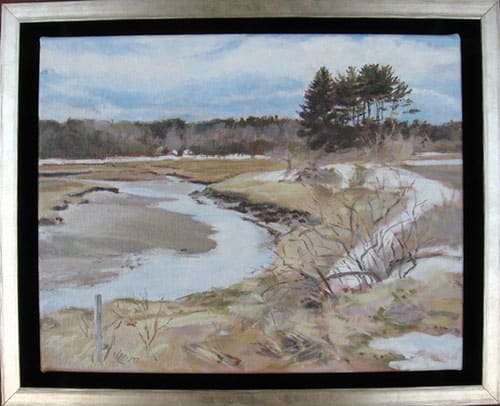
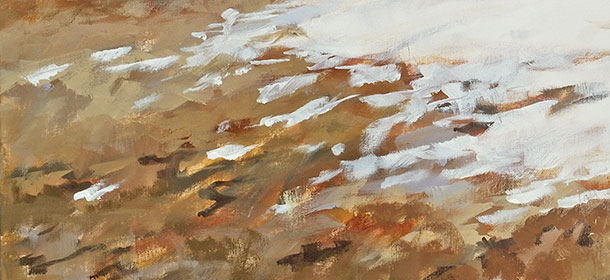
March Thaw, oil, by Kathleen Best Gillmann (click for larger image)

Today’s guest post is by Kathleen Best Gillmann, whose work, March Thaw (Coastal Maine, 11) won the Gallery Director Award for Best in Show in the January Open exhibit. We asked her to tell us more about how the painting came to be, her palette, painters she admires, and what’s next for her artwork:

The goal

My goal in painting March Thaw was to capture the briskness, barrenness, and beauty of this location.

To accomplish this, I started with a stark white, primed canvas. I often tone the canvas before I begin painting, and that tone (sometimes an exotic purple or burnt orange) will undoubtedly affect the temperature of the final painting. This painting, however, needed to feel cold so I didn’t tone the canvas. March Thaw was also going to include a lot of white, so I thought perhaps I could utilize some of the raw primed canvas in the final work.

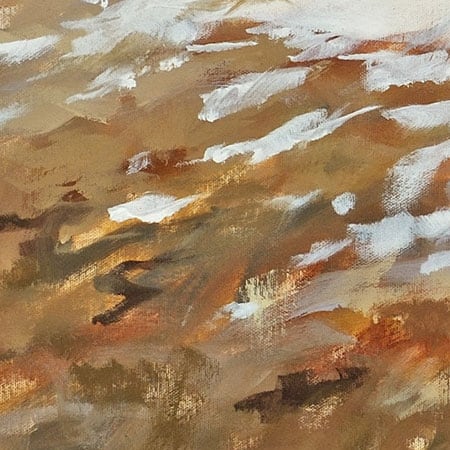
Detail from March Thaw

The palette

Titanium white is an opaque, cool white paint appropriate for the coldness of late winter snow and cumulous clouds. As this is a winter scene, I used a lot of neutral colors – browns like burnt umber and burnt sienna, yellows like Naples and Yellow Ochre, and Torrit Grey (Gamblin).

March Thaw is a very evocative snowy landscape with a great sense of space and atmosphere. I very much appreciated the abstraction of it—the open, white shapes in the foreground and middle ground, which really allow the painting to breathe.” — Ephraim Rubenstein, exhibit juror

I rarely put black from a tube on my palette. I usually mix my black from the colors on my palette creating cool or warm dark tones as needed. I don’t generally see true black outdoors during daylight hours, consequently I rarely put it on my palette.

When I begin any landscape painting, I put out my full palette of colors (warm and cool colors) arranging them from the violets through red, yellow, blue (the primaries) ending with the neutrals (browns). White, and a black I mix, go in the center bottom of my palette.

When painting landscapes, I use very little red except to create more interesting purples, blues, greens, and pink when needed. For this painting I used very few manufactured greens from a tube because it is a winter scene – I remember using some Olive Green (Gamblin). For pine trees, I love the greens I can get mixing Ultramarine Blue, my yellows plus a brown.

The place

March Thaw is the 11th painting in a series called “Coastal Maine” which I started in 2011. Other paintings in this series include three that were in my solo exhibition at the Art League Gallery in July 2016: Solitude, River of Rocks, and Secrets Revealed which may be familiar because it was used on the post card & exhibit poster.

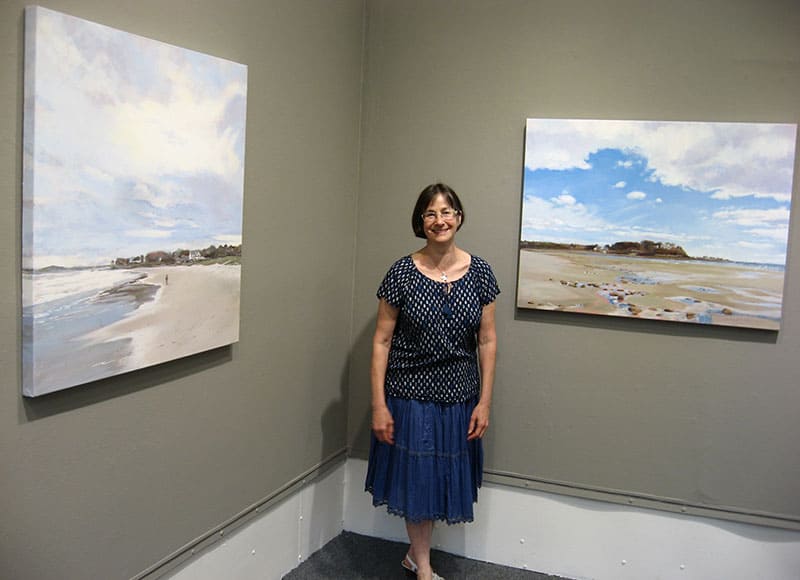
The artist with Solitude and Secrets Revealed from the Coastal Maine series at The Art League gallery.

All four of these paintings depict scenes near or on Parsons Beach in Kennebunk, Maine. March Thaw presents a meadow merging into salt marsh – a place I have passed numerous times on my way to the beach. I’ve been there in all seasons and in many types of weather because I grew up and Maine and still visit often.

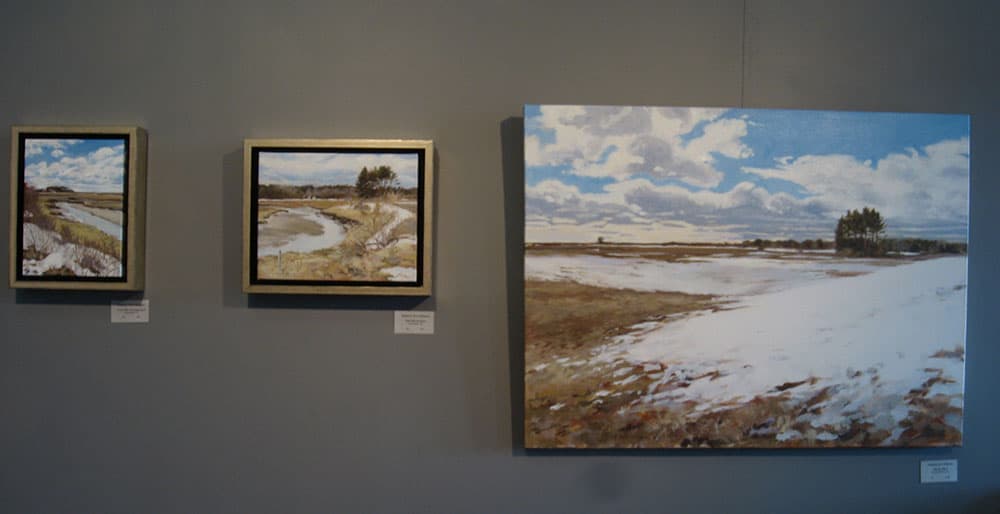
Because this is a favorite place, I have painted scenes of this beach and the surrounding landforms a least a dozen times. Last summer, I exhibited March Thaw for the first time with two small paintings beside it inspired by the same location behind the beach: Great Hill, Snow Waning and Salt Marsh Pines. These two smaller paintings are related to March Thaw by location and subject matter: all three are winter scenes. The two smaller paintings are in a different series (“Intertidal”) because they include a tidal creek.

Companion paintings to March Thaw in the exhibit “Kennebunk to Ketchum: Explorations East to West” at Arches Gallery, Workhouse Arts Center, July 2017

The studio

When I began painting professionally in 2010, I used acrylic paints at the start. I reintroduced oils (hadn’t used it since college) to my repertory in 2012. I continue to work in both acrylic and oil. When starting a painting one of my earliest decisions is which medium to use: acrylics or oils? I chose oils for March Thaw because oil paint has more body than the acrylic paints I use (Liquitex, heavy body) and is great for creating texture like in the grasses and rotting snow in this scene.

Salt Marsh Pines by Kathleen Best Gillmann

I admire the work of many artists living and deceased. Some of my favorite painters are Winslow Homer, Andrew Wyeth, Fitz Henry Lane, Edward Hopper, George Bellows, Edward Henry Potthast, and others.

I’ve been distracted this month and haven’t had much time in my studio lately. So, to jump start my creativity I pulled out an experimental canvas last week and began painting a semi abstract still life in acrylic. I have several unfinished canvases in my studio waiting for my attention including two oil paintings that are winter scenes related to March Thaw.

So, I’ve enjoyed this conversation, but now back to the easel!

Thank you, Kathleen Best Gillmann

P.S. To see more of my work please come to Arches Gallery, Workhouse Arts Center, Lorton, VA or visit www.VeryBestFineArt.com or find me on Facebook: Kathleen Best Gillmann – Very Best Fine Art.

The January Open Exhibit is on view through February 4, 2018.

2018 Patrons’ Show Updates

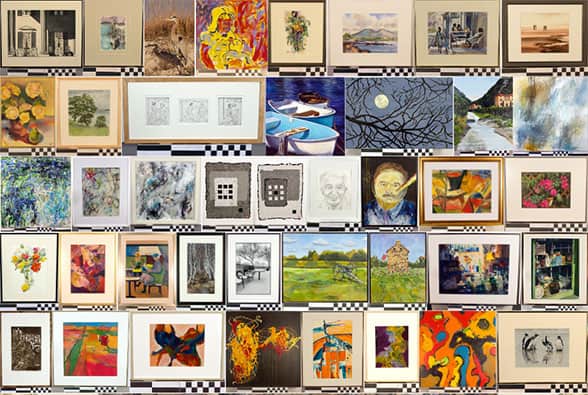
The first batch of artwork has been uploaded to Flickr.

With just a few weeks until our 50th Anniversary Patrons’ Show Fundraiser, we’re thrilled to see the event taking shape — even before the artwork is hung on the walls!

(New to Patrons’ Show? It’s turning 50 this year, but we’re proud to host an event that brings in fresh faces every time. If you’re a newbie, or thinking about attending, learn all about how it works in this blog post.)

Here are all the latest updates:

Tickets

Tickets are on sale now, and there are about 100 left as of this blog post. Couple’s Tickets are currently sold out, but there are plenty of single tickets ready to be claimed. Get all your tickets on Eventbrite and let us know if you run into any trouble!

If you already have a ticket and want to buy extras (a “no seat needed” ticket), get in contact with our gallery and they can help you out.

Can’t attend? Want an extra chance to take home your favorite piece? The First Choice Raffle returns this year, and you’ll be able to buy raffle tickets online. Stay tuned for details!

Viewing the artwork

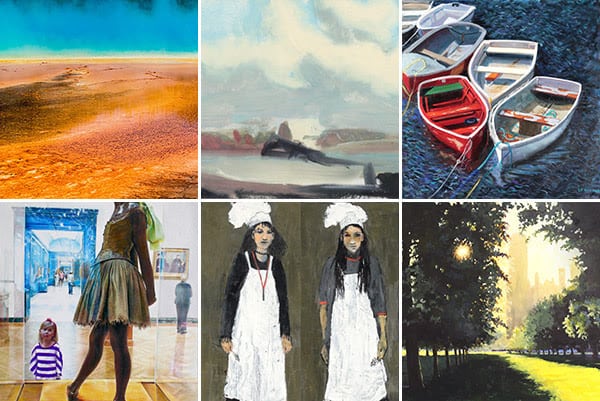
Donated artwork is being photographed and uploaded to Flickr right now! View all the artwork in this Flickr album.

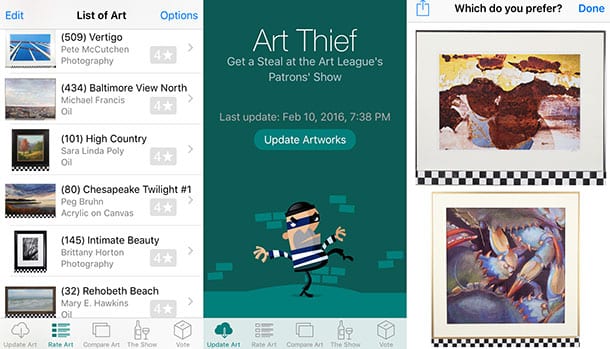
If you’re using the Art Thief app and don’t see artwork yet, go to the Update Art tab at the bottom of the app. Learn more about how to use Art Thief in this tutorial video.

The Art Thief app on iOS

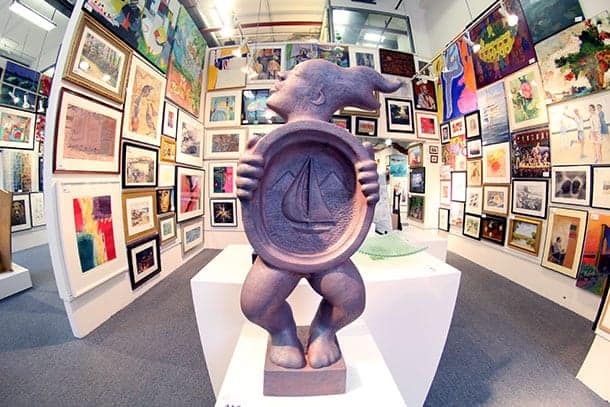
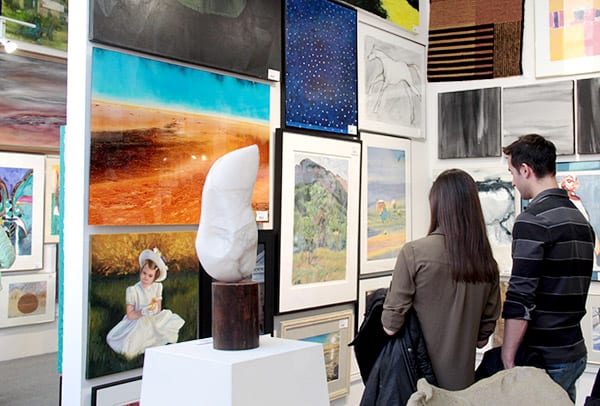
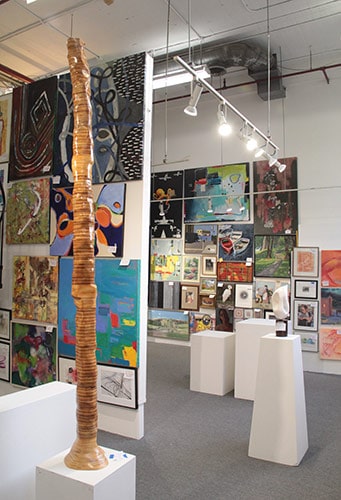
Of course, you’ll want to view the artwork in person, too. We’ll start hanging artwork in our gallery as soon as the current show closes February 4, and expect to have the gallery open to the public within a few days afterward.

Artist donations

Artists, there’s still time to donate and be a part of this 50th anniversary event! This is a great way to get your artwork in front of thousands of viewers and your chance to take home some of our $21,000 in prizes. Get all the details on how and why to donate here.

To be eligible for all of the judged prizes, be sure to donate by February 5!

And of course, a huge thank-you to all of our artist donors and the award sponsors.

Artist Opportunities #406

Painting by Art League instructor Sara Linda Poly.

On Tuesdays, we gather a variety of artist opportunities around the DC area and beyond. Find one below and enter today — good luck! Click here for recent opportunities posts, and submit your opportunity listing here.

Artists 50 and over

The Beacon is holding a regional competition for people over 50 who have picked up a new artistic endeavor: painting/drawing, 3D art, photography, or poetry. The competition opens in April 2018. For details, download the PDF flyer.

Emerging artist residency

Deadline: January 31. For this residency at the Torpedo Factory (Alexandria, VA), artists must be 18 years or older and reside in Virginia, Maryland, or the District of Columbia. Artists must have less than five years of experience as a professional working artist, and must plan and teach two public workshops.

Prints & drawings

Deadline: January 31. For the 29th National Drawing & Print Competitive Exhibition at Gormley Gallery (Notre Dame of Maryland University, Baltimore, MD), artists may submit drawings or prints (not including photographs).

Superfine art fair

Deadline: rolling admission through September 2018. Applications are now open for Superfine!’s first fair in DC, coming this Halloween to Union Market. Galleries, artist collectives, and solo artists can apply for space.


Re-runs: These announcements have been posted here before, but it’s not too late to enter!

Fiber artworks

Deadline: January 24. “Material” at D’Art Center (Norfolk, VA) will highlight the quality and variety of fiber art, and is open to functional, non-functional, 2D, 3D, fine art, and fine craft in fiber.

Exhibit proposals

Deadline: January 31. The Merion Hall Gallery at St. Joseph’s University (Philadelphia, PA) hosts six professional artist exhibitions each school year.

France residency

Deadline: January 31. BAU Institute announces call for applications for its summer 2018 artist residencies at a Seaside mediterranean village Near Marseille.

Public sculpture

Deadline: February 1. Friends of Leesburg Public Arts is renewing its sculpture on loan program: ArtsPARKs 2018 at Raflo Park in Leesburg VA. For more information, see the Artist Opportunities page and click on “button.”

BlackRock

Deadline: February 1. BlackRock Center for the Arts (Germantown, MD) is now accepting proposals for solo, themed and group exhibitions to be presented in our gallery spaces in 2019.

Target Gallery solo shows

Deadline: February 4. This is an open call for proposals for an exhibition at Target Gallery(Alexandria, VA) in the summer of 2018. This call is open to emerging or mid-career artists from North America working in all visual media.

Patrons’ Show donations

Deadline: February 5. Over $21,000 in prizes is available to artists who donate artworks to the 50th Anniversary Patrons’ Show Fundraiser at The Art League.

Illustrators

Deadline: February 6. Illustrators in any country working in any medium or content can enter work created between January 2017 and February 2018 for the World Illustration Awards 2018.

Plein air event

Deadline: February 15. The Mountain Maryland Plein Air Competition & Exhibition, an annual juried exhibition and art competition, is sponsored by the Allegany Arts Council.

Painting awards

Deadline: February 23. The Bethesda Arts & Entertainment District invites eligible artists to enter the Bethesda Painting Awards. Artists must be 18 years of age or older and permanent, full-time residents of Maryland, Virginia or Washington, DC.

Torpedo Factory installations

Deadline: March 1. The Torpedo Factory Art Center invites artists and artist teams residing in Virginia, Maryland, and the District of Columbia to submit their qualifications and proposals for the Torpedo Factory Art Center’s common areas. Up to three artists/artist teams will be selected to install works of art in three designated public locations inside the Torpedo Factory Art Center.

New Photography

Deadline: March 8. Photographic artists of all walks are invited to submit their latest works to a national juried show at the Academy Art Museum in Easton, MD. The exhibition aims to highlight the current state of photography across a broad spectrum. Artists may submit all types of photographic works including digital, analog, alternative processes, etc.

Wanderlust

Deadline: April 5. artlessBastard in De Pere, Wisconsin is calling for 2D & 3D works of art, in all mediums – except performance art or film – for their May 2018 Wanderlust Show. Themes of work may include anything related to the journey of leaving home.

There’s More to the Google Arts & Culture App Than Just Selfies

Two years ago, we wrote about the Google Cultural Institute as “The Massive, Online Museum You Didn’t Know About.”

Now it’s been renamed Google Arts & Culture and everyone’s heard about it. Which we love.

https://twitter.com/kumailn/status/952329304259489793

More than selfies

By now, you’ve definitely seen those art-historical selfies floating around your social feeds. (If you haven’t, here are some examples!)

But if you live in Texas, Illinois, or outside the U.S., you’ve been feeling a little left out. We’ll let you in on a little secret: you can still download the app and enjoy tons of cool stuff.

That’s right! As the Google Arts & Culture app was becoming the most-downloaded over the past weekend, its vast treasure trove of non-selfie content was remaining mostly unexplored. These include virtual museum tours, massive detailed photos of artworks, and curated features from around the world.

Can’t make it to Singapore or the Taj Mahal? Take a visit on your phone. Or, browse by popular topics.

What to explore

These were the top stories during a recent visit to the app:

  • the work of a Korean abstract pioneer
  • Mayan glyphs
  • African beadwork
  • Hong Kong’s neon lights
  • historical shoes
  • the colors used by the Surrealists

Check again a few days later, and they’re all new stories. In other words, whatever you’re interested in, you can spend some valuable time exploring.

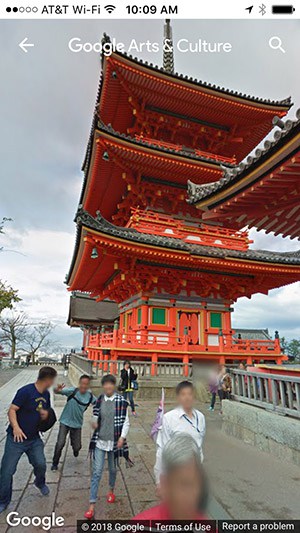
A street-level tour of Kiyomizu-Dera Temple in Kyoto, Japan.

There are 360-degree videos to watch. Objects to add to your own virtual collection. Sites and museums to take a virtual stroll in. And hey, once you’re feeling inspired, you can tap “nearby” to see physical museums near you!

We could run through all the features in this app (which you can also access in your browser), but for us the fun is all in exploring. So get to it!

Still feeling bummed about the selfie thing, Texas and Illinois? You can always find yours the old-fashioned way.

What’s in a Lenticular Picture?

https://www.instagram.com/p/Bd0GY0ID-0B/

“Each substance of a grief hath twenty shadows,
Which shows like grief itself, but is not so;
For sorrow’s eye, glazed with blinding tears,
Divides one thing entire to many objects;
Like perspectives, which rightly gazed upon
Show nothing but confusion, eyed awry
Distinguish form

Richard II, Act II, Scene 2

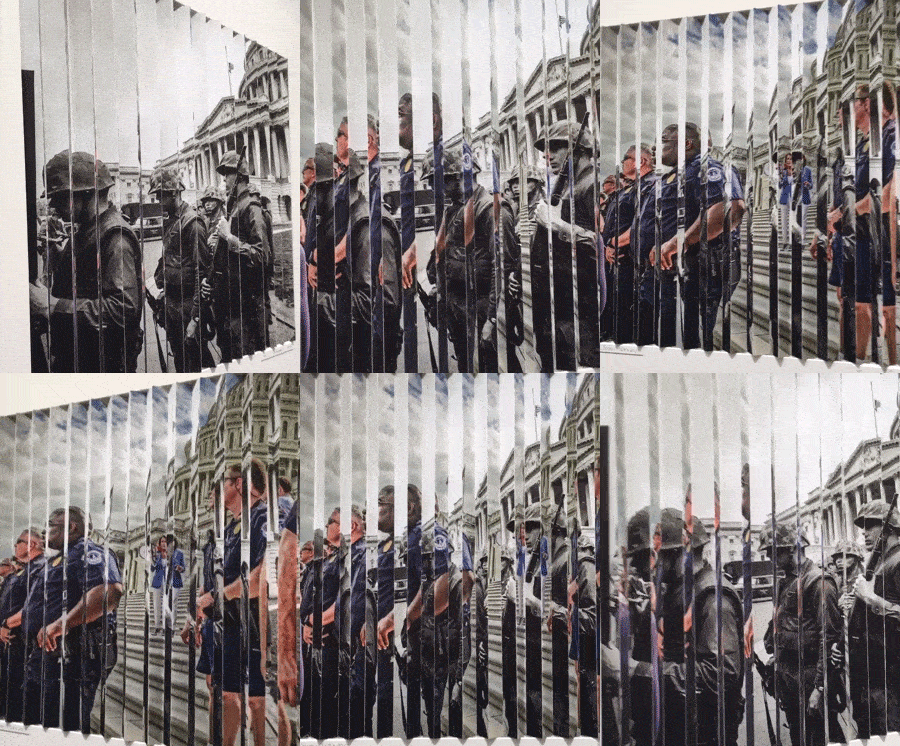
This dialogue by Shakespeare very likely refers to lenticular pictures — those accordion-pleated creations that show different images when you look at them from the left or right. In Shakespeare’s time and in the 20th century, lenticulars were manufactured as amusing distractions. Today, the technique is finding a home in fine art — including this month at The Art League.

Lenticulars in history

One of the first examples of a lenticular picture still in existence is the Double Portrait of King Frederik IV and Queen Louise of Mecklenburg-Güstow of Denmark by Gaspar Antoine de Bois-Clair, signed 1692.

As you can see in the photo, this type of lenticular picture uses a corrugated structure to achieve the effect. Look at it from the left, you see the king; from the right, the queen; and if you look at it straight ahead, you get a mish-mash of both.

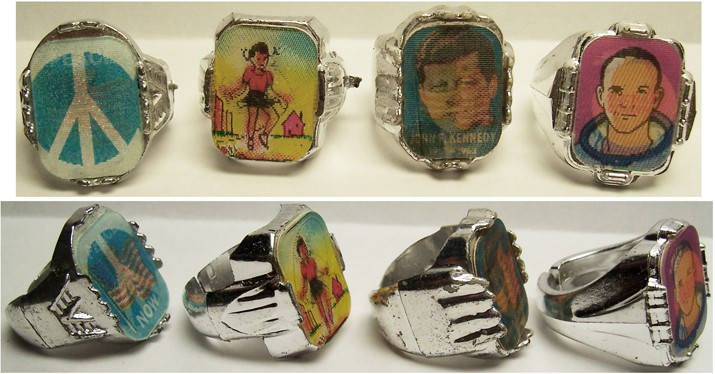
Starting in the 1950s, companies like Vari-Vue were able to mass-produce lenticular images through lenticular printing — a novelty you’re probably familiar with from Cracker Jack boxes and baseball cards:

Image from toyring.com

These flickering images are the result of the same principle but a different process: the images are behind a small, ribbed plastic lens that shifts what’s in focus.

Lenticulars as fine art

Artists such as Roy Lichtenstein and especially Yaacov Agam have used lenticular design in their artwork.

Photographer Sally Canzoneri began creating lenticular prints for a specific exhibit proposal: it was to be displayed in NoMa, a DC neighborhood that was undergoing a lot of change. While considering how best to show that change, Canzoneri happened to see this tutorial on creating lenticular images.

It was a match.

U.S. Capitol Steps: 1968 & 2017 by Sally Canzoneri

“I’ve found that people get drawn into them in a way they don’t get drawn into my flat pictures,” Canzoneri said. The way viewers engage with the content “comes — at least in part — from the fact that the viewing experience is broken up and blended in an unusual way.”

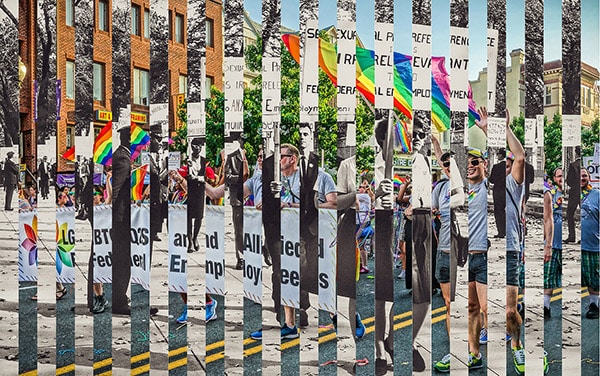
It can also lead to happy accidents. In the print seen in the video at the top of this post, women’s marches from 1913 and 2017 intersect. Because of the way the images overlap, when viewing the black-and-white image, you can see a slight pink glow above the 1913 marchers’ heads.

How it works

Canzoneri’s prints use the old-fashioned accordion style, not the plastic lens. It’s a more hands-on endeavor, and one that took some experimenting to refine.

It starts, of course, with two images. Using Photoshop, Canzoneri stitches together strips from each image, for a final product that looks like this when printed:

Then, using a carpenter’s square, she carefully folds it into the accordion shape. After a few tries, Canzoneri found the right type of paper to use and the correct fold depth (about an inch).

Double Takes

Which brings us to “Double Takes” — Canzoneri’s exhibit of lenticular photographs on view now at The Art League. You can catch these images through February 4, 2018.

Bring your walking shoes — the better to interact with the artwork. And, Canzoneri says, she hopes the photos encourage viewers to “go outside and look around with fresh eyes.”

New to Painting? Read Our Guides to Brushes & Paint

If you’ve just started a painting class for the first time (or if you’re refreshing your skills) — congratulations! There are few things as rewarding as learning a whole new way to express yourself.

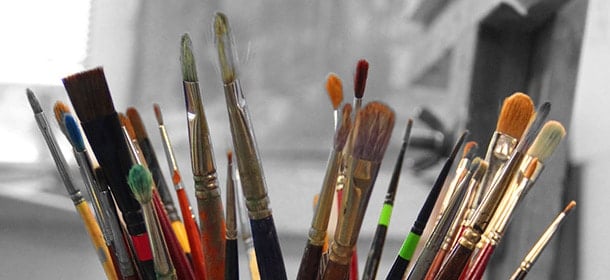
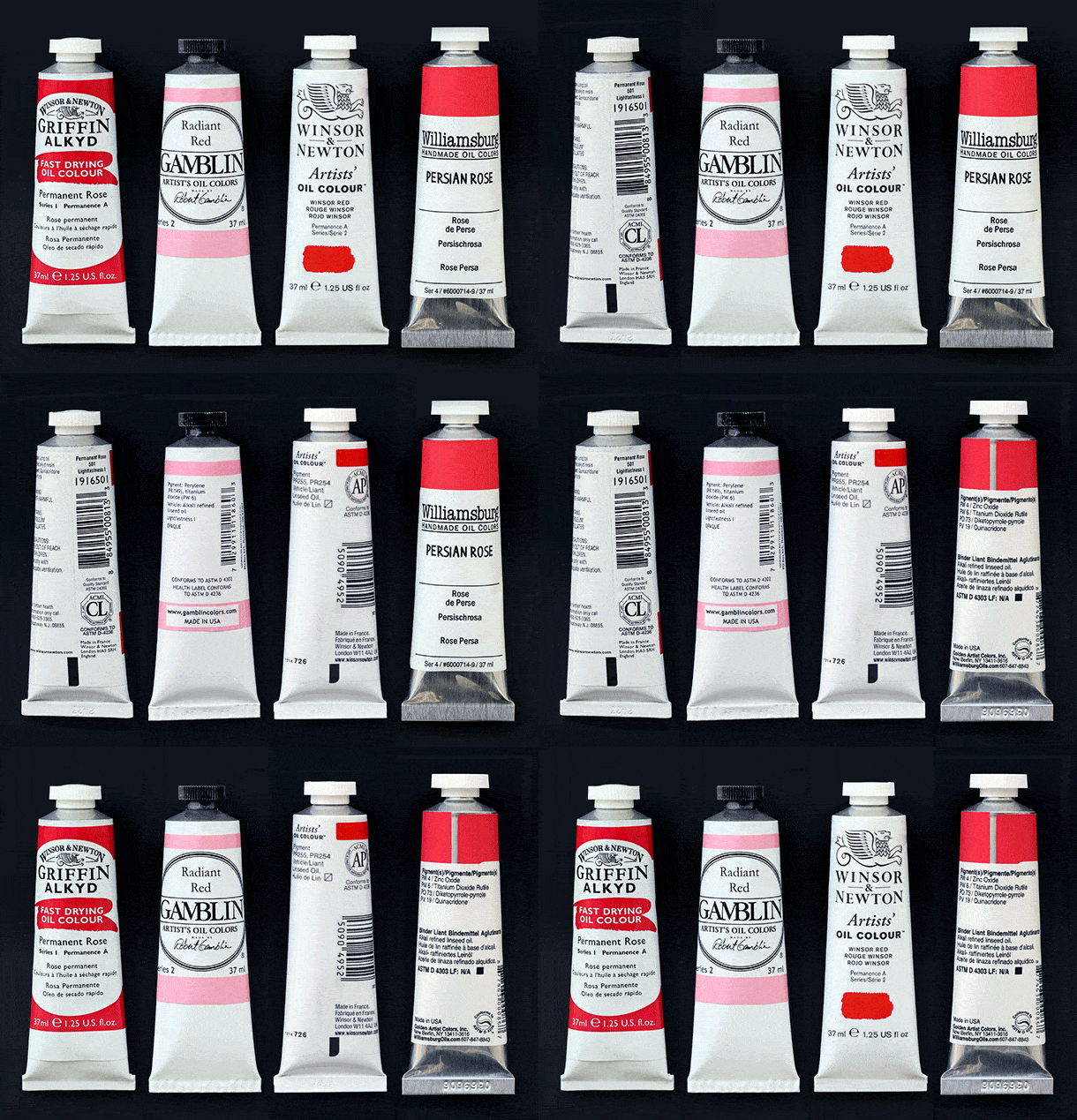
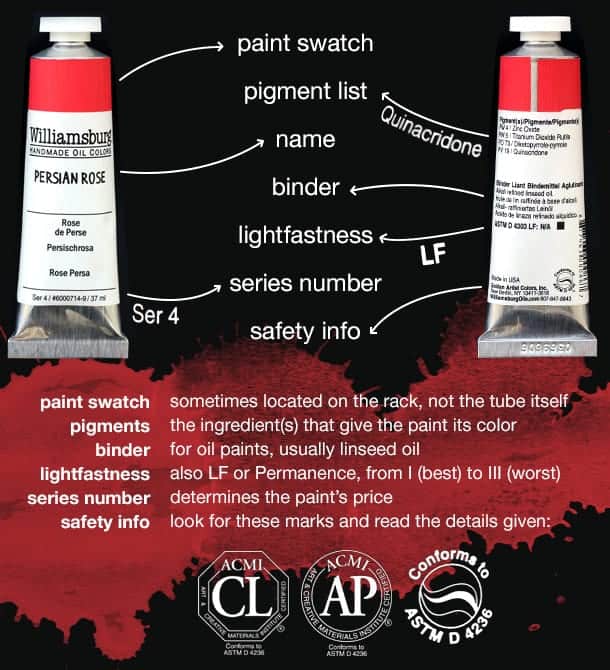
That said, jumping into an art form with such a long history can be overwhelming, too. That’s why we made these guides to the different types of paintbrushes and how to read a tube of paint.

Read on for a crash course and links to more info. And best of luck on your creative journey!

Other tips & resources: paintbrushes

Details about paint labels:

  • About pigments: Different manufacturers have different “common” names for paints that use the same pigment. For example, Winsor & Newton’s “Winsor Lemon,” Golden’s “Hansa Yellow Light,” and Williamsburg’s “Permanent Yellow Light” all use PY3: Arylide Yellow, but you wouldn’t know that unless you peeked at the back of the label.
  • About lightfastness: Lightfastness lets you know how permanent (or archival) the paint will be: will the color look the same in a few years or does it lose its vibrancy or shift hues after periods of exposure to light or heat? The manufacturer has tested it for you so you don’t have a nasty surprise years down the road.
  • About series numbers: The higher the number (or letter), the higher the price. Why are some paints more expensive than others? It’s all about the pigments, which might be from organic sources or manufactured synthetically, and how much they cost the manufacturer.

Of course, these are just the basics — different products have many variables that may or may not be on the label, like opacity and transparency, how thick or thin the paint is (viscosity), and drying time.

Did you find these guides useful? There are lots more artful resources in our archive.

Artist Opportunities #405

Painting by Art League instructor Patrick Kirwin

On Tuesdays, we gather a variety of artist opportunities around the DC area and beyond. Find one below and enter today — good luck! Click here for recent opportunities posts, and submit your opportunity listing here.

Fiber artworks

Deadline: January 24. “Material” at D’Art Center (Norfolk, VA) will highlight the quality and variety of fiber art, and is open to functional, non-functional, 2D, 3D, fine art, and fine craft in fiber.

Patrons’ Show donations

Deadline: February 5. Over $21,000 in prizes is available to artists who donate artworks to the 50th Anniversary Patrons’ Show Fundraiser at The Art League.

Wanderlust

Deadline: April 5. artlessBastard in De Pere, Wisconsin is calling for 2D & 3D works of art, in all mediums – except performance art or film – for their May 2018 Wanderlust Show. Themes of work may include anything related to the journey of leaving home.


Re-runs: These announcements have been posted here before, but it’s not too late to enter!

Works on paper

Deadline: January 16. Maryland Federation of Art invites all artists residing in the United States, Puerto Rico, Canada and Mexico to enter its 39th annual Art on Paper competition. Any original 2-D or 3-D work created on or of paper, including collage, artist book, origami, printmaking, painting, sculpture, and more, will be considered.

Torpedo Factory Artists’ Association

Deadline: January 22. Phase I of the 2018 jury to join the Torpedo Factory Artists’ Association is underway. Read more about the opportunities and benefits of membership on the jury page.

Exhibit proposals

Deadline: January 31. The Merion Hall Gallery at St. Joseph’s University (Philadelphia, PA) hosts six professional artist exhibitions each school year.

France residency

Deadline: January 31. BAU Institute announces call for applications for its summer 2018 artist residencies at a Seaside mediterranean village Near Marseille.

Public sculpture

Deadline: February 1. Friends of Leesburg Public Arts is renewing its sculpture on loan program: ArtsPARKs 2018 at Raflo Park in Leesburg VA. For more information, see the Artist Opportunities page and click on “button.”

BlackRock

Deadline: February 1. BlackRock Center for the Arts (Germantown, MD) is now accepting proposals for solo, themed and group exhibitions to be presented in our gallery spaces in 2019.

Target Gallery solo shows

Deadline: February 4. This is an open call for proposals for an exhibition at Target Gallery(Alexandria, VA) in the summer of 2018. This call is open to emerging or mid-career artists from North America working in all visual media.

Illustrators

Deadline: February 6. Illustrators in any country working in any medium or content can enter work created between January 2017 and February 2018 for the World Illustration Awards 2018.

Plein air event

Deadline: February 15. The Mountain Maryland Plein Air Competition & Exhibition, an annual juried exhibition and art competition, is sponsored by the Allegany Arts Council.

Painting awards

Deadline: February 23. The Bethesda Arts & Entertainment District invites eligible artists to enter the Bethesda Painting Awards. Artists must be 18 years of age or older and permanent, full-time residents of Maryland, Virginia or Washington, DC.

Torpedo Factory installations

Deadline: March 1. The Torpedo Factory Art Center invites artists and artist teams residing in Virginia, Maryland, and the District of Columbia to submit their qualifications and proposals for the Torpedo Factory Art Center’s common areas. Up to three artists/artist teams will be selected to install works of art in three designated public locations inside the Torpedo Factory Art Center.

New Photography

Deadline: March 8. Photographic artists of all walks are invited to submit their latest works to a national juried show at the Academy Art Museum in Easton, MD. The exhibition aims to highlight the current state of photography across a broad spectrum. Artists may submit all types of photographic works including digital, analog, alternative processes, etc.

Greek island residency

Deadline: ongoing. The Skopelos Foundation for the Arts offers residencies for two weeks to two months for ceramists, mixed media artists, painters, printmakers and sculptors from March through December.

Announcing Over $21,000 in Awards For Patrons’ Show Donors

Artists: Our biggest fundraiser of the year is coming up, and we need your help! Read on for details on why, and how, to donate to the 50th Anniversary Patrons’ Show Fundraiser.

Who will take home your artwork?

The Patrons’ Show Fundraiser is The Art League’s biggest event of the year, making it possible for us to meet our mission: by nurturing the artist, we enrich the community. This year’s event is special: it’s the 50th anniversary Patrons’ Show Fundraiser!

Our success depends on our generous artist donors! For each piece of artwork donated (valued at $225 or more), we can sell one ticket to the Patrons’ Show Fundraiser. For more about the fundraiser, visit our website.

Why should I donate?

Thousands of dollars in prize money is available for artists—more than double last year’s:

  • $5,000: Clemente Best in Show for Contemporary Realism*
  • $3,500: Clemente Faculty Award (Art League faculty are eligible)*
  • $3,000: Collector Award (first artwork chosen in the drawing)
  • $3,000: Collector Award (second artwork chosen in the drawing)
  • $3,000: Collector Award (third artwork chosen in the drawing)
  • $2,000: The Patrons’ Show Brenda Bunn Kollman Award for Best in Show for 3D Artwork*
  • $1,000: TFAA Artist Award (TFAA artists are eligible)*
  • $400: Van Landingham Award*
  • $250: Geri Gordon Award (first choice raffle award)

*Chosen by the Patrons’ Show judge. To be eligible for these awards, artwork must be donated by Monday, February 5, 2018. If you will be donating unframed work as well as framed pieces, make sure they are donated well ahead of time so they can be framed for judging.

And all participating artists are eligible to win multiple awards!

The Brenda Bunn Kollman Award for 3D Artwork, new this year, is in honor and memory of Brenda (Townsend) Kollman, an Art League member artist for 14 years and an established Torpedo Factory Artist for 15 years. The amount is $2,000 for the 50th anniversary year and will be $1,500 in subsequent years. The award is sponsored by Brenda’s husband, Jerry Kollman.

Did we mention that hundreds of Patrons’ Show Fundraiser ticketholders (and non-ticketholders) will view your artwork online, in person, and in the app?

Details from the six award winning artworks in 2017. This year there will be eight!

What are we raising funds for?

The Patrons’ Show Fundraiser is critical to ensuring The Art League is able to fulfill its mission each year. Funds go to:

The Art League is a 501(c)(3) nonprofit, which means that your donation is tax-deductible. Currently, the IRS allows artists to deduct only the cost of materials used in donated artwork, not the artwork’s full value.

How to donate

Simply bring your framed, ready-to-hang artwork to The Art League gallery during regular hours (these may be affected by Torpedo Factory closures):

  • Monday–Saturday, 10:00 am–6:00 pm
  • Thursdays until 9:00 pm
  • Sunday, 12:00 noon–6:00 pm

Artists who contribute two or more framed works may also donate unframed works. We also need donations of frames and glass that are 16″ x 20″ or larger.

If you’d like to donate artwork currently in our gallery, please contact us ([email protected]) and we’ll take care of it!

Important dates

  • Saturday, January 13: Tickets go on sale, online only
  • Monday, February 5: Deadline for artwork to be eligible for awards
  • Sunday, February 18: The Patrons’ Show Fundraiser drawing

Ready for the Patrons’ Show Fundraiser?

Tickets are now on sale for the 50th Anniversary Patrons’ Show Fundraiser!

If you’ve been before, reading that sentence was like hearing Santa on the rooftop. But if you don’t know about Patrons’ Show, here’s a short guide to our biggest event of the year.

Important dates

  • Tickets go on sale: Saturday, January 13, 2018 at 10:00 am (purchase tickets online)
  • Drawing: Sunday, February 18, 2018 at 4:00 pm

Buy tickets on Eventbrite

The big idea

The Patrons’ Show Fundraiser is all about taking home artwork at a bargain price while having a lot of fun. You pay $225 for a ticket that guarantees you one artwork worth at least $225. This is The Art League’s biggest fundraiser, supporting our gallery and outreach programs.

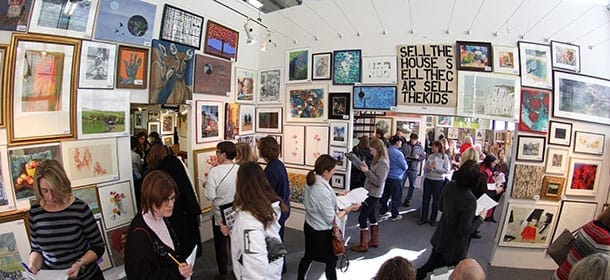
Some of last year’s artwork.

The basics

Once you’ve got your tickets, here’s how things will go down:

  1. Preparation: Artwork images are posted online and on the Art Thief app, and the artwork itself is displayed in our gallery. Make a list of your favorites, a minimum of 100 pieces long! See below for tips.
  2. The drawing: Ticket holder names are drawn and called in a random order. When you hear your name, call out the number (not the title or artist) of the artwork you want, loudly and clearly. Congratulations!
Using the Art Thief app.

How to prepare

As you can tell, it’s not enough to just pick your favorite — it might be gone by the time we get to your name!

  • There are a number of tools to help you make your list:
    • The latest program (a list of artwork numbers, titles, and artists, available in PDF or Excel) will be posted closer to the event on the main Patrons’ Show page
    • Every piece will have a photo in the 2018 Flickr album
    • The Art Thief app makes organizing a snap (free on the App Store and Google Play)
  • Before you finalize your list, make sure to view all the artwork in person in the gallery. After all, it’s the artwork that will be hanging in your home — not the photo of the artwork!
  • If you’re using the app, be sure to update one last time before you leave home on Sunday. There’s no public wifi in the building, and data might be iffy.
    • You can email your list to yourself (Options → Email List) as a backup.

Enjoy yourself

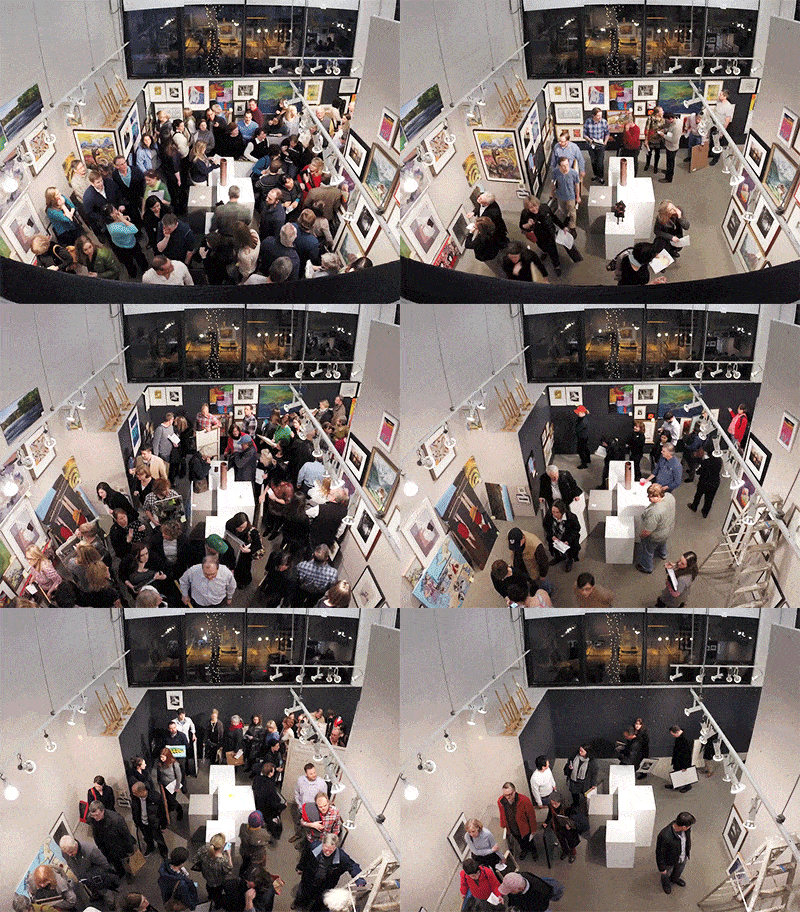
The Patrons’ Show Fundraiser has been described as a block party. Here are some guidelines for an enjoyable experience:

  • Refreshments are welcome. Please keep your coolers small enough to fit under a chair, and please — no tables, other furniture, or food deliveries.
  • Unfortunately, there is no room for babies or pets. They wouldn’t have a good time, anyway: it gets crowded and noisy.
  • On that note, please keep your conversations at a low volume. It’s important to make sure people can hear the announcements, names, and numbers being called out.
  • Please remain seated until the announced breaks.
  • Be kind to your neighbors.

Don’t miss out

The main drawing isn’t the only fun to be had!

First choice raffle: The first choice raffle is a separate drawing that happens just before the main event. When you buy a ticket, you mark the piece you want most of all. A single ticket is drawn at 4:00 pm, and the piece marked on it is set aside for that lucky person to pick up! You do not need a regular Patrons’ Show ticket to participate.

Raffle tickets are $15 each or two for $25, available for purchase online until February 16 in the gallery up until 1:00 pm on the day of the event.

After-auction: There will be a few pieces left over at the end of the drawing. Join us immediately after for the aptly named after-auction, where you can get more artwork for a steal! You’ll register for a paddle and bid on artworks just like in a regular auction.

Door prizes: The last few names called each round get special prizes!

Questions

Any questions we didn’t answer? We want to make your first Patrons’ Show experience a good one! Call us at 703-683-1780 to get in touch.

Artist Opportunities #404

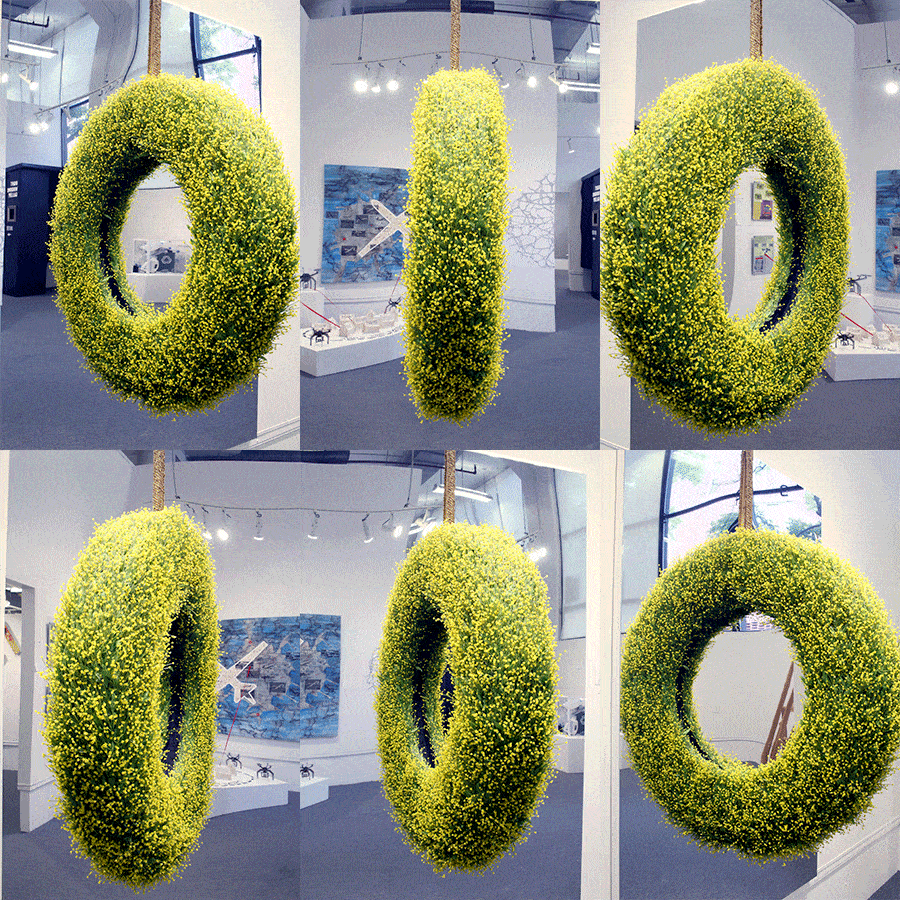
Tire Swing by Art League instructor Andy Yoder

On Tuesdays, we gather a variety of artist opportunities around the DC area and beyond. Find one below and enter today — good luck! Click here for recent opportunities posts, and submit your opportunity listing here.

Painting awards

Deadline: February 23. The Bethesda Arts & Entertainment District invites eligible artists to enter the Bethesda Painting Awards. Artists must be 18 years of age or older and permanent, full-time residents of Maryland, Virginia or Washington, DC.


Re-runs: These announcements have been posted here before, but it’s not too late to enter!

Home

Deadline: January 9. For “There’s No Place Like Home,” the Maryland Federation of Art invites all 2-D and 3-D artists to submit works that illustrate what they describe as “home.” Juror: Liza Key Strelka is Manager of Exhibitions at The Phillips Collection in Washington, DC.

Works on paper

Deadline: January 16. Maryland Federation of Art invites all artists residing in the United States, Puerto Rico, Canada and Mexico to enter its 39th annual Art on Paper competition. Any original 2-D or 3-D work created on or of paper, including collage, artist book, origami, printmaking, painting, sculpture, and more, will be considered.

Torpedo Factory Artists’ Association

Deadline: January 22. Phase I of the 2018 jury to join the Torpedo Factory Artists’ Association is underway. Read more about the opportunities and benefits of membership on the jury page.

Exhibit proposals

Deadline: January 31. The Merion Hall Gallery at St. Joseph’s University (Philadelphia, PA) hosts six professional artist exhibitions each school year.

France residency

Deadline: January 31. BAU Institute announces call for applications for its summer 2018 artist residencies at a Seaside mediterranean village Near Marseille.

Public sculpture

Deadline: February 1. Friends of Leesburg Public Arts is renewing its sculpture on loan program: ArtsPARKs 2018 at Raflo Park in Leesburg VA. For more information, see the Artist Opportunities page and click on “button.”

BlackRock

Deadline: February 1. BlackRock Center for the Arts (Germantown, MD) is now accepting proposals for solo, themed and group exhibitions to be presented in our gallery spaces in 2019.

Target Gallery solo shows

Deadline: February 4. This is an open call for proposals for an exhibition at Target Gallery(Alexandria, VA) in the summer of 2018. This call is open to emerging or mid-career artists from North America working in all visual media.

Illustrators

Deadline: February 6. Illustrators in any country working in any medium or content can enter work created between January 2017 and February 2018 for the World Illustration Awards 2018.

Plein air event

Deadline: February 15. The Mountain Maryland Plein Air Competition & Exhibition, an annual juried exhibition and art competition, is sponsored by the Allegany Arts Council.

Torpedo Factory installations

Deadline: March 1. The Torpedo Factory Art Center invites artists and artist teams residing in Virginia, Maryland, and the District of Columbia to submit their qualifications and proposals for the Torpedo Factory Art Center’s common areas. Up to three artists/artist teams will be selected to install works of art in three designated public locations inside the Torpedo Factory Art Center.

New Photography

Deadline: March 8. Photographic artists of all walks are invited to submit their latest works to a national juried show at the Academy Art Museum in Easton, MD. The exhibition aims to highlight the current state of photography across a broad spectrum. Artists may submit all types of photographic works including digital, analog, alternative processes, etc.

Greek island residency

Deadline: ongoing. The Skopelos Foundation for the Arts offers residencies for two weeks to two months for ceramists, mixed media artists, painters, printmakers and sculptors from March through December.

Why an Art Class is the Best Way to Treat Yourself in the New Year

New year, new you, new term of art classes!

With Winter term starting next week at The Art League, this is the perfect time to get a head start on a more fun, more creative, more you year. Here are four ways taking an art class can help you be your best self.

Be present

There’s no way to check your phone when you’re elbow-deep in clay. Practicing art is a way to break your routine, shoo away distractions, and clear your mind. Painting, drawing, weaving, photography, and even things like soldering can be very Zen.

Pablo Picasso

Exercise your mind

“To practice any art, no matter how well or badly, is a way to make your soul grow. So do it.” —Kurt Vonnegut, Jr.

What do you see? It’s a surprisingly difficult question to answer. When you take an art class, you’ll learn things like white isn’t always white and how to see like an artist. Of course, there are plenty of technical skills to learn as well, but seeing comes first.

Wayne Thiebaud, Three Machines

Accept failure

It’s true that pencils come with erasers, but artists actually use several different types of erasers — they’re that important. (You can use erasers not just to refine your pencil marks, but as a drawing tool in its own right.)

Helen Frankenthaler (photo by Gordon Parks, 1956)

Part of creating art is confronting failure, that moment when you smush a so-so pot and start anew — or paint over a struggling canvas for a fresh start. Edit, rework, find the good parts, and leave the rest behind.

In art, you can always go back to the drawing board.

Art by Andy Warhol, quote by Marshall McLuhan

Challenge yourself

Just because anyone can take an art class doesn’t mean it’s easy. A good class will challenge you to think in new ways, to use your creativity differently, and to do difficult things. Some of our instructors even assign homework.

One of the most common remarks art students make is that teachers “make it look so easy” — and it’s true! Mastering any medium takes years, but every step of the way has its rewards.

Browse the catalog

Keith Haring, Untitled, 1987


Are you ready? Feeling inspired? Get signed up for a winter class!

4 Ways to Warm Up in Art Class

Brr! With Winter classes starting up soon, our minds are brimming with expectations and yearning for some creative warmth.

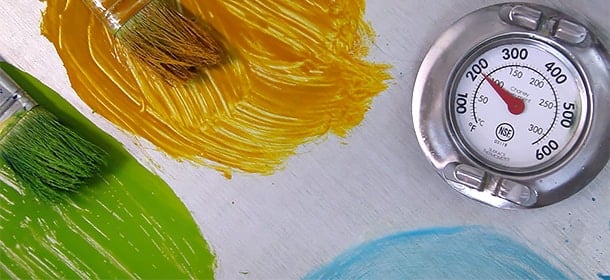
Heat, it turns out, is also an important part of an artist’s toolkit. Here are a few of our classroom videos where temperature plays a role, and how you can participate this season. (And you can see the full catalog online.)

1. Raku firing

In this video, Art League ceramics chair Blair Meerfeld fires ceramic work using the raku process. After the raku ware is heated in a kiln until red-hot, the pieces are placed in metal cans filled with combustible material, like newspaper. The paper ignites and the smoke completes the process:

Heat-coloring copper

The sculpture classroom sees plenty of heat when we hold our Metal Sculpture classes. In this demo, Brian Kirk shows how easily a torch’s heat can create interesting coloration on copper:

Encaustic photo transfer

Beeswax, pigment, and heat are the critical ingredients for painting in the ancient medium of encaustic. For our encaustic workshop, the jewelry studio becomes a painting studio for a few days. Warm wax allows for some interesting transfer techniques, like the simple photo transfer here:

Color study painting

For an exploration of temperature as it relates to color choices, you can’t go wrong with a color study. In this demo, artist Danni Dawson shows how to build a portrait starting with some pretty wild colors:

Winter classes start next week (January 8 or later)! Browse the full catalog online.

Updated: Where to Find Public Domain Images for Your Artwork

Public domain images for artists

We’re revisiting some useful resources while we’re on break this week. Enjoy this 2016 blog post on public domain imagery, updated with links for 2018!

Copyright serves a valuable service, protecting the rights of the artists, authors, and other creatives who depend on their work to make a living.

Public domain images fill another need, for people who need images to rework, reuse, repurpose — people like artists. For creating a new collage, mixed media work, or even just painting from a reference photograph, the sites below will be a great resource. But first …

What is the public domain?

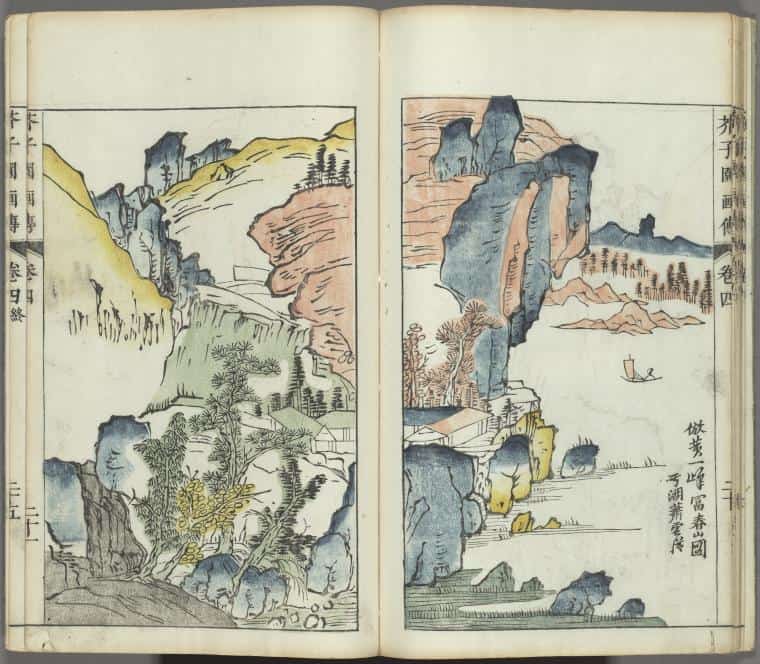
From Kaishien Gaden, The Mustard Seed Garden Painting Manual. Artist: Wang Gai. From the New York Public Library.

Reusing copyrighted images can be tricky. Sometimes it can be considered “fair use,” and sometimes it can be copyright infringement. In the U.S., it depends on things like what portion of the work is used and whether the new work is sufficiently transformative. (Sorry, we aren’t lawyers, but you might find this article on Graphic Artists Guild helpful.)

You can sidestep these issues entirely by using public domain and CC0 images in your artwork.

  • public domain: This refers to creative works which are free of copyright restrictions, often because the copyright has expired. Work in the public domain can be used for any purpose, including commercial purposes, with no permission or credit necessary.
  • CC0 (Creative Commons zero): A tool by which the copyright holder waives their rights to the work and releases it into the public domain. Just like with public domain works, CC0 works can be used for any purpose.

Unlike with copyrighted works, these images can be freely used as the focal point of an artwork without fear of committing copyright infringement.

Where to find public domain images

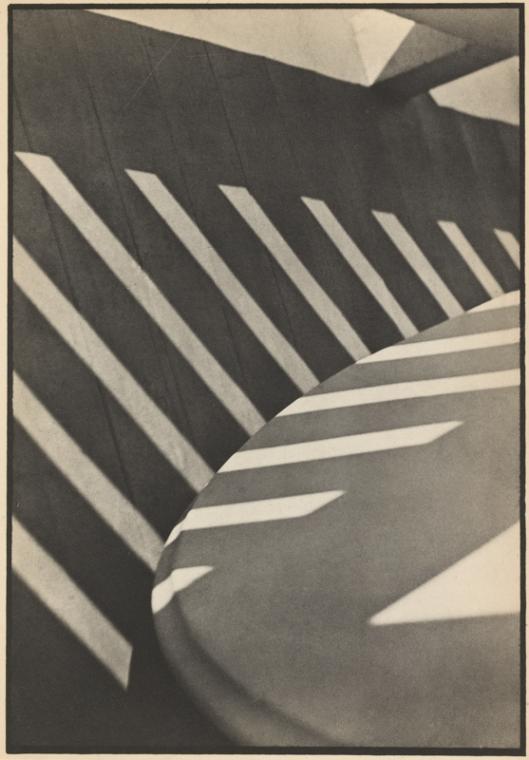
A 1917 photograph by Paul Strand. From the New York Public Library.

Now, the good part. These websites all specialize in copyright-free images, including things like illustrations, photographs, and maps.

  • The Met has released over 375,000 images with a CC0 license as part of their Open Access program. See their full collection or just the public domain portion.
  • Dover Publications makes books that we first heard of through the work of collage artist David Alfuth. They publish books with copyright-free imagery you can cut out, photocopy, and use for whatever you like. (Note that not all their books are copyright-free.)
  • The University of Texas maintains images of maps on its website, many of which are in the public domain.
  • Pond5 has a huge library of images and video, but only some of it is in the public domain. When you search, select the appropriate checkbox to see only copyright-free images.
  • Looking for outer space imagery? It’s hard to beat NASA, images (and videos) from which are typically in the public domain.
  • Likewise, you can search Flickr for only Creative Commons images. Check the details for each image to see what restrictions it has.
  • The Internet Archive has all kinds of images you can download, but not all of them are necessarily free of copyright restrictions. The Brooklyn Museum and the Met have both uploaded collections here.
  • The Library of Congress, naturally, has a huge amount of photos, maps, artwork, and other images, and many of them are available online. However, there’s no way to search for only public domain images, so you’ll have to check the copyright information for each image. Limiting your search dates to before 1923 will turn up mostly public domain images.
  • The New York Public Library digital collections contain both copyrighted and public domain images, with a checkbox that allows you to search only the public domain.
  • Pixabay has thousands of CC0 images and videos. We’ve found it quite useful for this blog and other projects.
  • Pexels has you covered if you’re looking for photography.
  • Finally, many museums host downloadable images on their website, including the Philadelphia Museum of Art, the Hermitage, and the Rijksmuseum. There are many, many more.

Are there any other resources we should include here? Let us know! And don’t forget, if you find these images useful in your work, the people who create and maintain these resources always appreciate a donation.

Repost: How & Why to Sign Your Artwork

Famous artists' signatures
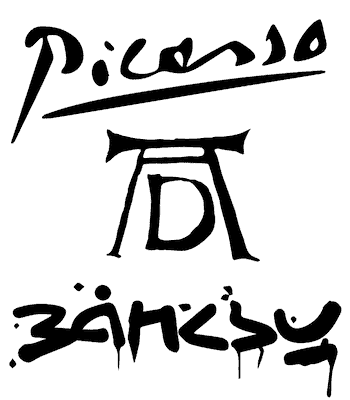
Signing artwork is an important part of the creative process that’s sometimes overlooked. Here are three signatures we’d all like to find in our attic! (via)

Happy 2018! While we’re on vacation, please enjoy this repost from May of last year:

What’s the first thing you do after you’ve finished a piece of artwork? Frame it? Take a photo? Put it on your website?

Not so fast. Before you do anything else, you need to sign it.

Common mistakes in signing artwork

The most common mistake artists make with signatures is not signing artwork in the first place. Maybe you forgot, maybe you aren’t sure how, or maybe you don’t feel like a “real” artist.

This is no time to be shy — signing artwork is a must. It gives the work value and marks it as a finished, sellable piece of work. (We’re including examples from Art League artists throughout this post.)

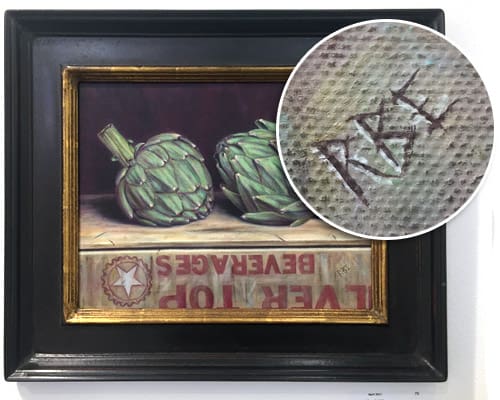
Artichokes on a Crate by Brent Erickson, signed with the artist’s initials in a trompe l’oeil style.
There are some other mistakes you can make when signing your art:

  • Distracting from the artwork: Your signature should be small and unobtrusive. This is not the time to break out your glitter marker.
  • Signing illegibly: The signature is there to identify you as the artist, so make sure it’s legible.
  • Signing the matte: For photographs and other prints, we sometimes see artists sign the matte. You should sign the print itself — probably not on the image, but just outside, or on the back. This way, if the piece gets reframed, the signature goes where the art goes.
  • Using non-archival materials: Just like the artwork itself, your signature should be made to last. Don’t use ink that will fade over time, for example.
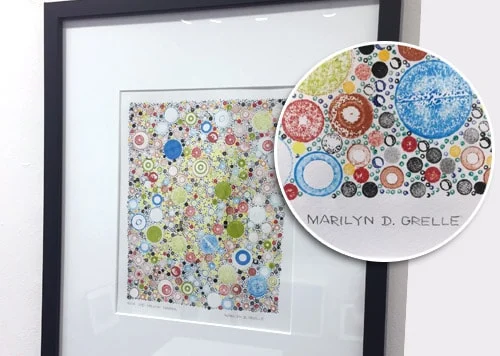
Blue Dot, Yellow Center by Marilyn Grelle. The signature is on the same paper as the monotype, printed neatly just below the image along with the piece’s title.

Where and how to sign

Where to sign is up to you: some artists do it on the back, some on the front in a corner. As you’ll see below, there are other places to “hide” a signature. Most artists, however, sign in a bottom corner, and that’s where a collector will look first.

Just be sure to sign on the artwork itself — not on the matte or a stretcher bar, for example.

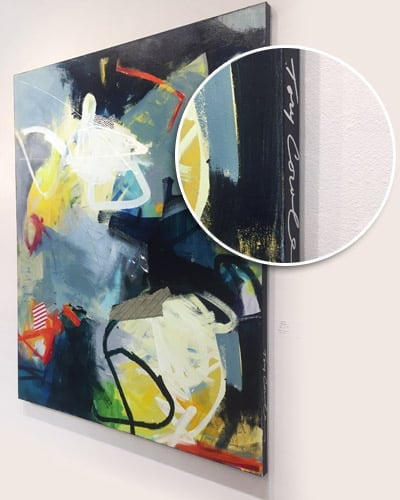
#877 by Tory Cowles is signed on the side of the gallery-wrapped canvas.

How to sign depends on your medium: pen or pencil are good for works on paper. Painters should sign in paint (using a small brush) with a color that makes sense for the artwork. Again, your artist signature should be legible but not draw attention to itself.

Keep in mind this doesn’t have to be the same signature you use for signing checks: you can use your initials or a monogram, like Albrecht Durer’s at the top of this post.

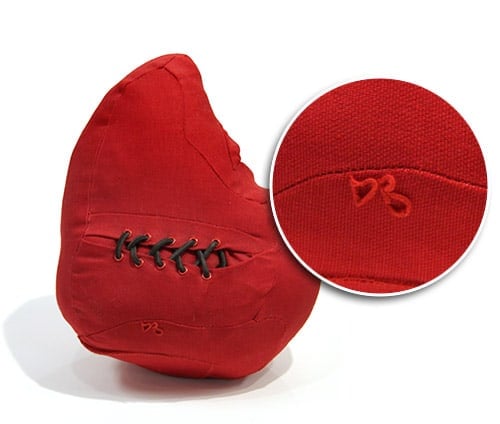
Signing artwork with a chain stitch
Diane Blackwell signed her sculpture The Washington Football with a chain stitch.

What about three-dimensional work?

The same basic rules apply to sculptures and other three-dimensional work. That is, you should sign unobtrusively on the work itself and not, for example, on a detachable base.

For jewelry and ceramic works, you may want to create a unique maker’s mark. You can see Blair Meerfeld’s distinctive mark below:

Signing artwork with a maker's mark
Blair Meerfeld

Jewelry can be tricky when it’s very small. Whitney Staiger puts “UDOP,” the name of her jewelry business, on the inside of pieces when she can.

Creative solutions

As long as it doesn’t detract from the artwork, there’s no reason you can’t get creative with your signature! You are an artist, after all.

  • In this video, Sara Linda Poly shares a good tip for painters: you can sign with a color shaper by removing paint. It’s probably a little easier to write with, compared to a brush.
  • You can have a little fun by hiding your signature in the subject matter, like Joey Mánlapaz does in her painting below.
911 by Joey Mánlapaz features a signature built into the scene.

Artists, is there anything else you’d like to know about signing artwork? Let us know in the comments!