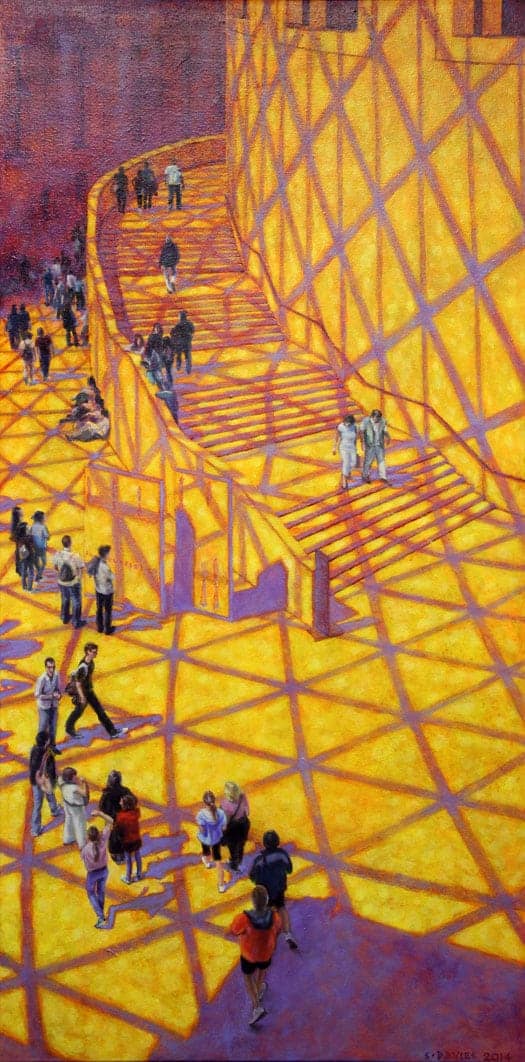
British Museum, acrylic, by Sally Davies. (click for a larger image)
Sally Davies, a painter and elementary school art teacher, won the Mira Masé Award this month for British Museum, a view looking down on a dramatically sunlit room of the London museum. We asked her about her favorite museums, her current work, and looking at the world with a bird’s eye.
Where is this scene? What caught your eye about it?
Sally Davies: This is the British Museum in London, England. When I visited a few years ago, I found a room on the second floor that had a window looking out on the interior courtyard. It was a sunny day and the pattern of the glass ceiling made interesting shadows on the interior. I took maybe 40 photos from that spot, knowing I’d really want to paint it when I got home.
What was your goal with this painting?
I was attempting to unify a very large space with a design that would not become cluttered, and yet still have interesting details. My main focus was the pattern of shadows and light.
The bird’s-eye perspective has appeared in many of your paintings. What brings you back to it?
Not sure. It just really appeals to me. I love long shadows in the morning and evening … and that warm glowing light that is so transient.
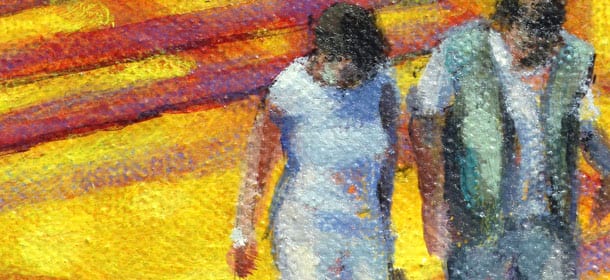
British Museum (detail) by Sally Davies
What’s your process like, from an idea to a finished piece?
I’m always looking out for the long shadows. Also, people and interesting architecture are a big part of the appeal that attracts me to an image. I take lots of photos of a scene and then pick and choose elements to design the painting. Then I have fun with the under-painting, playing with layers of colors until I get something I love. Next, I sketch in the elements and paint the shadows and people.
Why are you a painter? Why acrylic?
Oh, I love watercolor and drawing, too. Right now I’m having fun making some mobiles. I’m also an elementary school art teacher so I am often inspired by my students’ creativity, too!
Is there one element in your work that is most important to you (line, color, etc.)?
It depends on the piece and the medium. When I’m working in my sketchbook, I like ink line and watercolor washes. With larger canvas pieces, I’m focusing more on light/color and how it affects form. Overall, the most important element that effects all my work is a strong, uncluttered design.
What are you working on now?
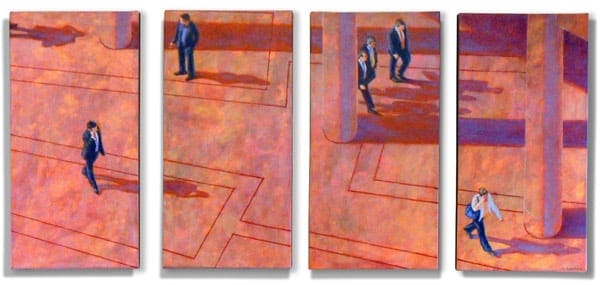
Another canvas with bird’s-eye perspective with long shadows, of course! This time it is of people crossing a street. The pavement markings become part of the design.
Connections by Sally Davies
Both your piece and the other award winner (Web Bryant’s Sentry to the 54th) depict museums — do you have a favorite museum? Is there something special about museums in particular that made you want to paint it?
Well, picking a favorite museum would be hard for me to do since there are so many wonderful ones … National Gallery of Art and the Smithsonian galleries here in DC, The Portrait Gallery in London, England (I love that they write information about the painter and the sitter next to every portrait on display), the Louvre in Paris (I could spend weeks there), the National Archaeological Museum of Athens (they have a wonderful display of sculptures – some even rescued from ancient underwater shipwrecks), and of course, the British Museum in London (which is the subject of this painting).
I’ve just spent the last few weeks in Japan and the Edo-Tokyo Museum was amazing. You can Google a photo of the architecture – very modern, enormous concrete building cantilevered out over a huge plaza space. Inside, the exhibits were spectacular, with incredible miniature models, recreated interiors of historic buildings, and a whole area dedicated to Japanese block printing. I also had some great opportunities to take photos of people from a bird’s-eye view – which is what I look for when I travel. So at the moment, this museum tops my list!
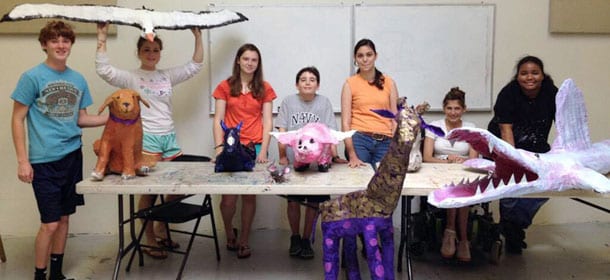
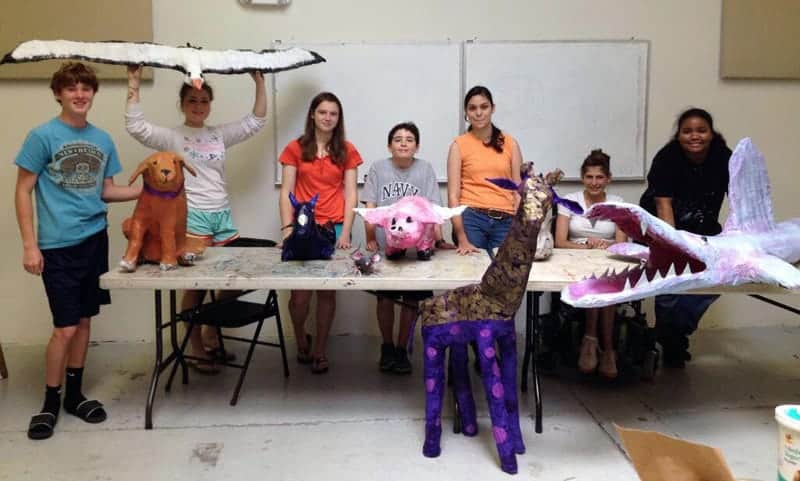
This is the last week this summer for Painting Camp, and the only week for Photo Camp and Life-Size Paper Mache, so don’t miss those if they’re on your list!
Life-Size Paper Mache 2013 (photo by Lisa Schumaier)
For any artists who are new to the Bin Gallery or need a refresher, the last Bin Gallery Orientation is next Tuesday. This is the place to learn about how to drop off and keep track of your bin and wall work, how sales work, and so forth. You can RSVP here.
Want to take a class this summer? Basic Drawing, the class we recommend most for beginners, starts next Friday night. And if you want to try something in jewelry, Jumpstart in Enameling is a two-day workshop starting next Saturday.
Break out the champagne – this is The Art League Blog’s 1,000th post!
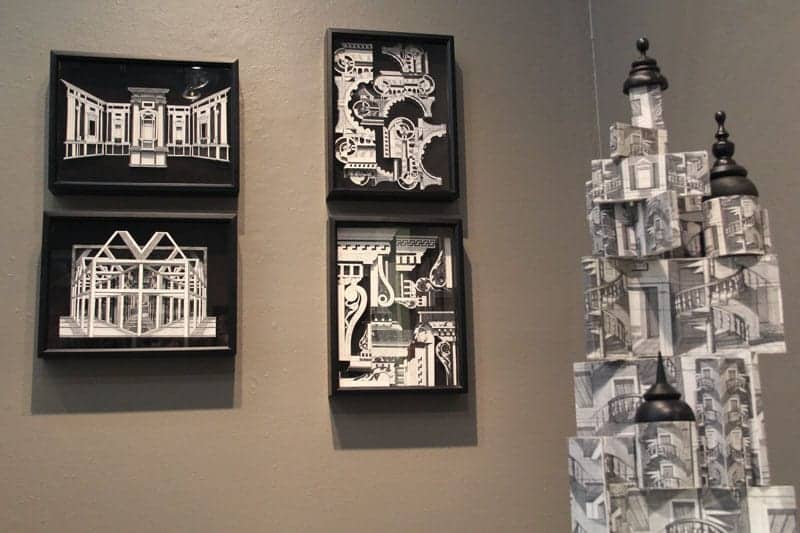
For almost six years, we’ve done our best to keep you up to date with what’s happening in our classes, exhibits, store, and behind the scenes. With videos, weekly opportunity posts, exhibit previews every month, and interviews with our artists and instructors, we’ve kept you in-the-know with what’s going on in and around The Art League.
Like our Community Canvas, pictured above and below, this blog is a collaborative effort and everyone is part of what we do. As the saying goes, it takes a village! So if you have news to share, something you’d like to see more of, or a guest blog post you’d like to write, please get in touch with us! Emails and comments are always welcome.
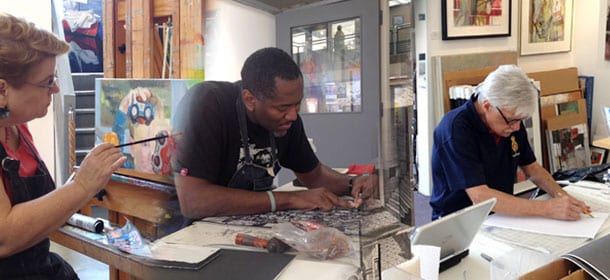
On any given day, you can see Art Leaguers at work in their Torpedo Factory studios, since many members and instructors are also artists in the building.
This summer, you have a chance to see a few more! The artists below are subletting studios right now, either as Associate Artists or part of the Visiting Artist Program.
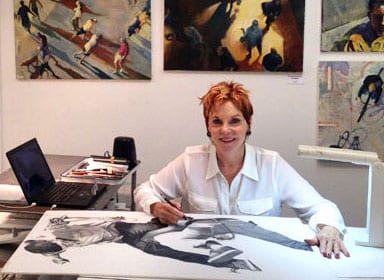
Suzanne Vigil
media
colored pencil and acrylic
dates
through July
location
studio 331
Suzanne will be here until the end of July, working on her photo-realistic colored pencil pieces, with a new twist: inspired by studiomate and painter Pauline Siple, she’s starting to combine acrylic paint with her colored pencil drawings on acetate. She says she’s intrigued by the idea of covering some areas with a layer flat acrylic while other parts remain detailed drawings.
Suzanne said she loves seeing people respond to the portraits. A lot of visitors “refuse to believe” that they’re colored pencil, she said. The best, she said, are the school-age kids. “They have the most direct, uncensored questions.”
Steve Prince
media
linoleum prints & drawings
dates
through July
location
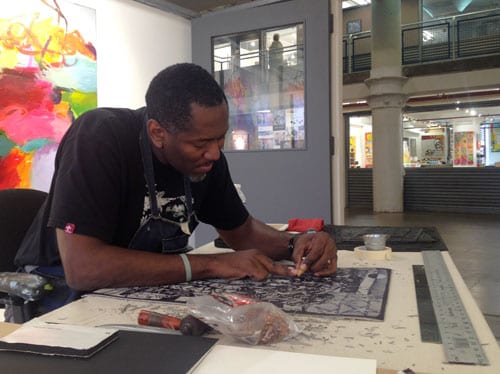
studio 7
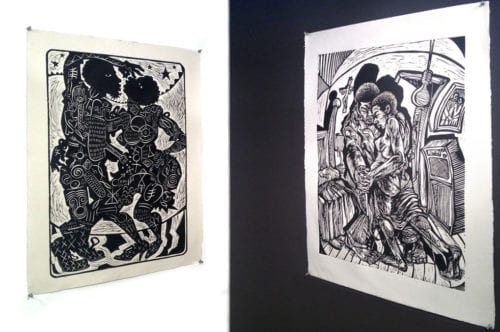
Steve Prince has the summer off from Allegheny College in Pennsylvania, where he was recently named Assistant Professor of Drawing and Printmaking. This month, he’s teaching Art Camp in the mornings and working on his series of linoleum prints and drawings, “The Old Testament,” in the afternoons. Steve is drawing from the 39 books of the Old Testament as subtext for the “love series.” (The two below are inspired by the Psalms.)
He says he’s going for a “hot off the press” look in the studio, hanging freshly printed work unframed on the walls, so repeat visitors can see what’s new.
That Voodoo That You Do and Slow Dance by Steve Prince.
Susan Sherwin
medium
oil
dates
through September 15
location
studio 3
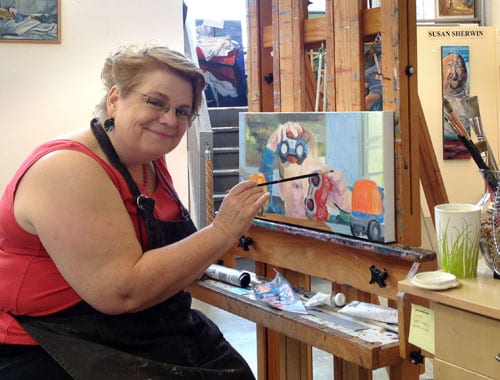
A relatively new transplant from Wisconsin, Susan said she found her community here by taking classes with Lisa Semerad and Danni Dawson at The Art League. As a newly juried Torpedo Factory artist, she’s expanding that community by running into artists and visitors of all stripes.
This summer, she’s working on portraits, including a new project doing double portraits of Alexandria dogs and their owners. Since she doesn’t have a dog to bring to the studio, she painted cut-out portraits of her three cats, and she’s now taking commissions for the oil on masonite portraits from other cat owners. You can say hello to Susan, along with Zeus, Eleanore, and Lancelot, through September 15 in Studio 3 at the northeast corner of the first floor. (She will be back for a period this Winter, too.)
David Alfuth
medium
3-D collage
dates
through the end of August
location
studio 301
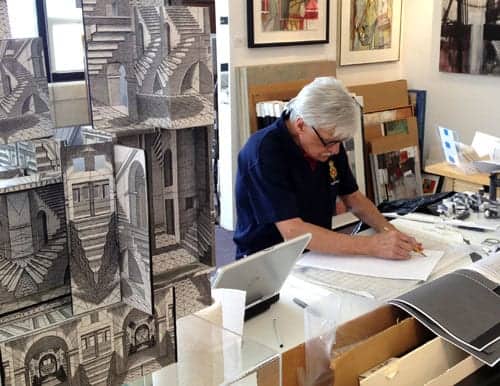
A few years after retiring as a teacher, David’s first thought after starting as an associate artist was that he was back at work. He had to remind himself, “You’re still retired; this is just for fun.” But now that he’s done with the preparations for his exhibit downstairs at The Art League, things are calmer.
David’s process involves photocopying from thousands of Dover books to create 3-D collages, both freestanding and in relief. He finds pages at home each night and photocopies them on the way in the next morning, so studio time is for selecting, cutting, and collaging. This summer, he’s working on two freestanding sculptures and chatting to visitors who come upstairs after checking out his exhibit.
Ellen Delaney
medium
acrylic
dates
through July
location
studio 4
Ellen is an associate artist at the Torpedo Factory. Since quitting her job in May, she’s also taking the plunge into being a full-time artist. You can find her working on her landscapes during the week, and mostly talking to visitors on the weekends.
“Keep in mind that the only person to write for is yourself. Tell the story you most desperately want to read.” — Susan Isaacs
“Structures” @ The Art League last chance!
Deadline: This Friday, July 18. Our August sculpture exhibit is by digital entry only. Entry is limited to Art League members, but nonmembers are welcome to join any time (see details in the prospectus). More about “Structures” →
Banned Books Week
Deadline: July 28. This call is open to artists who live and work in D.C. who are 18 years of age and older and/or organizations located in D.C. The DCPL Banned Book Week Exhibition: Unlimited Access is a temporary public art event at the Martin Luther King Jr. Memorial Library that asks artists to address the principles underlying the First Amendment with an emphasis on the freedom to read. More about “Unlimited Access” →
Art Maryland 2014
Deadline: August 31. Entry to this juried exhibit, sponsored by the Howard County Arts Council, is open to visual artists 18 years or older who live in Maryland or within a 100-mile radius of Ellicott City, MD. The juror for the exhibit, which runs from October 31–December 12, is Julia Marciari-Alexander, the new Executive Director of the Walters Art Museum. More about this exhibit →
Prince George’s Sampler
Deadline: September 6. The county’s annual juried exhibit is open to all artists and curators who are 18 years of age or older who live, work, study, or have a studio in Prince George’s County, Maryland. Juror: Myrtis Bedolla. Download the PDF prospectus →
Metamorphosis
Receiving: September 28 & 29. Entry to “Metamorphosis” at Del Ray Artisans is open to members and nonmembers. The juror is Elizabeth Ann Coleman, curator emeritus at the Museum of Fine Arts, Boston. Download the PDF prospectus →
Hillyer Open Call
Deadline: September 28. Hillyer Art Space in Northwest DC is accepting the 2015/16 exhibition season. Hillyer presents monthly exhibitions and each accepted artist is given a room in the three-room gallery space to present their work. More info here →
New member orientation sessions are for anyone who’s just joined the Gallery or is thinking about it. The first one is coming up Wednesday, and there will be another in August. Click here to RSVP.
Interested in a solo exhibit at The Art League? Learn about how that process works. The next application deadline is in September, and applicants must attend one of four information sessions — the first option is on Thursday. Click here to RSVP.
Sculptors and all 3-D artists: Friday is the deadline to enter “Structures”! This is the annual sculpture exhibit that goes up alongside “’Scapes” in August. It’s a popular pairing. Click here for details and to enter online.
Four summer classes start next week: Four Weeks One Pose with Marjorie Forgues (Sunday mornings), Metal Jewelry with Tina Chisena (Monday evenings), Print Like the Masters with Priscilla Treacy (Tuesday mornings), and Wildly Abstract Landscapes with Brenda Belfield (Thursday mornings). Wildly Abstract Landscapes is recommended for painters of all levels who want to try a new approach.
Art camp continues, as well: next week’s camps are Basic Art Camp, Drawing Camp, and Cartooning Camp.
Today, both of our July exhibits are officially open. It’s also Second Thursday, so tonight is your chance to meet the artists at the opening reception!
July’s All-Media exhibit was juried by Ginger Hammer, assistant curator at the National Gallery of Art. Our member artists made a strong showing and there’s something for everybody in this eclectic exhibit.
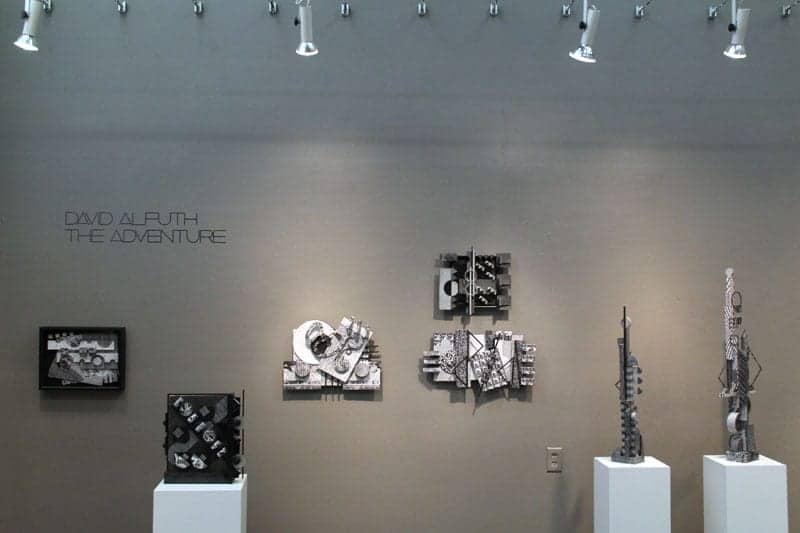
Over in the solo room, David Alfuth has crafted “The Adventure” with a photocopier and matte medium. The detailed 3-D collages and reliefs each have something different to say. You probably remember Mary, Mary, Quite Contrary from the January Solo Preview. This exhibit includes surreal scenes like that one, along with invented botanical specimens, architectures, and abstract sculptures.
This month also marks the return of the Bin Gallery, so you can see some new artists who have joined in the new membership year.
See you tonight! Here’s a little preview of the exhibits:
Foreground: Elation by Ann Ruppert
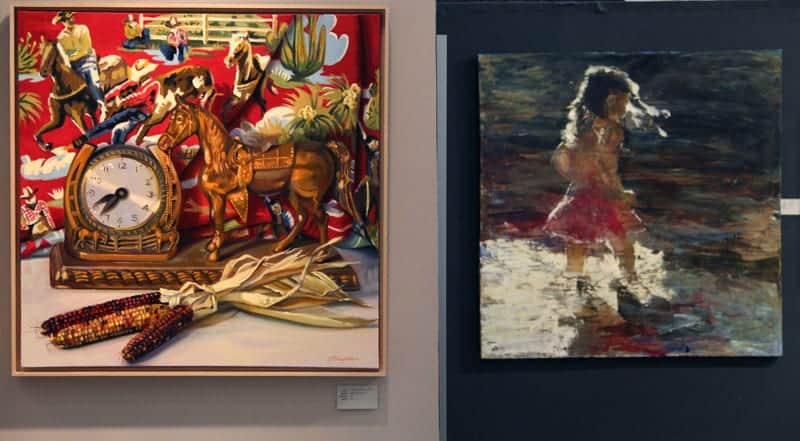
Cowboys and Indian Corn by Dana Thompson and Emmy Sunlit by Lisa Neher
The Stranger by Wendy Sittner
Sentry to the 54th by Web Bryant, awarded the Oerth Kirstein Award.British Museum by Sally Davies, awarded the Mira Masé Award.
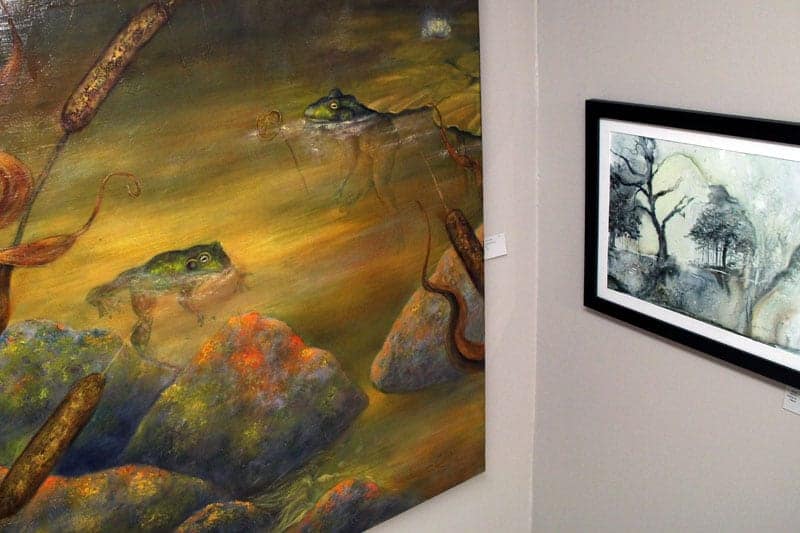
Frog Pond by Landon Peacock and Monsoon by Geeta Ramani.
We’ve written extensively about using social media and blogs to promote your art, but we haven’t really touched on the most powerful part of an artist’s online toolkit: email.
Many artists have a contact list of emails they’ve collected from different exhibits and events (and hopefully, their website).
Don’t let that list collect dust! Once somebody’s expressed interest, you want to keep that relationship alive by staying in touch. That’s an email newsletter.
So how to start? Whether you have an old email list to work with, or you need to start collecting names from scratch, it won’t take long:
1. Pick a service and start collecting
There are numerous email service providers (ESPs) to choose from. Two of the most popular are Constant Contact and MailChimp, the latter of which The Art League uses. MailChimp is even free if your list has fewer than 2,000 subscribers! If you used a website builder or similar for your site, check to see if there’s a built in option there.
There are many, many other options, both paid and free. Search around! Any good service will offer options to export and import lists, so you won’t be stuck.
Why use a service? Sending through a service, instead of through your personal email account, has several advantages: it’s easier to manage your list, you can see whether people are opening your emails, and it’s less likely to be marked as spam, especially as your list starts to grow.
Add the signup form. Whatever service you go with, the next step is to add names. You probably have three main sources:
people who sign a guestbook at an exhibit or art fair,
people who have purchased artwork from you in the past, and
people who sign up on your website.
To capture the last group, follow your email service provider’s instructions to add a signup form to your site. Keep it quick, easy-to-use, and hard-to-miss, and watch those emails come in!
You can add other addresses manually — for example, people who wrote their address in a guestbook — but make sure you only add people who have given their permission. Otherwise, your emails may start getting marked as spam.
2. Design an email
MailChimp’s email builder.
This is the fun part! As a guiding principle, think of all the promotional emails you get every day. Which ones do you actually open, and which ones go straight into the trash?
There are three things every good email needs:
Subject line: This is the most important part. Why should I open your email? Let me know with a short, clear subject line, or it’s likely to remain unopened.
Image: You’re a visual artist, after all, so make sure to include at least one image. The less the recipient needs to read, the better. If you have a web-friendly version of your exhibit card (or workshop flyer, etc.), that will work beautifully.
Something to do: This is called a “call to action.” Somewhere in the course of your email — maybe even more than once — you need to let me know what you want me to do. Otherwise, I’m likely to read your email and move on, and then you’ve lost my attention. So instead of just announcing the date of the reception, include a clear message: “Come to my reception tonight! I’d love to see you there!” Other potential calls to action: “Sign up,” “Come see,” “Watch my latest video,” etc.
Some common reasons you might send an email:
a new exhibit you’re in
an opening reception or event you’ll be at
a new offer for buyers
something new for sale: bowls you’ve just fired, photos you’ve just printed, etc.
other news: what would your fans want to hear about?
Let people know what to expect when they sign up for the first time. If you have different people interested in different things, organize your list into different segments and email the most relevant groups. (Your email service will have a tutorial on managing your lists.)
3. Hit send
How often will you send emails? That will largely be determined by what kind of emails you send. If you send announcements about receptions, exhibits, and other events, that will be dictated by when you have those events. If you want to send out a newsletter, make sure you’re committed to keeping it up. (If you have a blog, you can achieve this by automatically sending emails with each new post or on a regular basis – just search for “RSS to email.” This blog’s newsletter sends out weekly to everyone who signs up here.)
Find a happy medium between sending out too frequently, in which case your useful emails may start to look more and more like spam, or too infrequently, which might cause people to forget why and when they signed up in the first place. MailChimp’s co-founder recommends sending at least quarterly in his blog post with tips for artists.
Any questions or other ideas? What artist newsletters are you subscribed to, and which ones are your favorites? Let us know in the comments!
“‘But for to assaye,’ he seyde, ‘it nought ne greveth; For he that nought nassayeth, nought nacheveth.’” — Geoffrey Chaucer (“To attempt, he said, should not grieve us: nothing ventured, nothing gained.”)
Alexandria Art Market
Deadline: ASAP, accepted throughout the season. Join Del Ray Artisans in its 5th season of monthly outdoor art markets on the lawn area of the Del Ray Artisans gallery. These markets give artists an opportunity to sell their original handmade artwork and provide them with consistent exposure to the community. There will be six (6) monthly markets on the 2nd Saturday of the month (May through October) from 10am to 4pm, rain or shine. More about the market (PDF) →
Zanesville Prize for Contemporary Ceramics
Deadline: July 15. This juried competition is open to all artists worldwide with entries in functional, sculptural, and tile ceramics. Prizes total $30,000. Entry and more info here →
Cheap Thrills
Deadline: August 1. Anacostia Arts Center is now accepting submissions from DMV artists for a curated group show featuring works under $500. Visual artists who work in any media are encouraged to submit. More about the exhibit →
Labor Day Art Show
Deadline: August 3. The Glen Echo Park Partnership for Arts and Culture invites artists to submit work to the 44th Annual Labor Day Art Show in the Spanish Ballroom at Glen Echo Park in Glen Echo, MD. More about the art show →
Loudoun photography exhibit
Deadline: September 19. The Friends of Claude Moore Park (FCMP) invite you to participate in the 7th Annual FCMP Photography Expo “Natural Spaces and Old Places” to be held on September 27, 2014. Photographers of all levels and ages are encouraged to enter their favorite photos into the juried competition in five categories: Roots and Buds, Wild Creatures, Winged Wonders, Natural Landscapes, and History and Heritage. More about the exposition: rules → | entry form →
VMFA Fellowships
Deadline: November 7. Fellowships from the Virginia Museum of Fine Arts are offered for professionals, graduate students, and undergraduates. Applicants must be legal residents of Virginia. More about VMFA fellowships →
Re-runs: Don’t miss these opportunities previously posted here!
InLight Richmond
Deadline: July 15. 1708 Gallery in Richmond, VA invites artists working in all media and disciplines, including performance, to submit proposals for InLight Richmond 2014, 1708 Gallery’s 7th annual one-night, public exhibition of light-based art and performance. More about InLight Richmond →
Info sessions: July 17, August 15, August 28, or September 13. Deadline: September 26. Artists interested in a solo exhibit at The Art League in 2016 can submit their proposals in Fall 2014. Interested artists should attend an information session, submit their materials by September 26, and deliver their physical work to the Gallery for jurying on October 20. Required submission materials include five images, a resume, artist statement, and exhibit proposal. More about solo exhibits →
Printmaking exhibit
Deadline: July 31. “Ink, Press, Repeat 2014″: One artist will be selected to have a solo exhibition at the University Galleries at William Paterson University. Select works will receive cash prizes. More about the exhibit →
Cleveland residency
Deadline: August 1. Local, national, and international artists working in any medium are invited to apply for one-week, two-week, or four-week residencies at Micro Art Space in Cleveland, Ohio. More about Micro Art Space →
Cancer survivor artwork
Deadline: August 1. The American Society of Clinical Oncology is producing the annual Expressions of Hope wall calendar for 2015 as a way for anyone who has been affected by cancer – patients, friends, families, caregivers – to share their emotions through art and inspire hope in others. Entry form and more information →
Sculpture proposals: Bloomington, IN
Deadline: August 1. The Crescent Bend Neighborhood Association in partnership with the City of Bloomington is issuing a Call to Artists to submit proposals for consideration for a site-specific sculpture commission. Download the call for artists (PDF) →
Food
Deadline: August 15. Artists are invited to enter a juried exhibit, “Feast Your Eyes: The Art of Food” at Annemarie Sculpture Garden and Arts Center in Solomons, MD. All media welcome. More about the Art of Food exhibit →
Urban Aspect
Deadline: August 22. The October 2014 show at Principle Gallery Alexandria will be a juried exhibition entitled “Urban Aspect,” featuring works of art that explore the myriad of themes and vistas found in urban life in all corners of the world. More about the exhibit →
Put a Bird On It
Receiving: Sunday, August 31 and Monday, September 1 at Del Ray Artisans. Prove that embellishment can be art! All artwork must incorporate a ‘bird’, either thematically or literally. Open to members and non-members. Read the call to artists (PDF) →
Strathmore residency
Deadline: September 8. Emerging artists will be in residence in the Mansion at Strathmore from January – August 2015. During this time, each artist will have the opportunity to develop an audience in the DC metropolitan area, perfect their craft, create and implement an outreach, educational, or special event proposal for Strathmore’s consideration, and premiere a new body of artwork commissioned by Strathmore in a culminating exhibition. Find more info about the residency at the top of this page →
We’re sad to report the passing of Chuck Johnson, a longtime sculpture instructor at The Art League who retired in the Fall. Chuck was 90 when he passed away on July 3.
Cindy Kellams, a student of Chuck’s, wrote the following:
“Chuck’s life had many chapters, including childhood years on a farm in New Jersey, a stint in the Army Air Corps during World War II where he learned to fly most every plane they had, a Foreign Service career with postings around the globe and, most recently, an opportunity to do something he truly loved … sculpting and teaching. He encouraged his students at Montgomery College, the Studio School in Georgetown, and The Art League to discover and grow their own artistic style and challenged them to ‘dare to be great’! He touched many and his legacy can be seen in the work of individuals around the world who studied with him.”
Students stuck with Chuck for years — decades, in some cases. In 2012, Chuck’s students collected tributes in a book, “You’re the Artist,” which can be viewed online here.
Chuck is survived by his wife, Jean, and son, Scott. There hasn’t yet been an obituary published or an announcement of a memorial service, but we’ll add that information here when we get it.
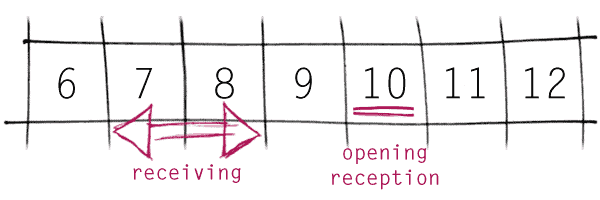
Artwork receiving for the July All-Media Exhibit, juried by NGA curator Ginger Hammer, is Monday, July 7, 6:30–8:30 pm, and Tuesday, July 8, 10:00 am–12:00 noon. Good luck!
Join us on Second Thursday for the opening reception for the all-media show, including presentation of awards, and David Alfuth’s solo exhibit, “The Adventure.” It’s 6:30–8:00 pm on July 10. Everyone’s welcome at opening receptions. This is your chance to enjoy some refreshments, see the new shows, and meet the artists!
Not too late to join a summer art class! There are several starting this week and next. A few are featured below, or click here to perform a search for all summer classes that haven’t started yet.
This guest post comes to us from Casey Webb of Jung Katz, a blog for artists and creatives, where this was first published. Casey is an artist whose primary passions are business and creating art that’s personal to her. Together with Joey Souza, also of Jung Katz, she has a social media following of over 2,000.
Social media can be a very useful tool for growing a strong community of followers — if you tend to your networks regularly and in the right way.
However, it can be a bit overwhelming to try and post daily if you have no idea what to post or what not to post. These tips work great for any social media network, including Facebook, Twitter, Instagram, Google+, and Tumblr.
What to post:
Artwork : Finished pieces, works in progress, and sketches. People follow you because they want to see your art. Give them a behind the scenes peak that they can’t see from just glancing at your website or portfolio. Maybe even take some pictures of your work space.
Project Updates: Are you starting a new series or collection? Artists need to self-promote a bit. If they’re interested in your work, they’ll most likely be interested in other projects by you as well.
What inspires you : Set aside some time to give a shout out to a fellow artist. This is a wonderful networking tool, just make sure you have permission to share their artwork beforehand. More than likely they will be extremely flattered and maybe even return the favor.
Upcoming Events: Tell them about gallery shows or craft fairs you’ll be at, and that you hope to see them there.
Accomplishments : It’s okay to be proud of a job well done. Talk about any features in magazines and other accomplishments or milestones.
Anything Noteworthy: Are you donating 15% of all proceeds to your local animal shelter for the entire month of May? Or are you switching over to organic fair trade materials? Both are great things to know and could potentially drive more sales.
What not to post:
Irrelevant Content : Post those on your personal account. If I follow you for your artwork and you only post art once in every four posts, chances are I’m going to become uninterested and unfollow you.
The Same Things Again, and Again, and Again: Don’t post tons of pictures of a single project all at the same stage of development. Some different views are nice, but we don’t need to see it from ten different angles.
Complaints : You probably don’t follow people to hear them complain about things, and chances are no one is following you to hear it either. Nobody likes being around someone who is always in a bad mood. You want to give your followers a positive experience, not a negative one.
Gossip : Talking bad about other artists is not only rude, but can also burn more bridges than you may be aware of at the time. Saying rude and negative things can sever relationships between you and the artist, you and the artist’s fans, and you and anyone who thinks you’re unprofessional. It’s best not to chance it. Just do your best to be courteous and polite to everyone, and handle issues privately and professionally.
Copyrighted Pictures: Don’t post pictures that aren’t yours unless you have permission to post them.
Anything Controversial: Unless you’re known by your fans for your controversial ways, you could potentially lose many followers by talking about things like politics or religion. If it’s not relevant to your artwork, consider keeping your opinions to yourself.
Before posting to any of your social media channels, think about what it is people follow you for. What do they want to see? What is it that you like seeing from the artists you follow? Take note of what you personally enjoy seeing from those you follow, as well as what you think they could do without. Try your best to understand what you want and what others want from you and you’ll have a deeper understanding of what to post and what not to.
Have any to add? Let us know in the comments below!
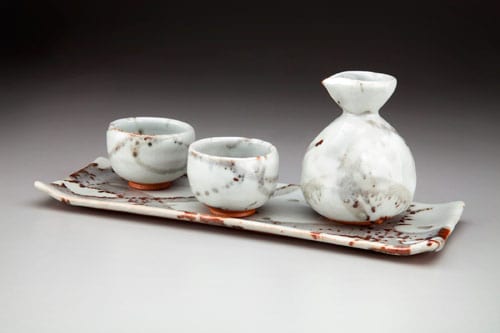
Japanese Shino Sake Set, stoneware, by Hironobu Nishitateno.
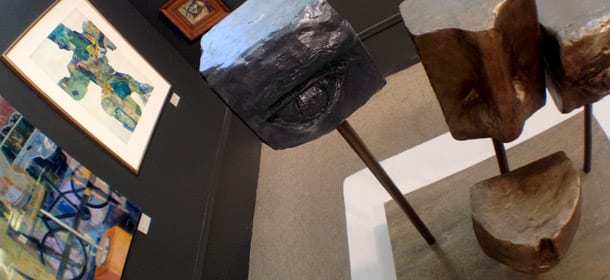
Every piece in the “Tabletop” exhibit starts with clay. If you look at the tags under “medium,” though, you’ll see a lot of more detailed terms.
Potters can use just a few words to say a lot about their process. But what’s the difference between earthenware and stoneware, or cone 6 and cone 10? Here’s a brief introduction to a few of the terms in this year’s “Tabletop” exhibit, open through this Monday, July 7.
cone
When a potter uses cone numbers — for example, Compote With Four Dishes(photo) by Charlotte Martin, which is cone 6 porcelain — they are describing how hot the kiln was (and for how long) during firing. The word refers to an actual numbered cone that looks like these which gradually slumps over as it’s fired. As opposed to a thermometer, which measures the temperature at any given moment, the cones indicate the total amount of heat energy the kiln has put out.
ash-glazed
Glazes are just a thin surface coating that fuses with the clay body during firing. As seen in Eric Botbyl’s Scraggleware Teapot(photo), an ash glaze uses some amount of ash mixed into the liquid glaze. Ash glazes were probably the first glazes to be used by potters. Raku technique, which is unrelated, can also involve ashes: in a raku firing, pots are heated in kiln and then cooled in the open air or placed in a container with combustible materials — which quickly catch fire and color the pots in unpredictable ways.
soda- or salt-fired
Each of these processes involves tossing a material — either salt or another sodium compound like baking soda — into the kiln during firing, which causes a glaze to form directly on the pottery inside. Both soda and salt firing produce a distinctive orange peel-like pattern on the finished piece. Green to Black Pitcher(photo) by Kyle Hendrix is an example of soda-fired porcelain.
earthenware, stoneware, porcelain
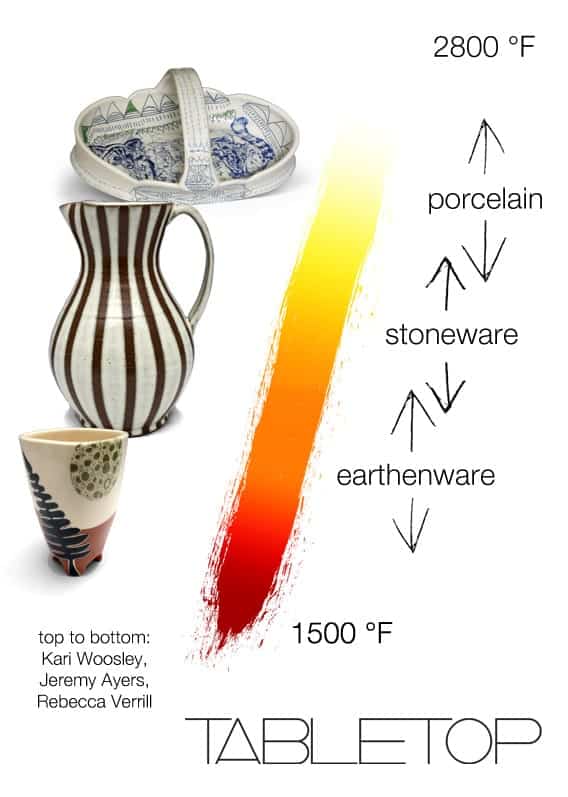
As seen in the graphic below, these terms refer to different mixtures of clay, which reach maturity at different temperatures. Earthenware is fired at the lowest temperature (with an orange-red flame in the kiln) and produces a porous body. Stoneware is less porous, and the highest-fired stoneware — when the flames are white-hot — is called porcelain. In porcelain, the clay has fused with the glaze and become vitrified (turned to glass) and strengthened.
Sources for this blog post: The Potter’s Dictionary by Frank and Janet Hamer and Ceramics: A Potter’s Handbook by Glenn C. Nelson.
“Whether you succeed or not is irrelevant, there is no such thing. Making your unknown known is the important thing.” ― Georgia O’Keeffe
Athletes and sports exhibit
Deadline: July 7. This juried exhibit — September 7 to November 3, 2014 in the New Canaan Historical Society & Museum, New Canaan, CT — is open to all artists over 18 and all original artwork depicting sports, athletes, or athletic events. They will also be featured in a downloadable, digitized illustrated catalogue. More about the exhibit →
Cancer survivor artwork
Deadline: August 1. The American Society of Clinical Oncology is producing the annual Expressions of Hope wall calendar for 2015 as a way for anyone who has been affected by cancer – patients, friends, families, caregivers – to share their emotions through art and inspire hope in others. Entry form and more information →
Sculpture proposals: Bloomington, IN
Deadline: August 1. The Crescent Bend Neighborhood Association in partnership with the City of Bloomington is issuing a Call to Artists to submit proposals for consideration for a site-specific sculpture commission. Download the call for artists (PDF) →
Open Call for the Halls
Deadline: ongoing. Washington ArtWorks is calling all metro DC area artists for a tremendous opportunity to showcase your work in our art center located in the heart of Montgomery County, Maryland. Artwork is hung on a first-come, first-served basis. More details here →
Workshop proposals
Deadline: ongoing. Art Enables invites local artists to submit proposals to lead a monthly art workshop at our studio/gallery in 2014. Artists will receive an honorarium ranging from $100 to $400 according to their experience and proposal. More about Art Enables →
Affinity Lab
Affinity Lab on U St. in Northwest has an open call for artists to display work in their space. Read the call for artists →
Wanted: art fair display
An Art League artist who will be in MPA Artfest wants to rent booth displays — Pro Panels, mesh walls, or similar — for October 5, 2014. The booths are 10′ x 10′. Local pickup would be best. Please contact Arlie Hammons at 703-938-0251.
Thinking of joining The Art League Gallery? Perfect timing! Our new membership year starts tomorrow on July 1. (Of course, you can join any time.)
We pride ourselves on offering a space for emerging and established artists to exhibit work with sales and promotion managed by professional staff. Anyone can become a member, which means you can enter work in a different juried show each month and apply for a solo exhibit. If your work is accepted into three shows in one membership year, you’re also eligible to exhibit framed and unframed work in the Bin Gallery on a monthly basis.
See below for answers to all the most common questions about membership. All these questions and more are also covered in new member orientation, coming up Wednesday, July 16, at 5:00 pm and Thursday, August 14, at 7:00 pm.
Jurying is the process by which we put on a monthly group show. For each exhibit, we invite a different juror (one without a connection to The Art League) to narrow down the hundreds of submissions to the 100 or so you see on the wall.
Because we have hundreds of artist members and limited wall space, jurying provides a fair opportunity for artists to have their work exhibited. Some shows have themes related to medium or subject matter, while others are unthemed — we call those “all-media” shows.
Jurors are regional (and sometimes national) artists, art critics, art teachers, and art writers invited by the Gallery Director. For most exhibits, we use a jury of one, but to select solo exhibitors, we employ a panel of jurors. The same person can’t jury more than once in a five-year period so that our members are ensured a wide variety of opinions.
Artwork receiving (not to be confused with the opening reception) is when artists drop off their artwork each month before the jury. There are two times to do so: Monday evening, 6:30–8:30, and Tuesday morning, 10:00 am–12:00 noon. Generally these are the first Monday of the month and the Tuesday immediately after. Some exhibits, like Art in City Hall or the annual sculpture exhibit, are juried online and have deadlines a few weeks ahead of the exhibit. Check our website for the specific dates.
1. When you come in, there will be a table outside the Gallery with blank entry forms. You fill out your name and the artwork’s title, medium, and price. (Photographers also have a Photographic Process Form to fill out).
2. Inside you’ll wait in line to pay your entry fee and get your entry number. The fee is $5 for each piece (you can enter one or two).
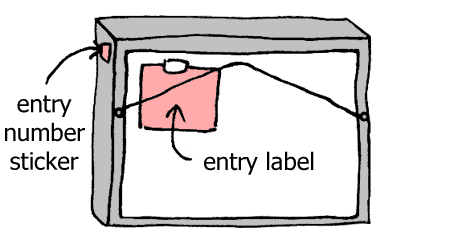
3. After a volunteer has taken down your entry info and given you a receipt, you attach the label to the back, and a sticker with the entry number to the left of the piece, like this:
For sculptures and 3-D work, attach the label and number in a place where they’ll be easy to find.
4. Finally, find a place along the wall to leave your piece (or pieces). There will be signs for the following categories:
Photographs
Work under glass
Canvas
Sculpture/3-D
Pick the one that fits best. The category isn’t as important as that you keep both your pieces together if you have two, which makes the juror’s job easier (see below). We provide cardboard to put between works to protect them.
We have no restrictions on subject matter or size (unless noted otherwise in the call to artists). If you can fit it through the door, you can submit it. However, artwork cannot weigh more than 60 pounds.
We accept all media, with these exceptions:
No giclee prints or reproductions of original artwork (whether by you or by another artist)
For prints, the edition must have been pulled by the artist himself or herself (it cannot be mass produced off-set lithography)
If a piece has been accepted to a previous Art League exhibit, it can’t be submitted again. Rejected pieces can be resubmitted.
Please note that Gallery rules prohibit live, perishable, or insect-ridden materials.
Special hanging requirements must be approved by the Gallery Director prior to receiving. If you have questions about where or how to leave your piece at receiving, ask the gallery staff.
During receiving, choose a place to leave your work against the wall.
After receiving is complete on Tuesday, the juror arrives. He or she typically stays in one spot while the volunteers bring artwork to them.
All work is shown to the juror except paintings that are still wet – those are automatically disqualified. If other framing guidelines are not met, a letter will be attached to the piece and if accepted, the artist must replace the frame with one that meets gallery requirements. (See framing requirements in the membership packet.)
Each piece gets a “yes,” “no,” or “maybe” from the juror. Since artists can have at most one artwork accepted to the exhibit, artists who submitted two pieces will have both presented together, and at least one must be a “no.” Not all jurors use “maybe.” Those who do go back to the maybe group if there is still room at the end of jurying.
After the exhibit is finalized, the juror selects the cash awards and honorable mentions for the exhibit. Each exhibit has different cash awards. Some are specific to medium, like pastel or collage. The number of honorable mentions is at the juror’s discretion — these pieces are designated with an asterisk in the show program and a gold seal on their wall label.
The volunteers are responsible for presenting the pieces for the juror, then organizing them into “yes,” “no,” and “maybe.” If the juror asks, they can read the piece’s title or medium (but not the artist’s name) from the label on the back. Any other questions need to go to the Gallery Director.
We interview jurors for each exhibit to get general feedback for our artists. You can see these juror’s dialogues on our website or in hard copies in the Gallery. See this blog post for some of the most commonly heard feedback from jurors. The main refrains: pay close attention to your framing and presentation, and if your work is rejected, try again next month. Jurying is necessarily subjective.
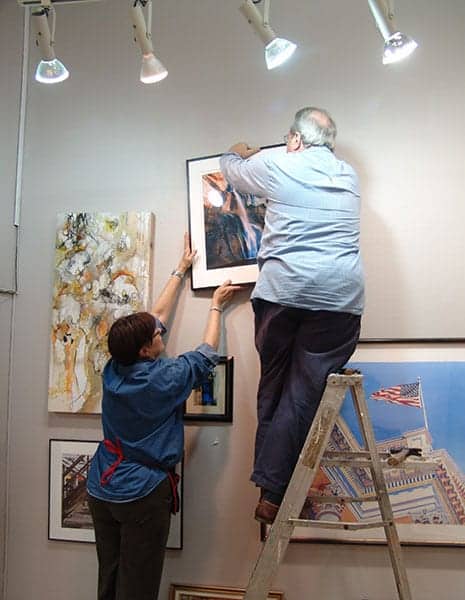
There’s a hanging committee of volunteers that come in to hang the show after the juror is done, around 5:00 Tuesday afternoon. The hanging chair and Gallery Director consult on placement of work. Rarely, jurors will have suggestions on how to hang specific pieces. The award winning pieces go in the front of the gallery, unless they’re too big for that wall.
If pieces sell and are removed during the show, we’ll rearrange the artwork as needed to avoid blank spots.
In the days after a new exhibit opens, we photograph every piece to upload to a Flickr album along with the artist’s name. This provides an archived record of our exhibits and is another opportunity for people to see the exhibit or contact us about a purchase. If you already have a photograph of your accepted piece, please send it in to us! This is especially helpful for works under glass. Our email is [email protected].
We also use images of the exhibit — both individual pieces and installation views — for press releases and online outlets like Instagram and this blog. We try to post a wide variety of work so people can get a sense of the show and get excited to come in and see it. We also do Q&As on the blog with the award winners each month.
Any other questions about receiving or the jury process? Let us know in the comments and we’ll get you an answer.
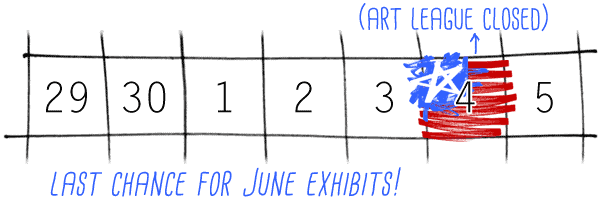
We’re closing up shop on Friday for the Fourth of July. The Gallery, School, and Store will all be closed. Art Camps and classes don’t meet that day.
Art Camp
Art Camp enters week three. This week: Basic Art Camp (ages 5–7 or 8–11), Painting Camp (8–12), and Sculpture Camp (5–7 or 8–11). See the catalog for all our 2014 Art Camps or just next week’s camps.
Summer Classes
There’s still time to join in the summer fun for adults, too! Next week will be the second week of summer session, with lots of classes yet to begin, including:
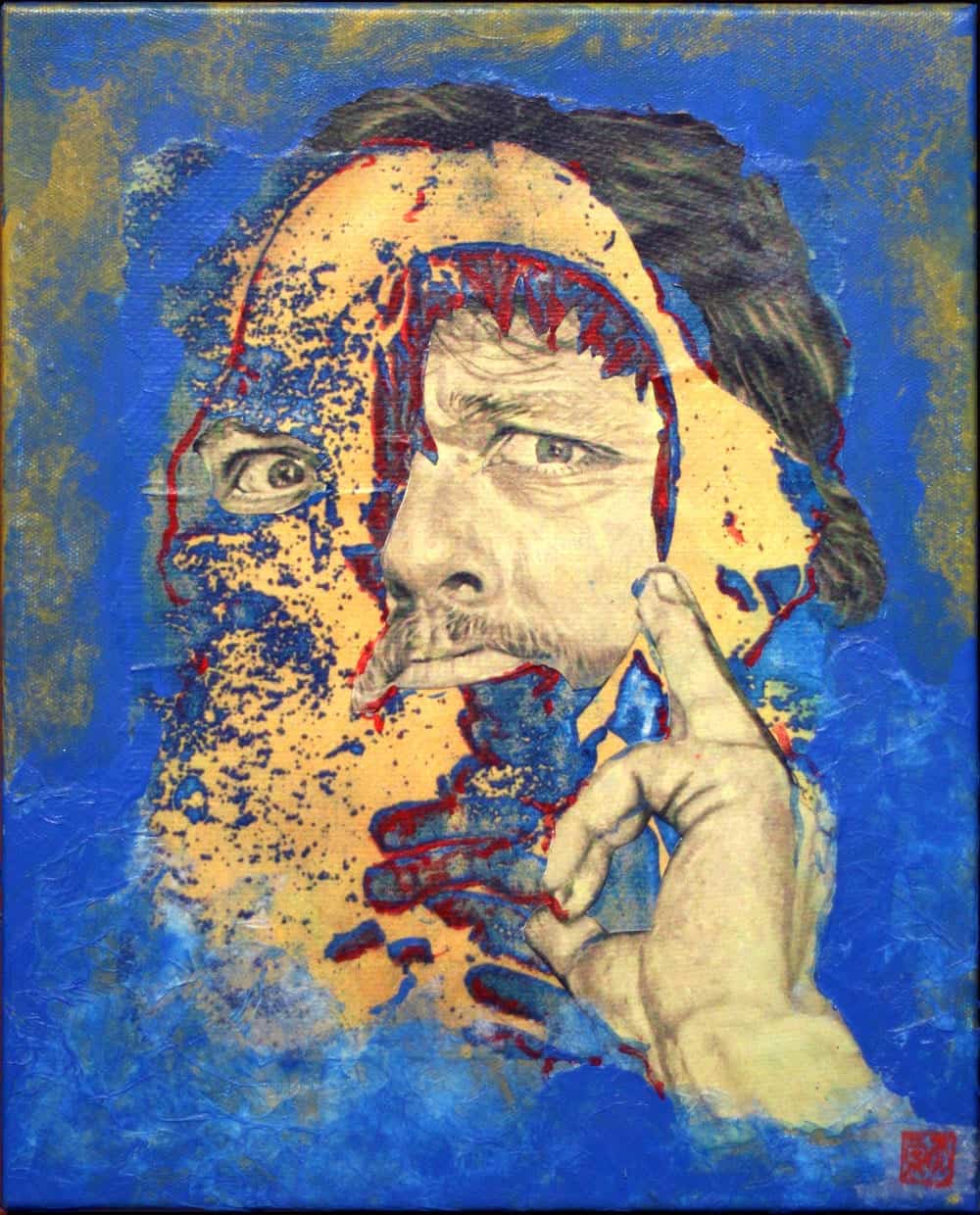
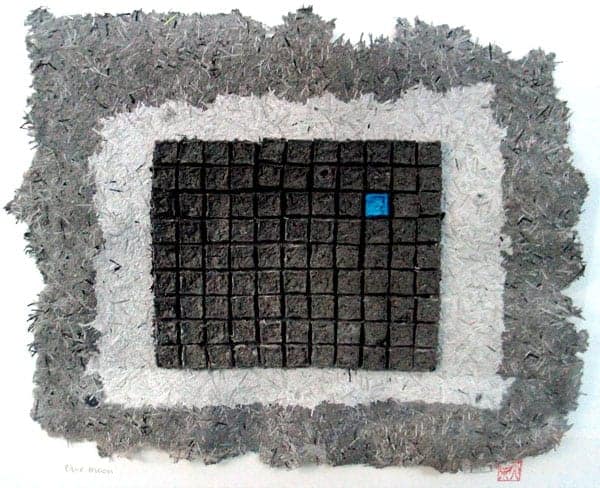
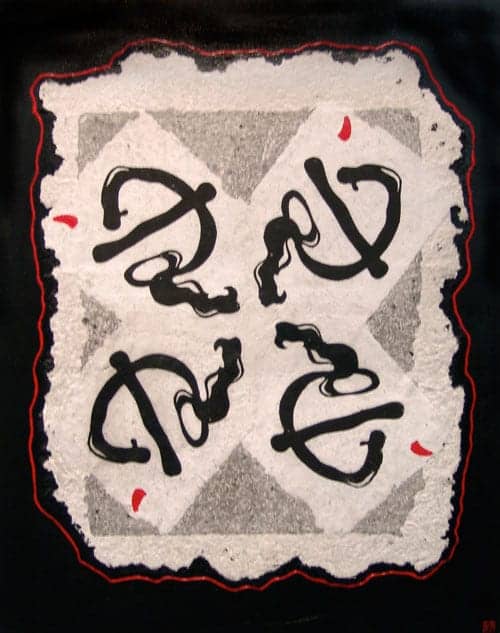
Donald Cicconi makes art with photographs, handmade paper, wood block prints, acrylic paint, and a strong influence from Japanese art. His mixed-media Artist Self-Portrait, above, caught the eye of Kim Levin, who juried June’s “Neo-Expressionism” exhibit and awarded it the Anne Banks Collage Award. We asked the artist to tell us more about his motivations and influences.
What was your goal with this self-portrait?
Donald Cicconi: I didn’t have a specific goal in mind; I never do. I am only interested in creating interesting images that will attract the viewer’s attention. It is up to the viewer to interpret the image.
What materials did you use?
I took several photographs of two different self-portraits I did many years ago in college. I cut them up and arranged them into what I though was an interesting image. I added some rice paper and acrylic to finish it off.
What appeals to you about working in collage or mixed media?
My problem is I like all media. I work with collage, woodblocks, photography, handmade paper and acrylics. I have tried photo etchings in college and I have several ideas that I hope to work on one.
Whatever media I think will make the image I have in mind.
Blue Moon, Donald Cicconi, 2010
Some of your work in past Art League shows has been made with handmade paper. What role does it play in your work?
Nothing special about working with handmade paper it is just another printmaking technique that works.
What are you working on now?
I am working several variations of the self-portrait, several cast handmade paper images and several woodblock prints.
When did you know you wanted to be an artist? I have always been interested in art and starting drawing when I was in grade school but being an artist was never something I thought of as a job or career; I still don’t. I started college in graphic design at a community college in upstate NY then transferred to a four-year college in upstate NY for studio arts. After college I went back into the military and spent 21 years in the military. The only art I did while in the Army was photography. I retired from the Army and now work for DoD doing what I did in the military, satellite communications. My art is something I do when I have time; it’s more of a hobby. I do it because I like it, I get ideas and I like to work on them to see how they come out. I don’t think I can make a living with my art, it takes too much time and too much money and no one buys the art unless they think it is a good investment. I don’t believe art should be considered an investment.
Who are your major artistic influences?
Two Japanese printmakers, Kiyoshie Saito and Haku Maki.
I spent eight years in Asia, six years in Japan and I fell in love with Japanese woodblock prints. Haku Maki and Kiyoshie Saito are just 2 of my favorite Japanese artists. Most of my art involves woodblock prints and I start out doing block prints using a style like Haku Maki. I have several ideas for woodblock prints using some of the ideas or style of Saito that I want to work on, it’s just having the time. I usually print my woodblock on my handmade paper then combine it into a handmade paper collage so I really don’t do editions. They are usually one of a kind. One day I will get around to doing editions, again it’s a matter of time. I live in Dale City but work up at Ft. Meade doing satellite operations for the military so that doesn’t leave a lot of time for art or much else.
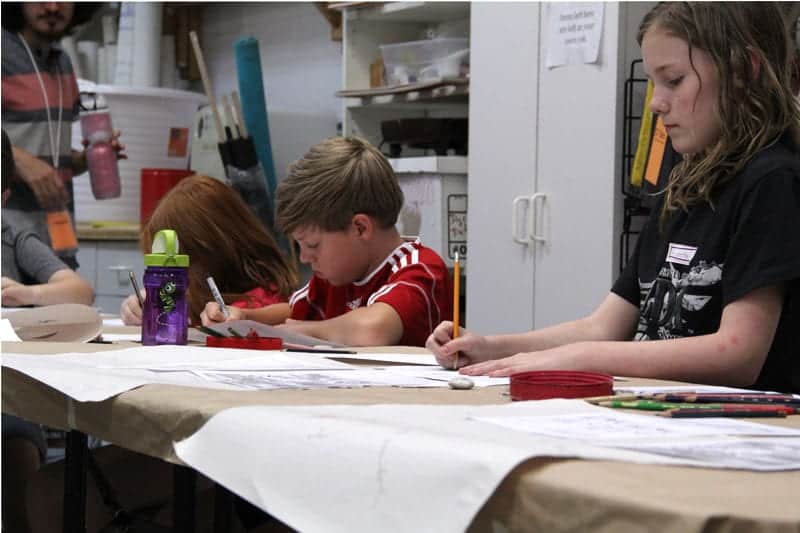
With the second week of Art Camp drawing to a close, here’s an update on some of what was happening over at the Madison Annex classrooms Thursday:
Cartooning Camp
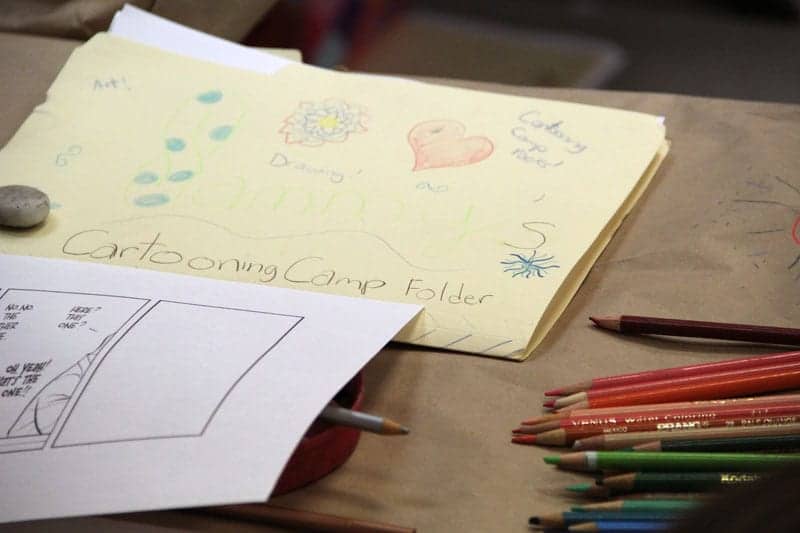
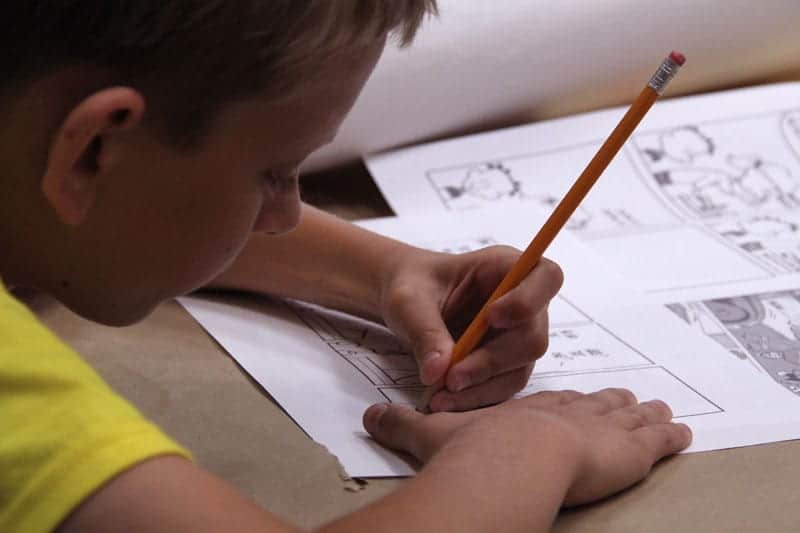
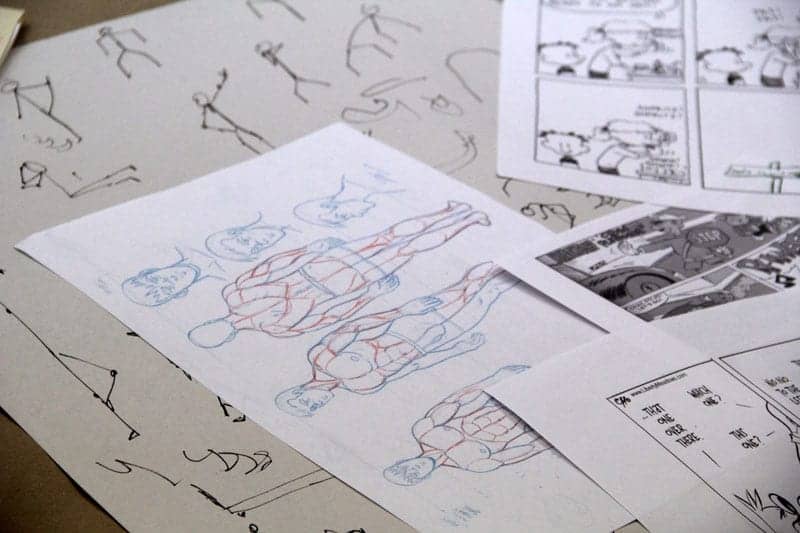
In Cartooning Camp, Ricky Bryant’s campers practiced gesture drawing. After that, they got some comic strips with their final panels missing and had to make up and draw their own endings.
Basic Art Camp
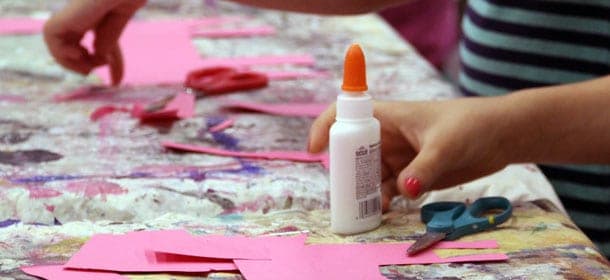
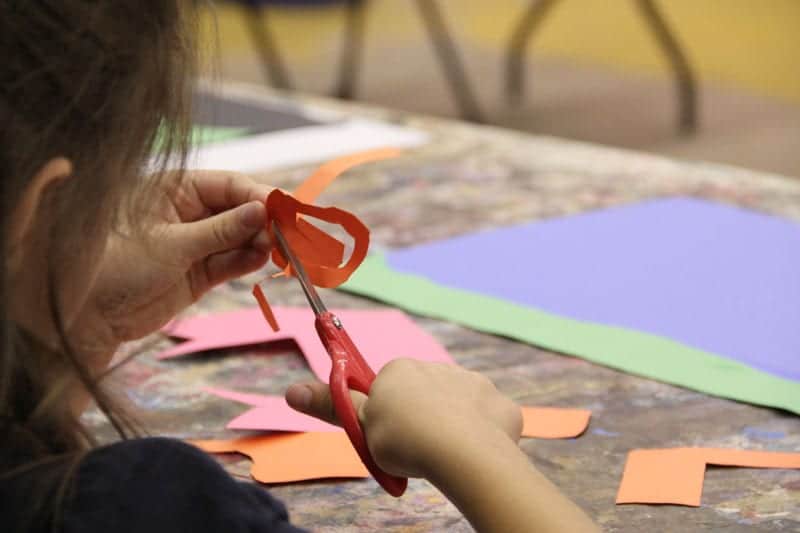
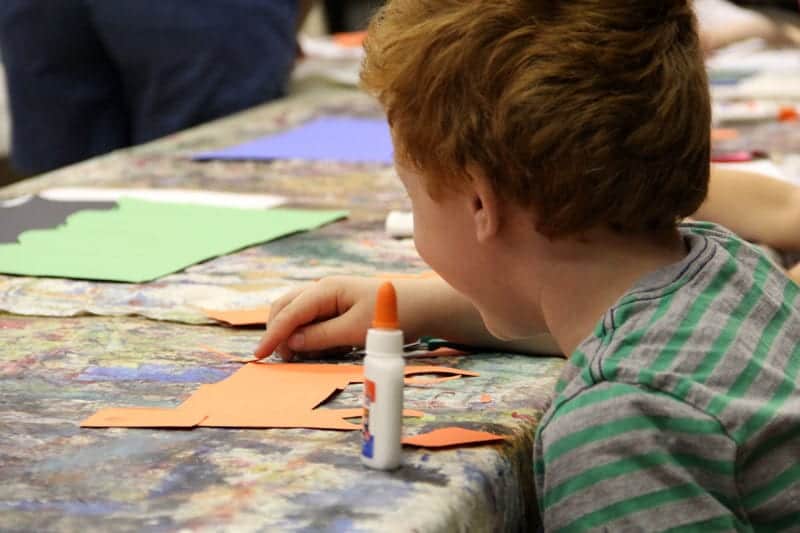
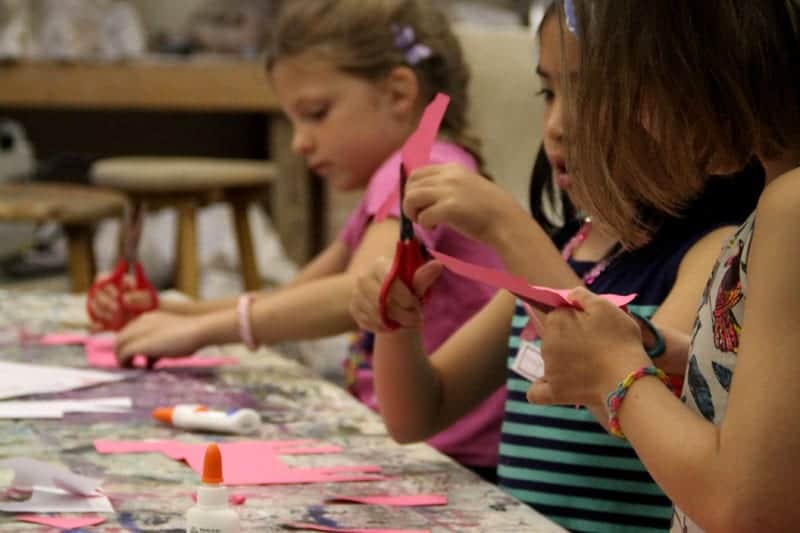
In Basic Art Camp, Ali Wunder was leading campers through making paper tigers with construction paper. We counted three orange tigers, three pink tigers, and one orange tiger with pink clothes. You can see one of the orange ones all finished up at the top of this post.
Clay Animation Movie Camp
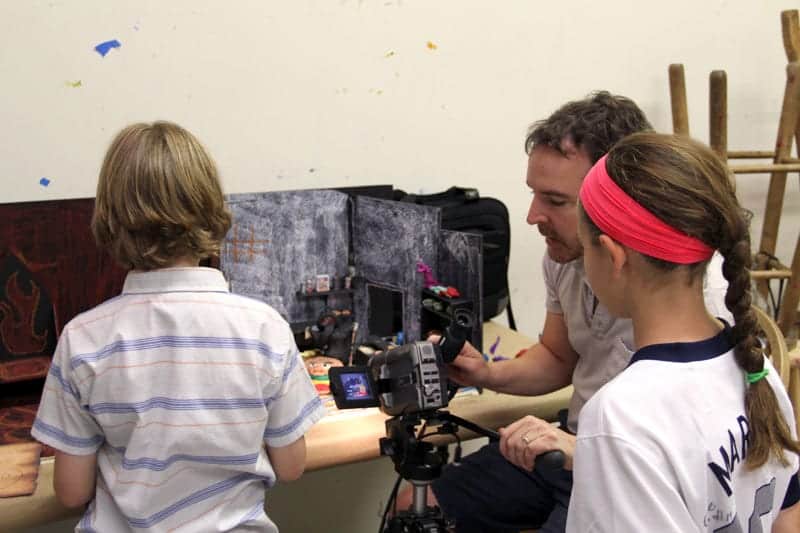
It was shoot day at Claymation Camp, with young filmmakers and Andrew Morgan filming their story frame by frame. We won’t spoil the movie for you, but there was mention of a talking tomato.
“Inspiration does exist, but it must find you working.” — Pablo Picasso
Hyattsville Arts Festival
Deadline: June 28. The Annual Downtown Hyattsville Arts Festival will be Saturday, September 13. Only original artwork, photography, handmade jewelry, and handmade crafts are allowed. Click here for the 2014 exhibitor application →
War of 1812 Festival
Deadline: June 30. Undaunted Weekend (August 23, 2014) commemorates the War of 1812, the March Across Prince George’s County, and the Battle of Bladensburg with lectures, festivals, food, tours, and more. About 20 arts and crafts vendors will be featured — half of the slots are scheduled for Gateway Arts District vendors, while the remaining can come from Prince George’s County and surrounding areas. Artists and craft workers need NOT be 1812 related, but participants which include traditional crafts, historic trades, general American patriotism, and/or the heritage, history and culture of the region and Maryland are strongly encouraged. See the vendor application →
InLight Richmond
Deadline: July 15. 1708 Gallery in Richmond, VA invites artists working in all media and disciplines, including performance, to submit proposals for InLight Richmond 2014, 1708 Gallery’s 7th annual one-night, public exhibition of light-based art and performance. More about InLight Richmond →
Strathmore residency
Deadline: September 8. Emerging artists will be in residence in the Mansion at Strathmore from January – August 2015. During this time, each artist will have the opportunity to develop an audience in the DC metropolitan area, perfect their craft, create and implement an outreach, educational, or special event proposal for Strathmore’s consideration, and premiere a new body of artwork commissioned by Strathmore in a culminating exhibition. Find more info about the residency at the top of this page →
Info session: Thursday, July 17, 6:00 pm. Deadline: September 26. Artists interested in a solo exhibit at The Art League in 2016 can submit their proposals in Fall 2014. Interested artists should attend an information session, submit their materials by September 26, and deliver their physical work to the Gallery for jurying on October 20. Required submission materials include five images, a resume, artist statement, and exhibit proposal. More about solo exhibits →
Printmaking exhibit
Deadline: July 31. “Ink, Press, Repeat 2014″: One artist will be selected to have a solo exhibition at the University Galleries at William Paterson University. Select works will receive cash prizes. More about the exhibit →
Cleveland residency
Deadline: August 1. Local, national, and international artists working in any medium are invited to apply for one-week, two-week, or four-week residencies at Micro Art Space in Cleveland, Ohio. More about Micro Art Space →
Food
Deadline: August 15. Artists are invited to enter a juried exhibit, “Feast Your Eyes: The Art of Food” at Annemarie Sculpture Garden and Arts Center in Solomons, MD. All media welcome. More about the Art of Food exhibit →
Urban Aspect
Deadline: August 22. The October 2014 show at Principle Gallery Alexandria will be a juried exhibition entitled “Urban Aspect,” featuring works of art that explore the myriad of themes and vistas found in urban life in all corners of the world. More about the exhibit →
Put a Bird On It
Receiving: Sunday, August 31 and Monday, September 1 at Del Ray Artisans. Prove that embellishment can be art! All artwork must incorporate a ‘bird’, either thematically or literally. Open to members and non-members. Read the call to artists (PDF) →
Penny Barringer’s five-day workshop, Intensive Monotype, runs Monday to Friday. This class is for beginning and intermediate printmakers alike. Monotypes, the “painterly prints,” are created by the most straightforward printing process, in which the artist draws or paints on a plate and presses it to paper.
exhibits
In the Gallery, “Neo-Expressionism,” “Tabletop,” and “Figural FINE LINES” are open all week. As always, the Gallery is open late Thursday, until 9:00 pm. Gallery hours are 10:00 am–6:00 pm Monday through Saturday and noon to 6:00 pm Sunday.
This week we were delighted to find some young copyists at work in The Art League Gallery. What’s it like being a copyist at a place like the National Gallery of Art? Art League artist Elizabeth Floyd gives readers a first-hand look at the NGA copyist program (among other topics) on her blog. She’s copied artists including Van Gogh and Monet.
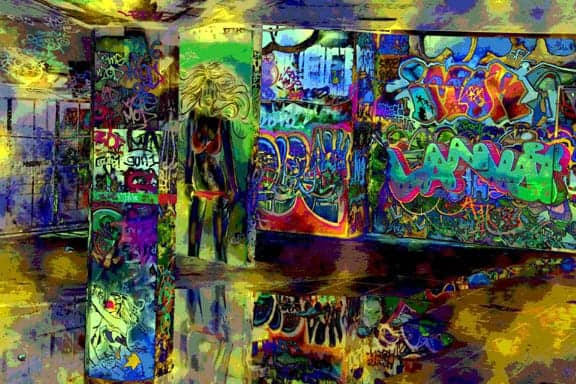
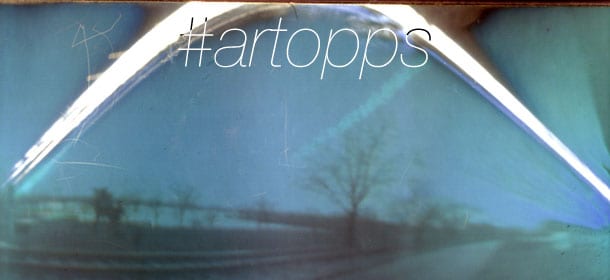
Ever made a pinhole camera? We’ve heard of long exposures before, but Jonathon Keats’s plan for a series of century-long exposures has them beat. Read about the thought-provoking project here.
We haven’t read it ourselves, but the newly released Creative Block: Get Unstuck, Discover New Ideas (Advice & Projects from 50 Successful Artists) looks promising and has some positive reviews. Let us know if you find it at your library.
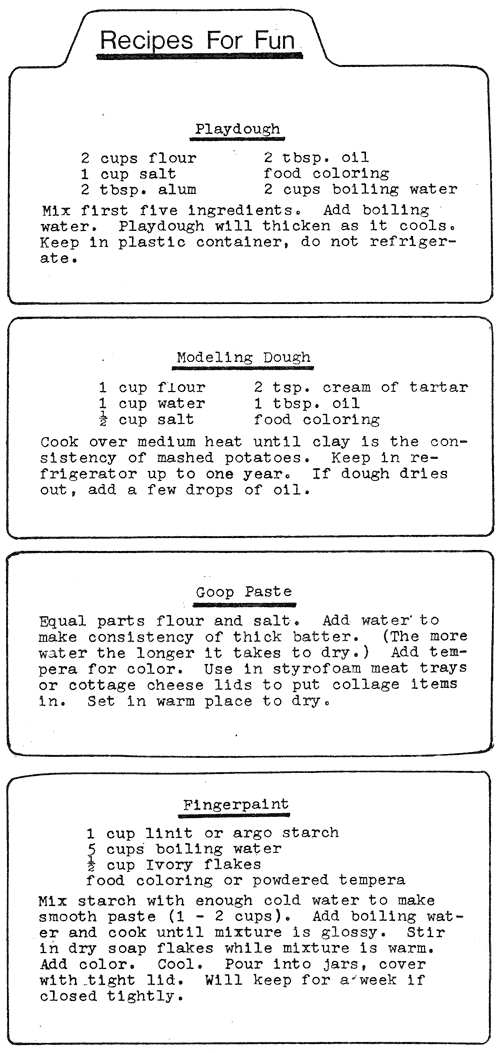
recipes
Once upon a time, Gallery Director Rose O’Donnell was an early childhood educator in Tacoma, Washington, where she put together a booklet of activities for kids ages two to four. We made her dig it up and bring it in so we could photocopy the following Recipes for Fun. Maybe worth an afternoon for kids too young for Art Camp?
DC SIGGRAPH is organizing a presentation from John Saint Amour, Copyright Information Specialist for Public Information at the Library of Congress Copyright Office. He will be talking about the fundamentals of copyright law and how it relates to visual artists. This talk is intended for artists of all stripes, from 2D/3D animators, graphic designers to traditional artists interested in learning more about their rights under US law.
This program is presented as part of the TFAC’s Community Partnerships program.
“It is the nature of the artist to mind excessively what is said about him. Literature is strewn with the wreckage of men who have minded beyond reason the opinions of others.” — Virginia Woolf
Cleveland residency
Deadline: August 1. Micro Art Space is approaching its second season as a new short-term residency program & gallery space in Cleveland, Ohio. Artists chosen for the residency conclude their experience with a solo or two-person exhibition open to the public during the high traffic indoor art walk. Local, national, and international artists working in any medium are invited to apply for one-week, two-week, or four-week residencies. More about Micro Art Space →
Food
Deadline: August 15. Artists are invited to enter a juried exhibit, “Feast Your Eyes: The Art of Food” at Annemarie Sculpture Garden and Arts Center in Solomons, MD. The goal is to create a rich and varied exhibit that honors the complexity of our relationship with food. All media welcome; small to large-scale installations; new media encouraged; indoor and outdoor works accepted; cash awards. More about the Art of Food exhibit →
Video & New Media
Deadline: December 31. Open Call from Artisphere for works from multiple creative works in visual and new media, for local, national and international artists. More about new media at Artisphere →
Local public libraries
Several local library systems have exhibit spaces for local artists. Below are the libraries we could find information for. Let us know if you know of others! Follow these links for guidelines:
Info session: Thursday, July 17, 6:00 pm. Deadline: September 26. Artists interested in a solo exhibit at The Art League in 2016 can submit their proposals in Fall 2014. Interested artists should attend an information session, submit their materials by September 26, and deliver their physical work to the Gallery for jurying on October 20. Required submission materials include five images, a resume, artist statement, and exhibit proposal. More about solo exhibits →
Printmaking exhibit
Deadline: July 31. “Ink, Press, Repeat 2014″: Since 2001, the University Galleries at William Paterson University has organized an annual juried printmaking exhibition featuring traditional and digital print media and book art. One artist will be selected to have a solo exhibition at the University Galleries. Select works will receive cash prizes. More about the exhibit →
Put a Bird On It
Receiving: Sunday, August 31 and Monday, September 1 at Del Ray Artisans. Prove that embellishment can be art! All artwork must incorporate a ‘bird’, either thematically or literally. Open to members and non-members. Read the call to artists (PDF) →
Urban Aspect
Deadline: August 22. The October 2014 show at Principle Gallery Alexandria will be a juried exhibition entitled “Urban Aspect,” featuring works of art that explore the myriad of themes and vistas found in urban life in all corners of the world. The theme is not restricted to any conventional ideas of cityscapes (though these are by no means discouraged), but rather is open so as to encourage creative and original subject matter and perspectives of urban life and locations. Juror: Jeremy Mann. More about the exhibit →
Art Camp is here! The first week of Summer Art Camp is June 16–20, and it continues weekly through August 22. Kids 5 to 15 can choose from camps in drawing, cartooning, painting, fiber art, sculpture, ceramics, photography, jewelry, clay animation, and more, including Basic Art Camp, with different activities every day. We’ve also got summer workshops for teens.
workshops
We don’t have Art Camp for adults, but how about a little getaway in the form of a weekend workshop? Coming up June 21–22:
In the Gallery: “Neo-Expressionism,” “Tabletop,” and “Figural FINE LINES” are open all week. As always, the Gallery is open late Thursday, until 9:00 pm. Gallery hours are 10:00 am–6:00 pm Monday through Saturday and noon to 6:00 pm Sunday.




 Suzanne Vigil