
“There is real beauty in the boldness,” said “The Influence of Fauvism” juror Alison Sigethy — a statement that could apply to the exhibit as a whole, but was specifically about the painting above.
Fair Valley by Lisa Neher was Sigethy’s pick for the Amelia T. Clemente Family Award for Best in Show. We asked the artist (last featured on this blog in 2012) to tell us more about the painting.
What’s your goal with a landscape painting like this one? Does it depict a real place?
After all these years of painting landscapes, almost every one — even when it begins from a photo of a specific place — becomes more about the painting than about the place. Long ago I realized that painting a specific scene was too limiting. It was too much like painting a portrait — of interest maybe to those who know the place, but not of interest to anyone else for the specific nature of the image. So my landscapes have become much more generic. I may use an image of a tree I like, but place it beside a stream I like from somewhere else.
How did this painting progress from an idea to a finished piece? Did it come out the way you imagined it?
All my best paintings are second, third, or even more images painted over an original that didn’t quite make it. This way, I can incorporate an element of surprise, of unplannedness, in the painting by letting the previous work participate where it can.
I think this painting began from a failed painting similar in kind. But I painted the horizon lower — a bigger sky — and used the sky lowering to etch out the row of cypress trees and the distant tree line. Then the river, derived from Van Gogh’s “Green Wheat Fields” rushing through the scene, and the fields with the suggestion of rows in the strokes.

I didn’t really have much idea what I was going for when I began, but when I stopped it was because the painting was just right.
Since this exhibit’s theme is Fauvism, have you found that the Fauvists inspire or inform your work?
I do love some of the Fauvist works, but try to maintain an independence from any school of art or style of painting. Van Gogh is an exception. How could anyone see that incredible painting in the National Gallery and not be inspired.
What are you working on now?
I am currently considering a challenge: a panorama of landscape painted across canvasses of differing sizes covering a scape of sky, sea, and land. Hmmmm.



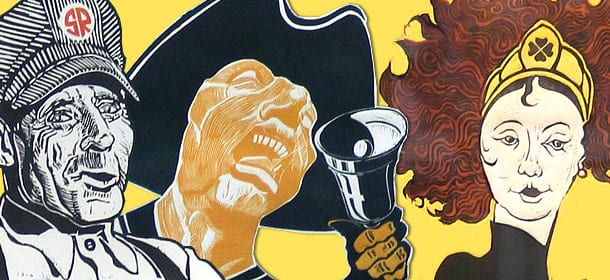
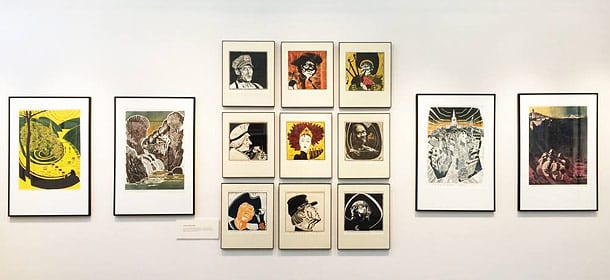
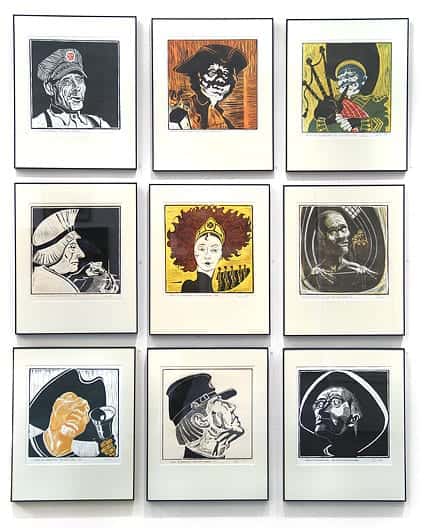
 The Scottish Walker, representing the annual parade that celebrates the founding of the city by Scottish merchants in 1749;
 The Tobacco Farmer representing the time when Alexandria was a tobacco trading post authorized by the British Crown in the 18th century;
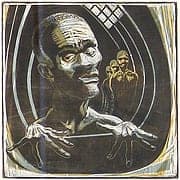
 The “Good Wife,” a designation common by the mid-seventeenth century in Virginia as lawmakers began to use ideas about gender and race to codify two distinct roles for Virginia women: the so-called “goodwife”, typically free and white, who performed domestic work in her home and raised her children, and the agricultural laborer, typically enslaved and black;
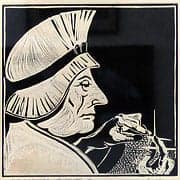
 The Field Hands, representing the slavery that existed in all the British American colonies. Africans were brought to America to work, mainly in agriculture. In Virginia, most slaves worked in tobacco fields. When the tobacco farms started to fail in the mid 19th century, the slaves were exported to the cotton plantations in Louisiana and the deep south;
 The Town Crier, with ceremonial duties that included reading proclamations, announcing upcoming events, and acting as master of ceremonies at special events. One of the earliest Alexandria town criers on record is Peter Logan, an African American man who served as the town crier and on holidays as the town piper in the early 19th century;
 The Night Watchman, and constables were employed by the city since 1795 up until the Alexandria Police Department was founded in 1870;
 The Railway Engineer: Potomac Yard in its heyday was one of the busiest rail yards in the Eastern United States, processing thousands of cars daily. The site reached capacity in 1937. The booming “Pot Yard” attracted thousands of workers, who largely settled in the areas of Del Ray and St. Elmo;
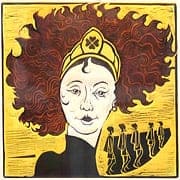 And so on up to the Irish Dancer, a later addition to the King Street parades celebrating St. Patrick’s Day and the Irish contribution to Alexandria’s history.