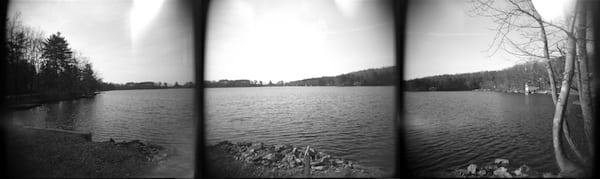
Join us in The Art League Gallery, 2:00–4:00 pm this afternoon, for the closing reception for “Yellowstone Abstracted” and “(CON)text,” our June exhibits. Come meet photographer Bob Tetro (in the video above) and the other artists behind these exhibits, enjoy refreshments, and see the awards presented.
Today and tomorrow are your last chances to see these exhibits — and “Tabletop”! — so don’t miss out. The Gallery will be closed Tuesday for jurying, followed by the opening of our July All-Media exhibit on Wednesday and Jennifer Brewer Stone’s “Fantasy of the Real” on Friday. (The Torpedo Factory is closed Thursday, July 4.)
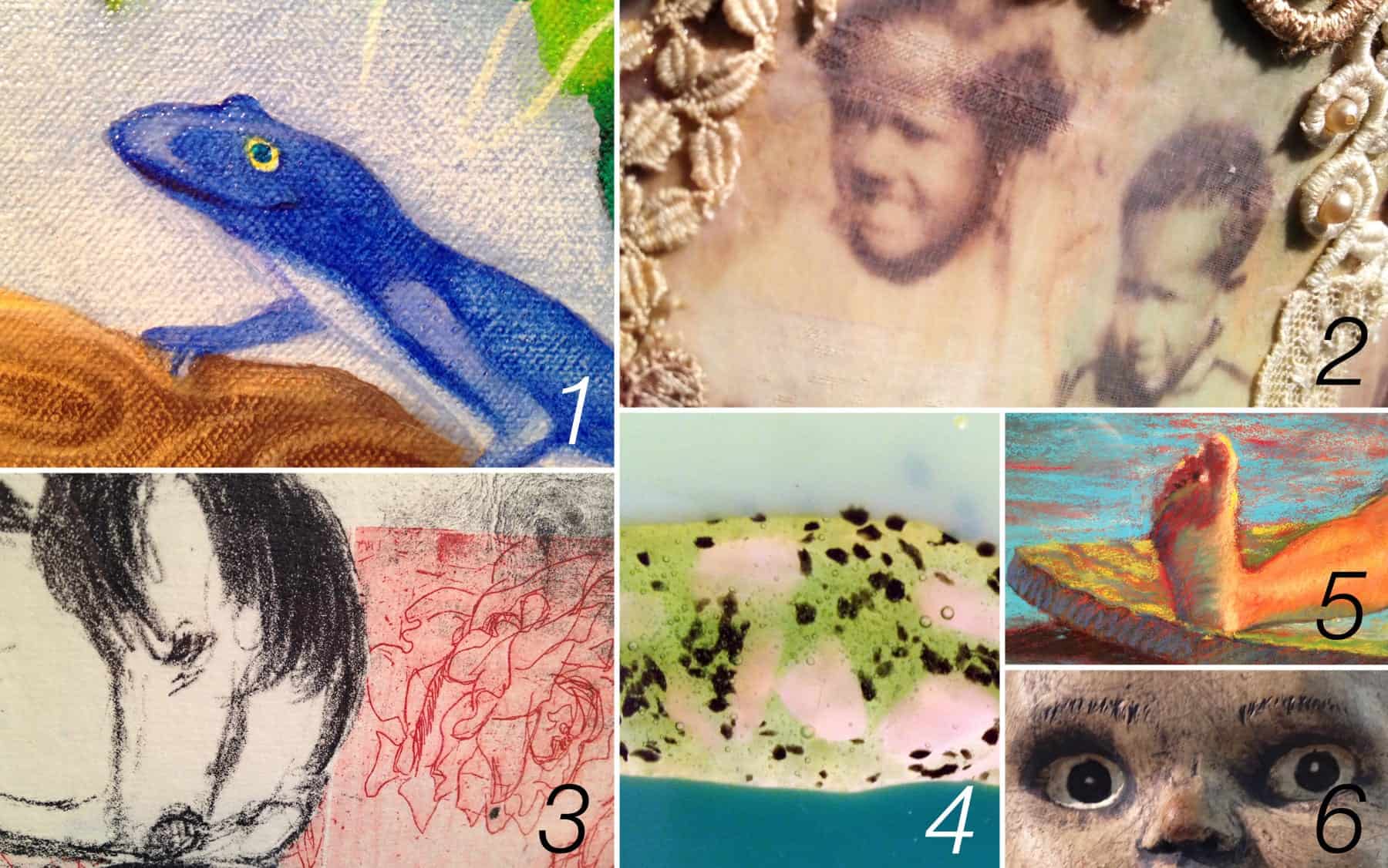
In this edition of our Art League Quiz series, we got up close to some of the pieces in “(CON)text,” on exhibit in The Art League Gallery through July 1 (this Monday). Do you recognize the artists from these details? (Hint: You might recognize one of these images from the exhibit’s top award winner, interviewed on this blog two weeks ago.)
Click on the image to view it full size. See if you can find the answers in the Gallery, leave your guesses in the comments, and we’ll recognize the winner in our next quiz!
Back in December, we wrote about Using Flickr to Share Your Art — the popular photo-sharing site, most used by photographers, also makes an easy, well-trafficked place to post photos of your artwork.
Last month, Flickr launched a complete redesign and reconfigured its services. The result: tons of free space, a much more attractive website, and lots of outdated advice in our original blog post. With that in mind, here’s what you need to know about the new Flickr. (You can still read the original post here for info on Flickr alternatives and some other tips.) Continue reading Flickr for Artists: New Design, More Space
Drawing And Painting Architecture In The Landscape
July 26–28, 2013 Registration page
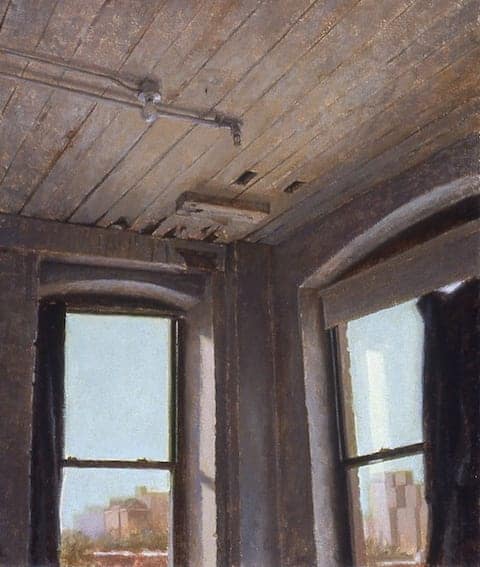
A new weekend workshop at The Art League this summer will be bringing the outside in, as students apply landscape techniques and other lessons to compositions of man-made buildings and machines.
Guest instructor Nicholas Raynolds, whose work has been exhibited internationally and who has taught at schools including The Art Students League of New York, will be teaching the workshop. He said the idea for the class comes from architecture as a contrast to the organic lines of pure landscape. The hard edges of machinery and buildings create a different set of opportunities — for example, the use of linear perspective, which isn’t as overt in a traditional landscape. Raynolds said he hopes to find good locations, either interior or exterior, for students to paint or draw. Continue reading New Workshop: Drawing & Painting Architecture
See below for information on upcoming exhibits, calls for artists, and studio space. You can click the banner above to view past opportunities posts. Good luck!
Shapes at The Art League
Deadline: July 12, 2013. This annual sculpture exhibit at The Art League is digital entry only. For more information and to download the entry form, click here.
Nothing tells your artwork’s story better than seeing it in person — still, for your website or a show submission, the next best thing is a photo. But what happens when weird colors, unexpected shadows, and poor image quality get in the way? How do you get your work looking its best?
For answers to these questions, we turned to photographer and Art League instructor Pete Duvall, who also teaches a workshop on the topic and works with artists to photograph their artwork. For more information or to contact him, visit Pete Duvall’s website here.
What’s your general procedure when an artist brings you a work to photograph?
In general, the more information I have about size, surface and number of pieces, the better. That way I can plan better. Flat artwork has one approach, and 3D artwork has another. It is always preferable to have flat artwork unframed and un-matted, but that is not a deal breaker. For 3D artwork, I want to know the color, approximate size and surface so I can plan on background and a lighting approach. The reality is that I don’t really know until I have the artwork in front of me. Then the artist and I can really make definitive decisions on an approach. After all, photos of the artwork are the best marketing tool an artist has, so you want the images to reflect the work well. Continue reading Q&A: How to Photograph Artwork
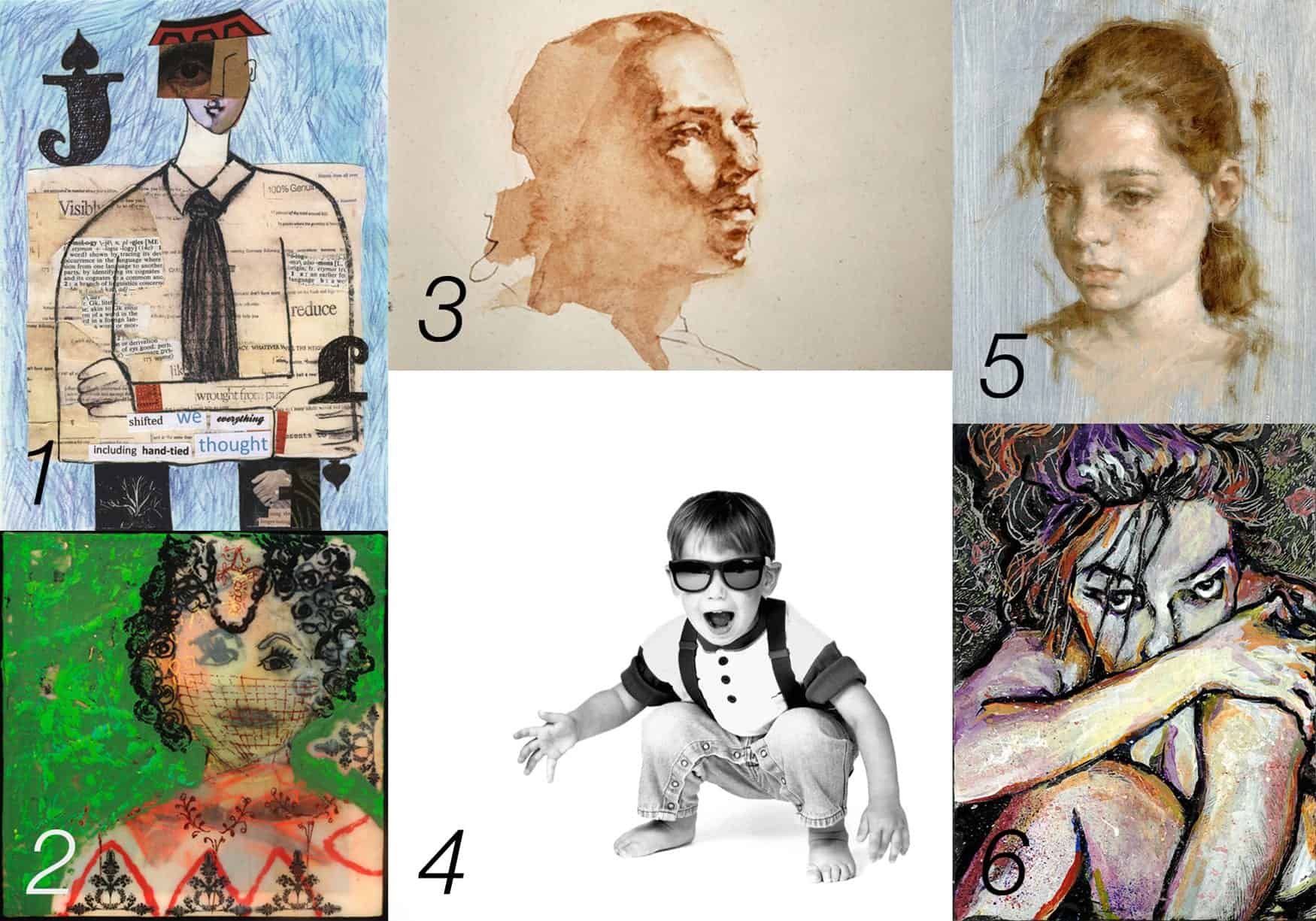
As you prepare for summer classes to start next week, we’ve prepared a little quiz to see how well you know your Art League teachers. This time, it’s a portrait quiz. Can you match names to these faces? (Hint: One of these comes from the instructor teaching this weekend’s Jumpstart in Wood Engraving workshop.)
Click on the image to view it full size. Leave your answers in the comments, and we’ll recognize the winner in our next quiz!
See below for calls to artists and other announcements. You can click the banner above to view past opportunities posts. Good luck!
Quick Draw contest
Saturday, June 22, 8:00 am–1:00 pm (register by Thursday, June 20). Part of the Easels in Frederick plein air painting event, Quick Draw is a fast-paced, friendly plein-air contest open to all artists aged 16 and older—professional or amateur—who register and pay a $15 fee. Participating artists may use any two-dimensional medium. Artists are eligible for cash prizes and can sell their artwork to spectators. For more information and to register, click here.
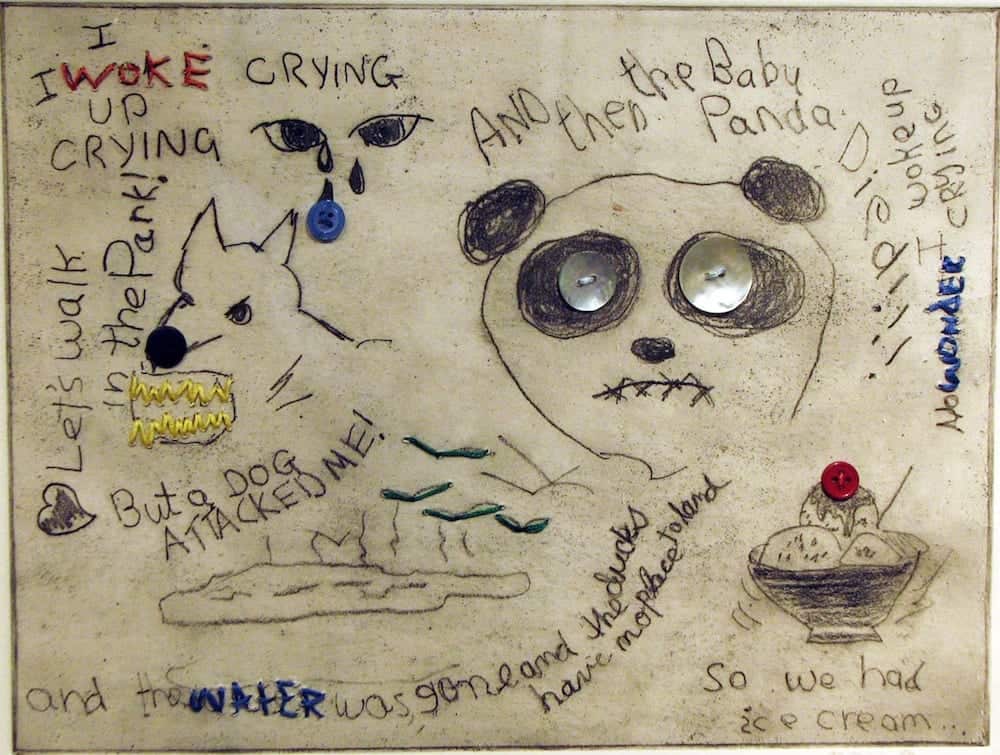
The piece below, I Woke Up Crying, started as a charcoal drawing before being committed to an etching plate, and finally finding new life with stitched-on elements — an evolutionary process that artist Pamela Day says is part of what she enjoys about etching. The sad, yet whimsical collage won the Anne Banks Collage Award as part of “(CON)text,” our June exhibit.
Since the show this month is about work with a message, what does this piece mean to you?
This piece is very cathartic to me. It is not based on a dream at all, but an actual really bad day. Sometimes you just wake up feeling sad, you know? My mom had died a couple of months before this day, and I guess I was missing her. That day it seemed like all efforts to cheer me ended in something else making me even sadder. I even left out the part about the car crash on my street that blocked it off when we were coming home with the ice cream! Sometimes a bad day can make for good inspiration. Continue reading Q&A with Award Winner Pamela Day
Image by Shane Pope used under a Creative Commons license
Do you have an Art League story you want to share? A tale of rejection and redemption? Something you’re doing behind the scenes? Or maybe a new class you’re teaching (or taking)?
We’re inviting Art League members, students, teachers, volunteers, and friends to write guest blog posts in this space. They don’t have to be long — we just want to hear some different voices.
ATTENTION: Tonight’s Reception Rescheduled for June 30
The Torpedo Factory is closing at 5pm tonight due to the severe weather predictions, and therefore, so is The Art League. Tonight’s opening reception for “(CON)text,” and “Yellowstone Abstracted” has been RESCHEDULED for Sunday, June 30, 2-4pm. Please stay dry and mark your calendars for the now closing reception!
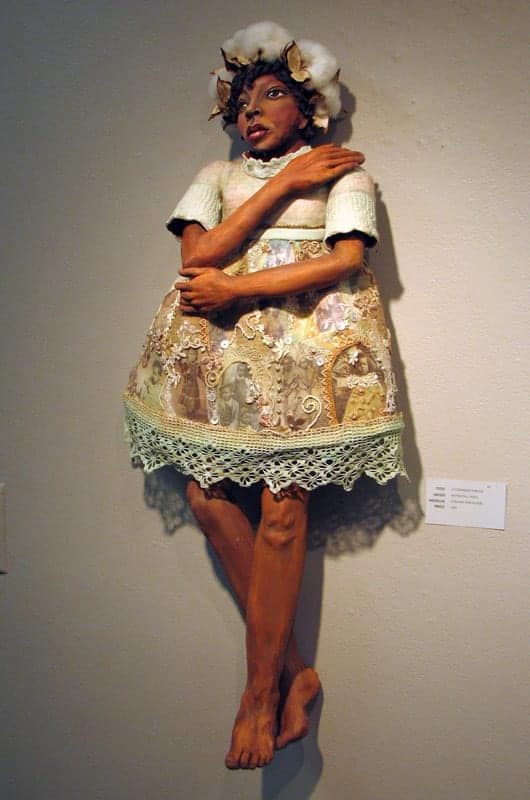
Among the stories, commentaries, and multi-layered messages in our June exhibit, “(CON)text,” one piece stood out to juror John James Anderson: A Common Thread, which tells its story through vintage photos, manuscripts documenting slave transactions, antique fabric, and clay and cotton. Anderson selected the piece for the Urquhart Award for best in show.
The artist, Kathlyn James Avila, told us more about her figure work, her influences, her love of mixed media, and the heritage and sacrifice represented in A Common Thread. It’s all in our Q&A, below.
Detail from A Common Thread.
Since the show this month is about work with a message, what does this sculpture mean to you?
Kathlyn James Avila: The message of A Common Thread is to give homage to the many African American children that had to work in cotton fields. Too often, those children were not recognized as being beautiful and having the opportunity to be dressed in fine laces and adornment. My figure was inspired by actual photos of children that had to work in cotton fields or on farms because of enslavement or the necessity in helping their families economically. As an African American, our common thread, for the most part, extends from our forefathers and mothers that had to make sacrifices during their childhood to empower our lives throughout each generation. Continue reading Q&A with Award Winner Kathlyn J. Avila
See below for details on upcoming exhibits, other calls for artists, and studio space. You can click the banner above to view past opportunities posts. Good luck!
Chalk art proposals
Deadline: June 21, 2013. Golden Triangle BID is looking for an artist to create a temporary chalk illustration on a designated sidewalk to infuse creativity and create a memorable visual statement within the district. The selected artist will receive a $600 stipend. For more information, click here (PDF).
About the program: SOHO is a creative mentorship program that serves pre-teen girls by providing yearlong mentoring through engagement in life skills instruction, creative art activities and meaningful community service projects. Each volunteer mentor makes a one-year commitment to the program, which fosters long-term relationships and culminates in the renovation of each girl’s bedroom, HGTV-style. SOHO utilizes evidence-based life skills curricula and the National Mentoring Partnership’s model program guidelines. SOHO operates from September to June. To learn more about SOHO, please visit www.spaceofherown.org. E-mail questions to [email protected]. Mentor One Child. Change Two Lives.
Click here for a 2-minute overview of SOHO and to view our mentoring commercial.
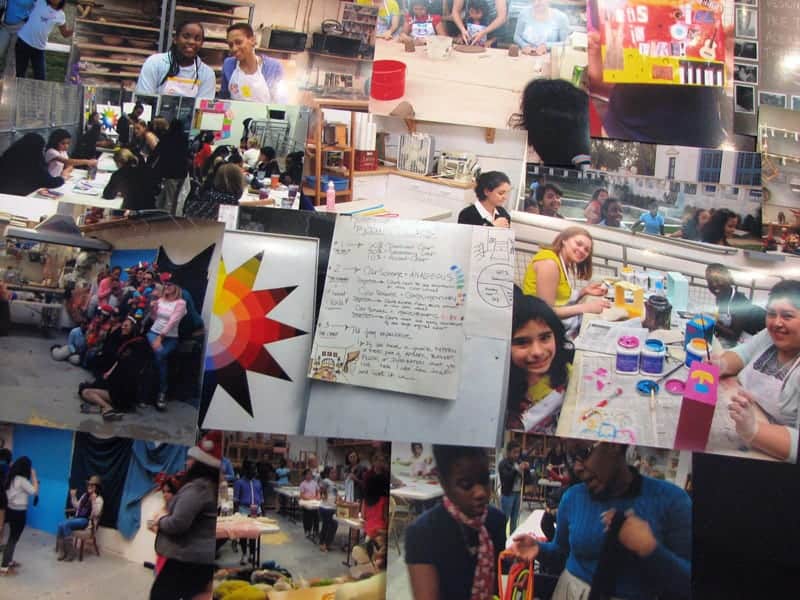
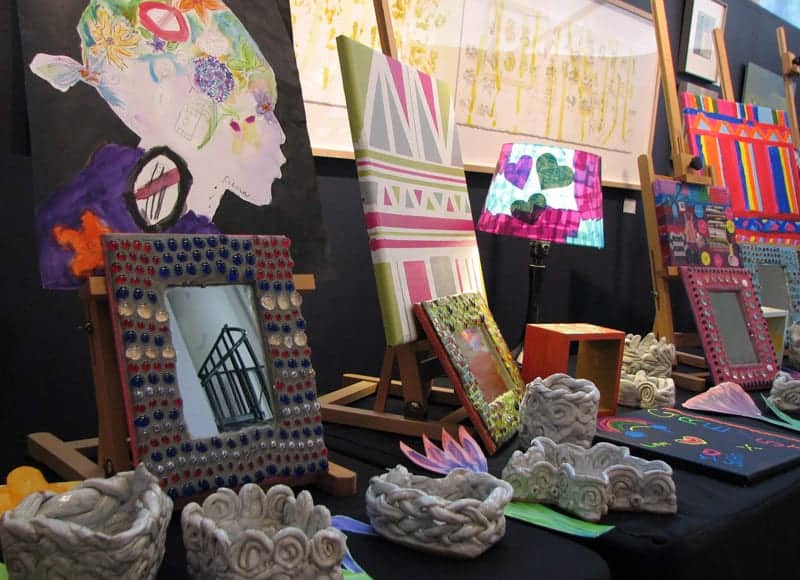
Artwork by the Old Town SOHO girls, above, and photos from the year’s activities.
Last Thursday, May 30, the graduates of the 2012–13 Space of Her Own program in Old Town gathered with their mentors and family to celebrate a year of fun and hard work.
Space of Her Own is an arts-based mentorship program that pairs fifth-grade girls with adult mentors for lessons on art and life skills, special outings, and concludes with a bedroom renovation for each SOHO girl. The program started in 2003 as a partnership between the City of Alexandria’s Court Service Unit and The Art League, and became a nonprofit in 2011. It depends on the help of dozens of coordinators, volunteers, and donors.
A Common Thread by Kathlyn Avila, which incorporates clay, fabric, cotton, photographs, and encaustic, won the Urquhart Award for best in show. Watch this blog for a Q&A with the artist.(Text)tile by Eric Vahouny.
With a title like “(CON)text,” one might expect an eclectic group exhibit at The Art League this month, and that’s what we’ve got: mosaics, comic books, and narrative collages, among the other works of art by our members. Each artist brought his or her own context to the exhibit, and juror John James Anderson, a DC-based artist and art teacher, selected what’s on the walls.
The theme called for text-based work or work that sends a message, and artists responded with original and repurposed text, language and the written word in the abstract, social and political commentary, visual conflict, comments on art, and stories of all kinds: Continue reading Art Leaguers’ Work in “(CON)text”
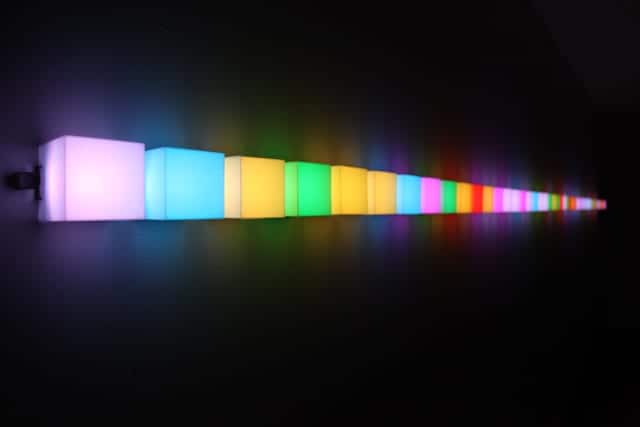
rgbca #2 by Philip Galanter was made with a microcontroller (like the ones used in this workshop) and LEDs. Watch a video of the installation in action on Galanter’s website. Image used with permission.
Motion, Light, And Sound: Dynamic Sculptures And Installations
August 6 & 7, 2013 Registration page
This summer, The Art League is offering an exciting new workshop in creating interactive art — a first for us! Technology teacher John Kauffman is teaching this new-media workshop, which will show students what they can do with a simple “microcontroller” to control lights, sound, and movement.
John’s first workshop is coming up on August 6 & 7 (the registration page is here), with more in the works for the future. We asked him to tell us more about what students can expect:
What will students do in this workshop?
John Kauffman: Students will work with a microcontroller — a very small, cheap, self-contained computer. The students will also have some standard electronics components like those seen on any electronics circuit. Then there are some little devices that sense the environment (light, switches) and more that control the environment (motors, lights, speakers). These pieces can be inserted in different combinations so there is no need to solder or use other special tools. All of the bits are re-usable for projects after the class.
Animating art consists of three parts: sensing the environment (light levels, the viewer twisting a dial), outputs (in this workshop: motor, lights, and sound), and in between, the microcontroller itself — listening to the inputs, deciding what to do, and controlling the outputs.
You can think of this as another tool in the artist’s kit. A potter uses a kiln, a painter the different types of paint, and a photographer a camera. Mastery of each kind of equipment enables the artist to go from the idea to the finished product. The microcontroller is another tool to implement the artists’ concept into a finished piece of art.
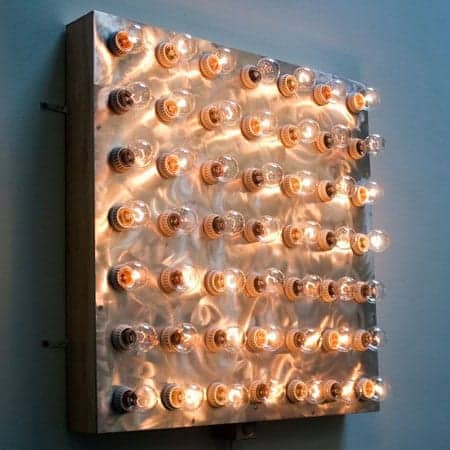
Changing Lights by Simon A.J. Winder. Winder’s description of the piece: “The viewer is chaotically and warmly illuminated.” Image used with permission.
Who is this for? Do students need any experience?
Several types of people can enjoy this course — people who have a piece in mind and need the knowledge to implement it, people who want to learn what’s possible, and life-long learners without a specific purpose at the present, who enjoy the challenge of new ideas. This is a completely fresh arena for most artists.
This course is very carefully designed to start at zero and only spend time on technical details as needed for the goals. For example, everything you need to know about electricity is summed up in three sentences. Only a few dozen technical terms are used and these are carefully explained. If you understand half the functions of a digital camera, then you will have no problems with this course. It is very useful to be capable of assembling small pieces using screwdrivers, pliers, etc. I have always admired the deftness of a painter or drawer to produce dozens of effects from the same brush or chalk — these kinds of people will have no problem. A magnifying glass or jeweler’s loupe is useful if you have trouble focusing close; I use one all the time.
What’s your background?
I’m a techie, not an artist. But I love observing and learning about art. The Metropolitan Museum of Art had Tuesday evening docent tours and I barely missed one in the 18 months I lived in Manhattan.
I’ve been working with the microcontroller tool for ten years and teaching technology in general an additional ten. I view myself like an expert in digital cameras or lithographic presses. I can teach the techniques, trouble shoot problems and explain the capabilities and limits. But it may be very hard for the technician to produce a great print.
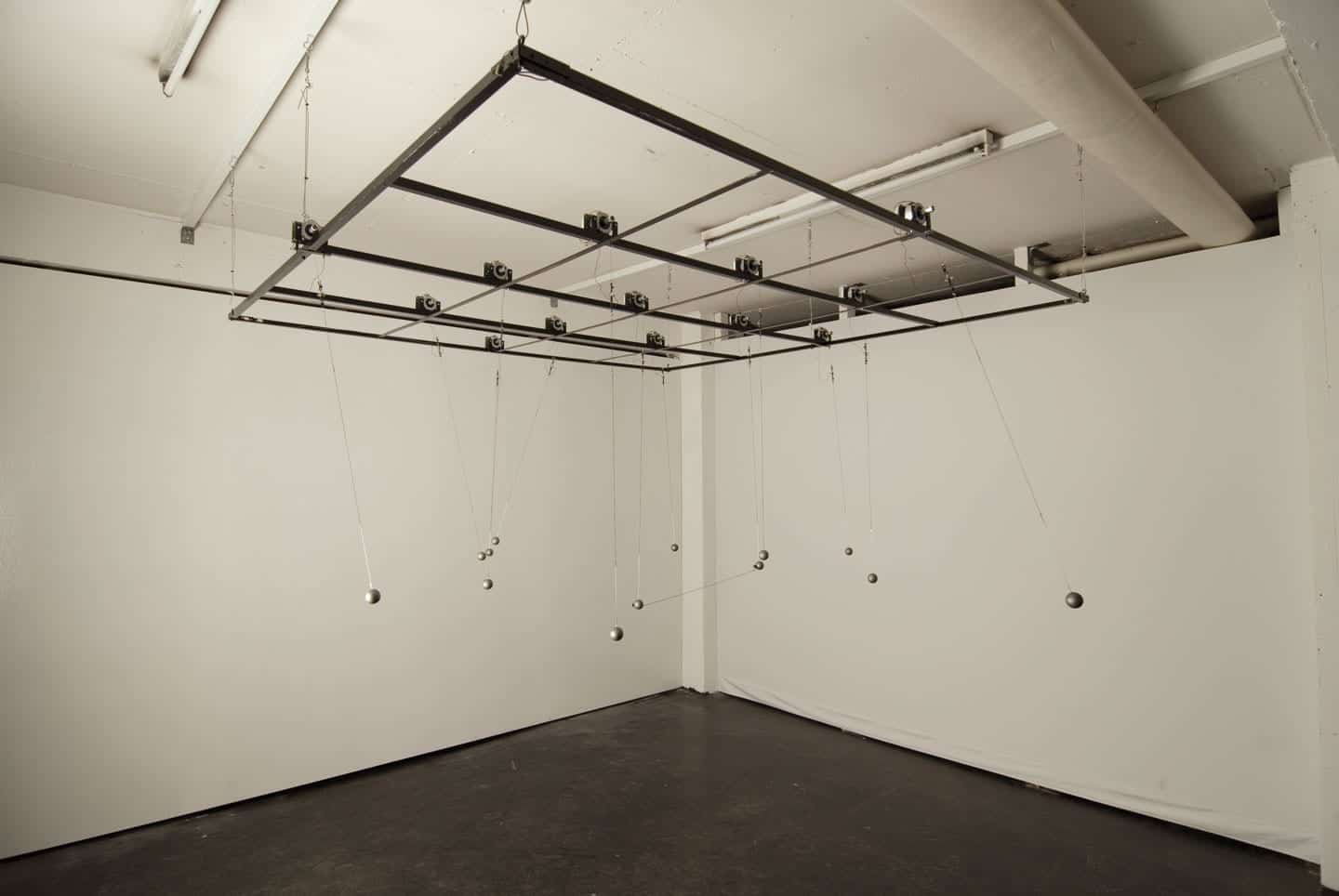
Connect, a “feedback-driven sculpture” by Andreas Muxel, uses microcontrollers to control 13 steel balls. Image used with permission.
What will students take home after 2 days?
Students will go home with knowledge and experience. They will have completed about a dozen projects, although each one is deconstructed to re-use the parts in the next. These projects will be demonstrations of techniques, not actual artistic pieces. I think just as important is that participants will understand what can and cannot be done with this tool. Artists will not end with a finished piece in this short course, but keep your eyes open for follow-up courses where we develop a given technique into a finished piece.
See below for details on upcoming exhibits. You can click the banner above to view past opportunities posts. Good luck!
First Annual Clifton Plein Air Festival
June 22–23, 2013. Register by June 10 for a $10 discount. Artists paint as many canvases as they want to, and submit two for judging on the second day. For more information and to register, click here.